


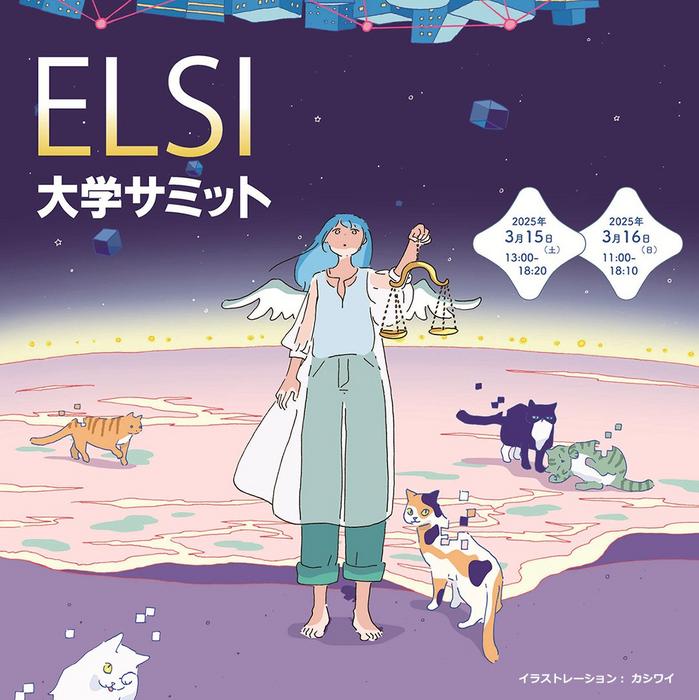
In March 2025, an influential two-day symposium known as the University ELSI Summit convened at Chuo University’s Korakuen Campus in Tokyo, Japan, drawing together over 600 participants both in person and online. This landmark event was co-hosted by the Chuo University ELSI Center and The University of Osaka’s Research Center on Ethical, Legal and Social Issues (ELSI Center), spotlighting the rapidly evolving landscape of ethical, legal, and social implications surrounding advanced artificial intelligence (AI) and responsible innovation on a global scale. The summit provided a vital platform for stakeholders from academia, industry, government, and civil society to engage in rigorous discourse about the roles and responsibilities necessary to navigate the profound transformations AI is catalyzing across society.
ELSI—an acronym for Ethical, Legal, and Social Issues—and RRI (Responsible Research and Innovation) frameworks have gained unprecedented urgency as AI technologies permeate all facets of human life, from healthcare and finance to national defense and education. The summit’s agenda reflected this urgency, focusing intensely on bridging the gap between AI development and the necessary oversight mechanisms to ensure technology’s social acceptance and safety. By assembling multidisciplinary experts and policy makers, the summit showcased a collaborative model aimed at preempting societal friction that unchecked AI advancement might provoke.
Opening keynote presentations set the tone for the summit’s comprehensive examination of AI’s potential and perils. Professor SUDO Osamu of Chuo University highlighted the accelerating trend of “AI democratization and popularization,” driven by innovations enabling natural language interface prompts and gesturing toward an era where multimodal AI and robotics integrate seamlessly into everyday complex systems. He emphasized groundbreaking AI systems such as China’s “DeepSeek-R1,” which in early 2025 demonstrated a leap in autonomous reasoning and reflection—capabilities previously thought to require explicit human programming. Profoundly, SUDO underlined the urgency of an ELSI perspective in steering these technologies, advocating for strong university alliances in Japan and globally to develop Responsible AI evaluation indices and foster broad multi-stakeholder dialogue.
Complementing this vision, Professor KISHIMOTO Atsuo from The University of Osaka elaborated on the concept of “social technology,” a critical knowledge domain enabling society to assimilate technological innovations ethically and legally. Kishimoto argued that the absence of robust social technology frameworks risks stalling the very social adoption of transformative technologies due to unresolved apprehensions spanning ethical questions to regulatory lag. His critique of traditional legal frameworks as too slow and rigid against the rapid pace of AI innovation highlighted the shifting prominence of ethics as an adaptable guidepost in this uncertain terrain. Pointing to progress in corporate AI ethics review and academic research governance, Kishimoto framed ethics as an increasingly central pillar in AI’s societal integration.
Throughout the summit, a diverse slate of presentations illuminated manifold ELSI initiatives from varied academic fields such as law, sociology, policy studies, economics, philosophy, and anthropology. These disciplinary perspectives enriched the discourse by dissecting AI-related challenges through their unique lenses, facilitating a holistic understanding of AI’s societal impact. Government representatives contributed critical insights, with IIDA Yoichi from Japan’s Ministry of Internal Affairs and Communications outlining recent international AI governance trends, including Japan’s leadership role in the Hiroshima AI Process. Similarly, HIRAMOTO Kenji of the Japan AI Safety Institute highlighted inter-agency cooperative structures underpinning public-private partnerships for AI safety strategies.
Industry’s voice was represented by seasoned professionals from major technology firms like NTT Corporation, IBM Japan, and Microsoft Japan, who shared frontline experiences in AI development and deployment. TSUNODA Katsu, President and COO of The Asahi Shimbun Company, drew attention to journalism’s evolving mandate amid AI’s rise, underscoring media’s role in translating complex interdisciplinary deliberations among industry, academia, and government into societal understanding and oversight.
The summit culminated in a dynamic, multidisciplinary panel titled “The Future of AI and Human Imagination,” featuring experts from information law, civil law, computer science, and cultural anthropology. Moderated by Vice Director ISHII Kaori of Chuo University, discussions delved into the multifaceted roles of ELSI frameworks. Panelists articulated an evolved vision of ELSI not merely as passive constraints but as proactive navigational tools—playing roles akin to steering wheels and headlights in guiding AI’s trajectory. They anticipated a future where collaborative synergy between development teams and ELSI specialists becomes standard practice, extending beyond AI to emerging technologies broadly.
Participants reflected enthusiastically on the summit’s layered structure and rich interactivity, citing the event as an inspiring forum that fostered meaningful cross-sector exchanges and intellectual growth. The fulfillment of the summit’s intent to forge sustainable multi-stakeholder connections is poised to accelerate Japan’s contributions to ELSI and RRI advancements nationally and internationally. Moreover, such synergy is expected to bolster innovation while addressing intricate social challenges inherent in technology diffusion.
Importantly, the summit’s ethos resonated with the principles of the Rome Call for AI Ethics—a global initiative advocating for ethically grounded AI design, development, and deployment practices. Chuo University’s unique position as the sole Japanese academic signatory underscores Japan’s commitment to these universal ethical norms. The event reinforced six foundational principles—Transparency, Inclusion, Accountability, Impartiality, Reliability, and Security and Privacy—as prerequisites for trustworthy AI systems.
The multidimensional dialogues and knowledge exchange at the University ELSI Summit exemplify the critical nexus at which cutting-edge AI research meets societal stewardship. As AI’s capabilities surge beyond mere automation into realms of autonomous reasoning and ethical reflection, such platforms become indispensable for cultivating responsible innovation paradigms. By fostering inclusive, interdisciplinary collaboration, the summit charted pathways to harmonize rapid technological progress with enduring human values and social well-being.
Through comprehensive academic inquiries, policy analysis, industrial perspectives, and ethical considerations, the University ELSI Summit embodied a beacon for global responsible AI discourse. It showcased Japan’s proactive leadership in converging legal, ethical, and social frameworks with technological advancement in AI, setting a replicable model for international initiatives. The event’s outcomes portend intensified research, policy innovation, and societal engagement as AI continues to reshape the fabric of contemporary life.
As the AI landscape advances toward more autonomous and multifaceted systems, the integration of ELSI considerations becomes not only beneficial but imperative. This summit demonstrates how academia, industry, and government can jointly construct resilient and adaptive governance architectures to safeguard humanity’s future amidst unprecedented technological revolutions.
News Publication Date:
March 2025
Web References:
https://www.chuo-u.ac.jp/english/research/elsi/
https://elsi.osaka-u.ac.jp/en/
Cite Scienmag News
Courtney Benton. (June 16, 2025). Navigating ELSI Challenges in the Age of Advanced AI. Scienmag. https://scienmag.com/navigating-elsi-challenges-in-the-age-of-advanced-ai/
Courtney Benton. "Navigating ELSI Challenges in the Age of Advanced AI." Scienmag, 16 June 2025, https://scienmag.com/navigating-elsi-challenges-in-the-age-of-advanced-ai/. Accessed 3 September 2026.
Courtney Benton. "Navigating ELSI Challenges in the Age of Advanced AI." Scienmag. June 16, 2025. https://scienmag.com/navigating-elsi-challenges-in-the-age-of-advanced-ai/


