


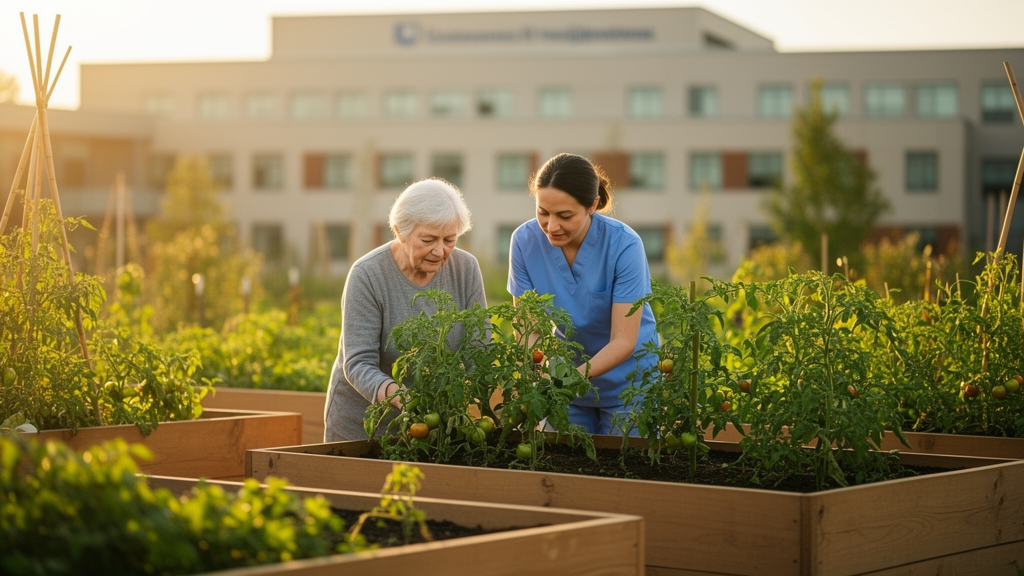
More than 57 million people worldwide are living with dementia, and that number is projected to climb steeply as populations age. With no cure in sight, researchers are increasingly turning to non-pharmacological approaches that help people live well with the condition. Now, one of the broadest syntheses of its kind suggests that something as simple as time in a garden, on a farm or in a forest may deliver measurable benefits for people with dementia and the family members who care for them.
A scoping review published in Frontiers in Dementia mapped 108 studies conducted across 21 countries, spanning more than two decades of research into nature-based interventions. The team, led by Manpreet K. Gill, Shareefa Thekkan and Danine Irwin of Dementia Adventure in the United Kingdom, followed the Arksey and O’Malley framework and reported their work according to PRISMA-ScR guidelines. They searched five databases, including PubMed, Scopus, Web of Science, Emerald Insight and the Cochrane Library, and screened more than 3,000 records down to the final evidence base with two independent reviewers at every stage.
The sheer scale of the synthesis is what sets it apart. Previous reviews tended to zoom in on a single intervention type, such as horticultural therapy or garden design. This one pulled the entire landscape together and sorted it into six themes: therapeutic gardens and environmental design, which accounted for 33 studies; horticultural and gardening interventions, with 30; green care farms and nature-based services, with 22; nature exposure, access and participation, with 16; technology-based nature interventions, with just 5; and development and implementation of nature-based services, with only 2. Across every category, engagement with nature was consistently associated with positive outcomes relating to wellbeing, social participation and meaningful activity.
Therapeutic gardens emerged as the single largest area of evidence, and the technical findings are striking. One study found that improvements in mood appeared after relatively brief exposure to nature, with no further measurable gains beyond 80 to 90 minutes, hinting at a dose-response relationship similar to those seen in pharmacology. A secure outdoor walking space known as a wander garden was linked to fewer and less severe falls and reduced medication use among residents of a dementia care facility. An enriched garden comprising an outdoor sensory area supplemented by 12 purpose-designed modules targeting cognition, independence, walking and balance improved cognition, activities of daily living, balance and mobility among nursing home residents. Exposure to a purpose-designed indoor therapeutic garden even reduced medication use, cortisol levels and blood pressure, pointing to genuine physiological regulation rather than mere enjoyment.
Japanese-style gardens added another dimension, operating primarily as viewing environments rather than activity spaces. Participants observed the gardens while seated, and viewing them reduced heart rate and physiological stress while supporting visual engagement, verbalisation and memory retrieval. Garden-based art therapy supported independence, self-expression and psychological safety, while garden redevelopment with natural, cultural and multisensory features prompted emotional, cognitive and social responses valued by residents, carers and visitors alike. Yet the evidence also revealed a sobering gap between design intention and actual use. Outdoor spaces were not always fully integrated into everyday care, and personal, institutional and resource-related barriers restricted access, even in facilities with beautiful gardens on site.
Horticultural and gardening interventions told a similar story with an important twist: the emphasis on active participation rather than passive exposure. Activities such as planting, watering, harvesting, cooking and maintaining gardens enabled participants to contribute to tangible tasks and engage in meaningful occupation. The most frequently reported benefits related to wellbeing and mood, followed by engagement and participation, cognitive outcomes and social connection. Outcomes relating to identity, purpose, agency and self-expression appeared in eight studies, with gardening supporting continuity and self-worth and enabling expressions of autonomy, citizenship and empowerment. The cognitive findings are particularly intriguing. Indoor horticultural therapy improved frontal lobe cognitive functioning, and outdoor gardening produced greater prefrontal cortex activation than indoor cognitive training, suggesting that nature-based activity may engage brain networks that conventional exercises do not.
Not every result was uniformly positive, and the review did not shy away from the inconsistencies. One study found no significant overall reduction in agitation and reported different responses according to participants’ levels of cognitive functioning, with those at lower levels appearing to benefit while those at higher levels showed increased agitation. Another reported reductions in apathy and improvements in cognition but no observed effects on quality of life or functional capacity. A longitudinal study of green care farms found no significant differences from regular day care in maintaining functional performance over time. These mixed findings matter because they temper the enthusiasm that often surrounds nature-based approaches and highlight the need for careful, person-specific programme design.
Green care farms, which integrate nature into the wider organisation of care and everyday life rather than centring on specific gardening activities, consistently supported wellbeing, social participation and meaningful engagement. Compared with traditional care settings, residents spent more time outdoors, participated in more domestic and outdoor activities, and demonstrated higher levels of physical activity, social interaction and activity engagement. One study reported improved dietary intake among attendees of a green care farm compared with regular day care. Carers reported reassurance regarding care quality and appreciation of person-centred approaches. In the nature exposure theme, a study involving 107 dyads found that forest bathing in urban green spaces was acceptable and feasible and was associated with reductions in carer burden, depressive symptoms and anxiety, while the largest study in that theme found that 83 percent of participants expressed interest in participating in nature-based interventions.
Technology-based approaches, though represented by only five studies, hint at a future where nature becomes accessible even to those who cannot leave their rooms. Virtual reality exposure reduced heart rate, a six-minute nature video reduced agitation and symptoms associated with sundowning, and digital nature experiences improved engagement, alertness, mood and wellbeing. The studies highlighted the potential for technology to increase access to nature for individuals who face barriers to outdoor participation and reported good acceptability of technology-mediated approaches. Meanwhile, the two studies on implementation emphasised that successful delivery depends on organisational culture, staffing, funding, access to green space and wider policy contexts, and that nature-based approaches must be embedded within wider systems of care rather than delivered as isolated activities.
The review’s authors conclude that the primary challenge is no longer establishing whether nature-based approaches can benefit people living with dementia and their carers, but understanding how such opportunities can be made accessible, sustainable and available to those who wish to participate. Notable gaps remain, including limited research on blue spaces such as coastal, river and lake environments, on young-onset dementia, on rare dementias and on underrepresented populations. Future research should focus on improving accessibility, understanding implementation and broadening the range of nature-based approaches available. What emerges from this synthesis is a compelling case that nature should not be viewed solely as a recreational opportunity but as an important component of living with dementia, one that supports identity, connection and engagement in everyday life.
Subject of Research: Nature-based interventions for people living with dementia and their carers: a scoping review
Article Title: Nature-based interventions for people living with dementia and their carers: a scoping review
Article References: Gill, M. K., Thekkan, S., & Irwin, D. (2026). Nature-based interventions for people living with dementia and their carers: a scoping review. Frontiers in Dementia, 5, Article 1818223. https://doi.org/10.3389/frdem.2026.1818223
Image Credits: AI Generated
DOI: 10.3389/frdem.2026.1818223
Keywords: Nature-based, interventions, people, living, dementia, carers, scoping, review, scientific research
Cite Scienmag News
Cassandra Pierce. (October 16, 2026). Nature Prescriptions for Dementia: Massive Review Reveals Gardens, Farms and Forests May Transform Care. Scienmag. https://scienmag.com/nature-prescriptions-for-dementia-massive-review-reveals-gardens-farms-and-forests-may-transform-care/
Cassandra Pierce. "Nature Prescriptions for Dementia: Massive Review Reveals Gardens, Farms and Forests May Transform Care." Scienmag, 16 October 2026, https://scienmag.com/nature-prescriptions-for-dementia-massive-review-reveals-gardens-farms-and-forests-may-transform-care/. Accessed 16 October 2026.
Cassandra Pierce. "Nature Prescriptions for Dementia: Massive Review Reveals Gardens, Farms and Forests May Transform Care." Scienmag. October 16, 2026. https://scienmag.com/nature-prescriptions-for-dementia-massive-review-reveals-gardens-farms-and-forests-may-transform-care/


