


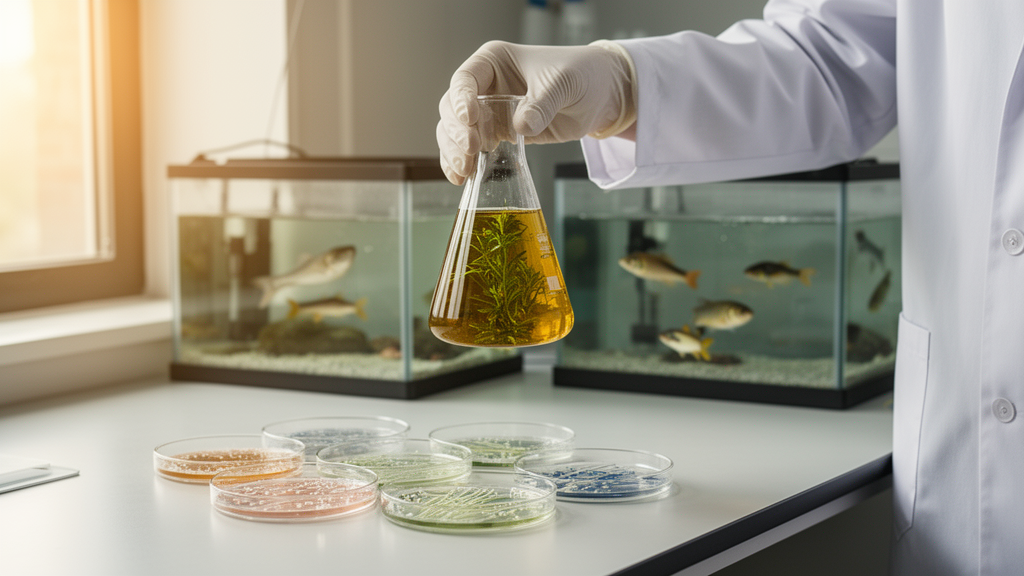
Aquaculture has become an essential pillar of global food production, and its share is expected to grow as demand for aquatic animal protein rises. But the same intensification that has boosted output has also increased the frequency and severity of infectious diseases, with bacterial pathogens standing out as a major constraint on animal health, production efficiency and economic viability. A new collection of studies, gathered in the Research Topic “Exploring Natural Extracts as Sustainable Antibacterial Agents Against Aquaculture Pathogens” published in Frontiers in Marine Science, surveys the state of play and illustrates how far the field has moved beyond simple antibiotic substitution.
Antibiotics have traditionally been the main tool for controlling bacterial disease in farmed fish and shellfish, yet their intensive and often inappropriate use has driven the emergence and spread of antimicrobial resistance, while also raising concerns about environmental contamination and chemical residues in aquaculture products. Those concerns have intensified the search for alternatives, and natural extracts and bioactive compounds derived from plants, algae, fungi and microorganisms have attracted growing attention because of their diverse biological activities and their capacity to act through multiple pathways at once.
The contributions to the Research Topic span an unusually wide range of sources: terrestrial plants, marine macro- and microalgae, fungi, microbial extracellular products, agro-industrial by-products and formulated mixtures. They also cover the full spectrum of pathogen-control strategies, from direct antibacterial activity and interference with bacterial virulence and biofilm formation to antioxidant and immunomodulatory effects, modulation of host responses, and the development of functional feeds and alternative delivery systems. Crucially, the editors note that the studies represent very different stages of evidence, ranging from in vitro and ex vivo characterization to dietary interventions and experimental pathogen challenges.
One of the most striking findings comes from Pham Thi and colleagues, who investigated a methanolic leaf extract of Annona glabra as a dietary intervention against Edwardsiella ictaluri, Aeromonas veronii and Vibrio parahaemolyticus in basa fish (Pangasius bocourti). The extract showed antibacterial and antioxidant activities in vitro, and when incorporated into the diet it reduced cumulative mortality and supported hematological and histological recovery after bacterial challenge. Under the experimental conditions, its overall performance was comparable to or better than that observed with doxycycline, highlighting the potential of plant-derived compounds to combine direct antimicrobial activity with host-supportive effects. The authors emphasize that such results reinforce the importance of evaluating natural extracts in vivo, where their biological activity may extend well beyond direct effects on bacterial growth.
The diversity of natural sources was further explored by Molina-Roque and colleagues, who evaluated nine terrestrial and marine extracts obtained from agro-industrial by-products and low-value marine biomass. The terrestrial extracts, derived from pomegranate peel, citrus fruits and grape seeds, generally contained higher levels of phenolic and flavonoid compounds and exhibited stronger antioxidant and antibacterial activities against Vibrio anguillarum, Vibrio harveyi and Photobacterium damselae subsp. piscicida. In contrast, several marine macro- and microalgal extracts displayed stronger immunomodulatory effects in gilthead seabream (Sparus aurata) head kidney leukocytes. That contrast suggests that different natural sources may provide distinct, potentially complementary biological functions, an insight the editors consider particularly relevant to the design of multifunctional ingredients rather than single-purpose antimicrobial products.
The potential of natural bioactives as functional feed ingredients was also tested in European seabass and European eel. Castro and colleagues evaluated three extracts obtained from white grape marc, an agro-industrial by-product generated during winemaking, in diets for European seabass (Dicentrarchus labrax). Although supplementation did not significantly improve survival or growth, some treatments enhanced antioxidant status and protein efficiency, and supplemented fish showed higher absolute survival after a V. harveyi challenge. In European eel (Anguilla anguilla), Molina-Sorribes and colleagues evaluated a phytobiotic formulation of microencapsulated essential oils against Vibrio vulnificus pathovar piscis. The selected formulation increased plasma lysozyme activity and, following experimental challenge, reduced mortality and delayed disease progression. Together, these studies support dietary supplementation as a preventive strategy while underscoring the need to identify formulations and doses that deliver measurable protection against infection.
Beyond direct antibacterial effects, several studies targeted bacterial virulence and infection processes themselves. García-Márquez and colleagues evaluated extracellular products from Bacillus pumilus strains cultivated in media supplemented with microalgal and cyanobacterial biomass. Most of the extracellular products inhibited biofilm formation by Aeromonas hydrophila and V. anguillarum, while all tested products affected expression of the aip56 gene in P. damselae subsp. piscicida and modulated genes involved in iron acquisition, including hutB, hutD, irp1 and irp2. These results point to microbial extracellular products as postbiotic agents that can interfere with pathogen behavior rather than relying exclusively on bacterial killing, an approach the editors describe as particularly relevant in the context of antimicrobial resistance, where strategies targeting virulence or colonization may complement conventional antibiotics.
A similar concept was explored by Morariu and colleagues, who examined an organic acid-based formulation, AuraAqua, against A. hydrophila. Although the formulation exhibited bactericidal activity, sub-inhibitory concentrations also reduced bacterial adhesion, invasion, motility and biofilm formation, and downregulated several virulence-associated genes. In primary gut cells from shrimp and tilapia, the treatment preserved epithelial barrier integrity and reduced indicators of cellular damage and oxidative stress during infection. Wang and colleagues, meanwhile, investigated a combination of extracts from Rheum officinale, Scutellaria baicalensis and Houttuynia cordata, formulated as effervescent tablets to control V. parahaemolyticus. The optimized formulation exhibited strong bactericidal activity and a relatively narrow window for mutant selection, suggesting a potentially reduced risk of resistance. Both works still require further in vivo validation, but they highlight the importance of formulation and delivery when translating natural compounds into practical disease-control strategies.
Host modulation represents another major theme across the collection. Ponce and colleagues evaluated a commercial mushroom-derived product containing Pleurotus ostreatus, Lentinula edodes and fermented Hericium erinaceum mycelium in European seabass. Long-term dietary supplementation modulated markers associated with both innate and adaptive immunity and increased plasma lysozyme, peroxidase and bactericidal activities. Importantly, the highest inclusion levels were associated with significantly increased survival following P. damselae subsp. piscicida challenge. These results support mushroom-derived compounds as functional feed ingredients that enhance host defense rather than act directly on the pathogen. Similarly, the Molina-Roque study demonstrated that marine extracts can stimulate respiratory burst and peroxidase activity in seabream leukocytes, further supporting the potential contribution of natural compounds to host preparedness against infection.
The editors also stress that sustainability means more than swapping antibiotics for natural products. The use of grape marc, plant by-products and low-value marine biomass illustrates how bioactive compounds can be recovered from otherwise low-value resources, creating opportunities for circular approaches to aquaculture nutrition. At the same time, natural origin does not automatically guarantee sustainable or practical application: extract composition, standardization, stability, bioavailability, dosage, production costs and scalability will ultimately determine whether promising laboratory results translate into commercially viable strategies. A review by Monteiro and colleagues on functional compounds for disease control in meagre (Argyrosomus regius) underscores the challenge, noting that although numerous nutritional interventions can modulate immune, oxidative, stress-related or intestinal responses, direct evidence linking these effects to improved disease resistance remains limited, particularly in long-term and commercial-scale studies.
Collectively, the studies demonstrate the wide range of possibilities offered by natural bioactive compounds for the sustainable management of bacterial diseases in aquaculture, acting through multiple and sometimes complementary mechanisms: direct antibacterial activity, disruption of virulence and biofilm formation, modulation of host immune and antioxidant responses, and improvement of physiological resilience. Yet the diversity of experimental approaches and outcomes also highlights the need for more integrated and systematic evaluation. The editors argue that future research should move beyond demonstrating antibacterial activity and establish clearer links between chemical composition, mechanism of action, host responses, microbiota and actual protection against disease. Greater attention to standardization, safety, dosage, formulation and validation under realistic farming conditions, they conclude, will determine whether natural extracts can advance from laboratory promise to routine practice in the world’s fish farms.
Subject of Research: Natural extracts as sustainable antibacterial agents against bacterial pathogens in aquaculture
Article Title: Editorial: Exploring natural extracts as sustainable antibacterial agents against aquaculture pathogens
Article References: García-Márquez, J., Cerezo, I. M., & Díaz-Rosales, P. (2026). Editorial: Exploring natural extracts as sustainable antibacterial agents against aquaculture pathogens. Frontiers in Marine Science, 13, Article 2026369. https://doi.org/10.3389/fmars.2026.2026369
Image Credits: AI Generated
DOI: 10.3389/fmars.2026.2026369
Keywords: aquaculture, bacterial pathogens, natural extracts, antimicrobial resistance, functional feeds, immunomodulation, biofilm, phytobiotics, marine biotechnology, sustainable disease management, host defense, postbiotics
Cite Scienmag News
Violet Maxwell. (October 27, 2026). Natural Extracts Emerge as Sustainable Antibacterial Tools for Aquaculture Pathogens. Scienmag. https://scienmag.com/natural-extracts-emerge-as-sustainable-antibacterial-tools-for-aquaculture-pathogens/
Violet Maxwell. "Natural Extracts Emerge as Sustainable Antibacterial Tools for Aquaculture Pathogens." Scienmag, 27 October 2026, https://scienmag.com/natural-extracts-emerge-as-sustainable-antibacterial-tools-for-aquaculture-pathogens/. Accessed 27 October 2026.
Violet Maxwell. "Natural Extracts Emerge as Sustainable Antibacterial Tools for Aquaculture Pathogens." Scienmag. October 27, 2026. https://scienmag.com/natural-extracts-emerge-as-sustainable-antibacterial-tools-for-aquaculture-pathogens/


