


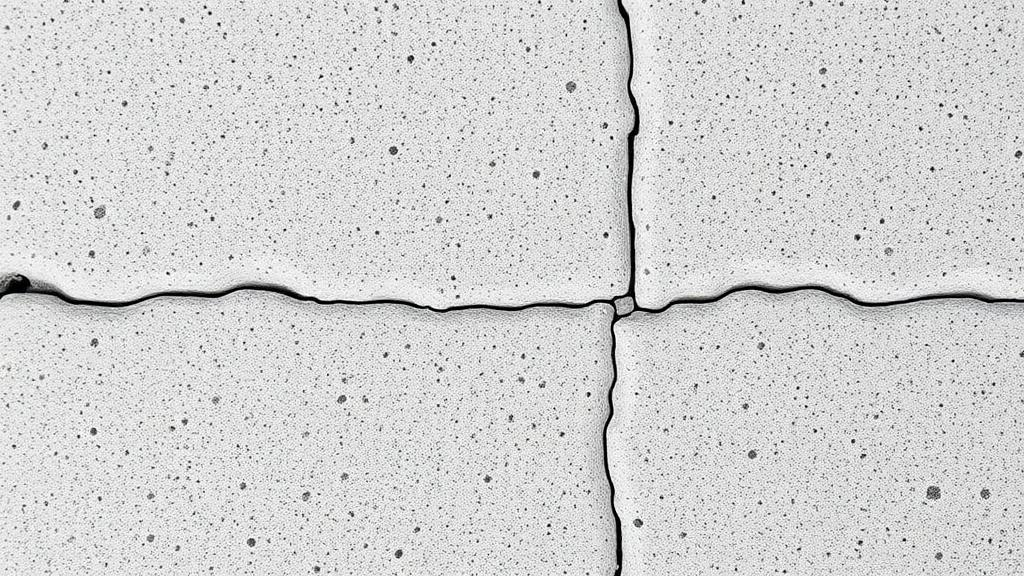
Sulfate attack is one of the quiet destroyers of the built world. Wherever concrete meets sulfate-rich groundwater, seawater, or industrial soil, sulfate ions creep into the hardened cement matrix and react with its vulnerable phases to form expansive crystals that pry the material apart from within. Dams, bridge piers, tunnel linings, buried foundations, and pavement slabs across the globe have all succumbed to this slow chemical siege. Now a study published in Case Studies in Construction Materials offers a strikingly simple and sustainable weapon against it: halloysite nanotubes, naturally occurring aluminosilicate clay minerals shaped like microscopic hollow tubes, dispersed with a common superplasticizer and stirred directly into ordinary cement mortar.
The research, conducted by Yaser Rashidi and Asghar Habibnejad Korayem, tackled a durability problem that has resisted conventional solutions for decades. When sulfate ions invade cementitious materials, two primary damaging products form. Ettringite arises when alumina-bearing hydrates such as monosulfate and calcium aluminate hydrates react with incoming sulfate in the presence of calcium hydroxide and water. Gypsum forms simultaneously through cation-exchange reactions between sulfates and calcium hydroxide. Both phases occupy greater solid volume than the phases they replace, so the matrix expands, cracks, and then admits even more sulfate in a self-accelerating feedback loop. Over time the cohesion of the hydration products collapses, and strength and mass drain away.
Engineers have traditionally fought back along three fronts: limiting the reactive tricalcium aluminate content of cement as in ASTM C150 Type II and Type V sulfate-resistant cements, blending in supplementary cementitious materials such as fly ash, slag, metakaolin, and silica fume to consume calcium hydroxide pozzolanically, and reducing permeability through lower water-to-binder ratios or fine mineral additives that tighten the pore network. Each strategy helps, but none fully solves the problem, because residual calcium hydroxide remains available for gypsum formation, and even well-refined matrices still transport ions. Nanoparticles promised a fourth front, yet materials such as nano-silica, carbon nanotubes, and graphene oxide carry significant production costs and environmental burdens, and their effectiveness depends critically on achieving good dispersion.
That is where halloysite nanotubes stand out. With outer diameters of roughly 30 to 70 nanometers and lengths of 1 to 3 micrometers, these natural tubes have enormous specific surface area, around 640,000 square centimeters per gram in this study, and an aluminosilicate composition of about 48 percent silica and 35 percent alumina. They act on cement through three complementary mechanisms: physical filling of the fine interstitial spaces between cement grains, heterogeneous nucleation that gives hydration products abundant surfaces on which to grow, and gradual pozzolanic reactions that consume calcium hydroxide and generate additional calcium silicate hydrate gel. Unlike carbon nanotubes or graphene oxide, they require no energy-intensive synthesis, chemical oxidation, or high-temperature functionalization; they are simply mined and processed.
A crucial subtlety the researchers confronted is that nanoparticles tend to clump in the brutal environment of cement pore solution. With a pH of 13.1 to 13.5 and a high concentration of dissolved ions, the synthetic pore solution used in the study compresses the electrical double layers around particles, collapsing the electrostatic repulsion that keeps them apart. Without help, ultrasonication only temporarily breaks agglomerates apart; they re-form within hours. The team’s answer was polycarboxylate ether, or PCE, the same high-range water-reducing admixture routinely used to fluidize concrete. PCE molecules adsorb onto halloysite surfaces through their anionic functional groups while their long polyethylene glycol side chains form a steric barrier, physically preventing neighboring tubes from touching.
The dispersion experiments were elegant in their design. Suspensions matching the dosages used in the mortars were mixed 1:1 with synthetic pore solution and tracked by visual sedimentation, ultraviolet-visible spectroscopy, and dynamic light scattering. The results were unambiguous. Without PCE, the suspension’s normalized UV-Vis absorbance collapsed from 1.0 to just 0.04 within six hours, and its average hydrodynamic particle diameter ballooned from 972 to 2,750 nanometers as particles aggregated and settled. With PCE, absorbance stayed high and particle growth was minimal, with the two lower-dose suspensions growing only from about 409 to 513 and 486 to 578 nanometers respectively. The highest-dose suspension, corresponding to 3 weight percent HNTs, showed slightly reduced stability, an early warning sign that would echo in the mortar performance.
The mortars themselves told the rest of the story. Replacing 1, 2, or 3 weight percent of ordinary Portland cement with PCE-stabilized HNTs, at a fixed water-to-binder ratio of 0.4 and identical workability, the researchers exposed mortar bars and cubes to a 5 percent sodium sulfate solution for 182 days following ASTM C1012. The plain reference mortar expanded by 0.084 percent over 26 weeks, above the 0.05 percent threshold that ASTM C1157 classifies as non-resistant to sulfate. The 1 percent HNT mixture fared little better at 0.080 percent. But the 2 and 3 percent mixtures stayed below the threshold at 0.032 and 0.043 percent respectively, a genuinely high level of sulfate resistance achieved purely by a clay additive.
The mechanical evidence was equally compelling. Before exposure, compressive strengths rose from 42.6 megapascals in the reference to 52.9 megapascals with 2 percent HNTs. After 182 days of sulfate immersion, the reference mortar had lost 18.8 percent of its compressive strength and a striking 29.9 percent of its flexural strength, while its ultrasonic pulse velocity, a proxy for internal integrity, dropped 9.6 percent. The 2 percent HNT mortar lost only 5.2 percent compressive and 13.1 percent flexural strength, and its pulse velocity actually increased by 3.3 percent, meaning sulfate products filling refined pores left it more acoustically dense than before. Scanning electron microscopy revealed denser, crack-poor microstructures before exposure and far fewer needle-like ettringite crystals afterward. X-ray diffraction showed progressively weaker ettringite and gypsum peaks with increasing HNT content, and Fourier-transform infrared spectra confirmed the pattern: weaker sulfate-related bands at 1110, 670, and 550 inverse centimeters, and a stronger calcium silicate hydrate band at 982.
Why does a humble clay tube outperform? The authors attribute it to synergy. Chemically, diluting the clinker reduces the reactive aluminate supply, while pozzolanic consumption of calcium hydroxide starves both the gypsum and ettringite reactions of raw material. Physically, the tubes pack into pores, nucleate hydration, and even act as internal water reservoirs whose hydrophilic bores release moisture gradually to sustain curing. The result is a matrix whose pore connectivity is so reduced that sulfate ions simply cannot reach their targets in damaging quantities. The one caveat is dosage discipline: at 3 weight percent, agglomeration created weak zones, and every measured property slipped slightly below the 2 percent optimum, a direct macroscopic echo of the dispersion tests.
Perhaps the most consequential finding is the sustainability comparison. Compiled literature data show halloysite carrying a global warming potential of roughly 5 to 6.6 kilograms of carbon dioxide equivalent per kilogram, versus 28.55 for carbon nanotubes produced by chemical vapor deposition and 8.55 for graphene oxide, and an embodied energy of about 21 megajoules per kilogram versus 480 for CNTs and 120 to 140 for graphene oxide. At around 0.7 dollars per kilogram, HNTs cost less than a tenth of nano-silica and a tiny fraction of carbon-based alternatives. For a construction industry desperately seeking durable, low-carbon materials, the message is remarkable: a naturally abundant clay mineral, stabilized by an admixture already in every ready-mix truck, can match the sulfate resistance of engineered nanomaterials while leaving a fraction of their environmental and economic footprint. The next generation of sulfate-proof infrastructure may literally be dug from the ground.
Subject of Research: Use of halloysite nanotubes to enhance the sulfate resistance and sustainability of cementitious composites
Article Title: Sustainable halloysite nanotubes for sulfate–resistant cementitious composites: Physicochemical mechanisms and environmental advantages
Article References: Rashidi, Y., & Korayem, A. H. (2026). Sustainable halloysite nanotubes for sulfate–resistant cementitious composites: Physicochemical mechanisms and environmental advantages. Case Studies in Construction Materials, 25, Article e06582. https://doi.org/10.1016/j.cscm.2026.e06582
Image Credits: AI Generated
DOI: 10.1016/j.cscm.2026.e06582
Keywords: halloysite nanotubes, sulfate attack, cement mortar, durability, nanomaterials, ettringite, gypsum, pozzolanic reaction, polycarboxylate ether, sustainable construction, pore refinement, embodied energy
Cite Scienmag News
Denise Maddox. (October 5, 2026). Natural Clay Nanotubes Shield Concrete From Sulfate Attack at a Fraction of the Cost. Scienmag. https://scienmag.com/natural-clay-nanotubes-shield-concrete-from-sulfate-attack-at-a-fraction-of-the-cost/
Denise Maddox. "Natural Clay Nanotubes Shield Concrete From Sulfate Attack at a Fraction of the Cost." Scienmag, 5 October 2026, https://scienmag.com/natural-clay-nanotubes-shield-concrete-from-sulfate-attack-at-a-fraction-of-the-cost/. Accessed 5 October 2026.
Denise Maddox. "Natural Clay Nanotubes Shield Concrete From Sulfate Attack at a Fraction of the Cost." Scienmag. October 5, 2026. https://scienmag.com/natural-clay-nanotubes-shield-concrete-from-sulfate-attack-at-a-fraction-of-the-cost/


