

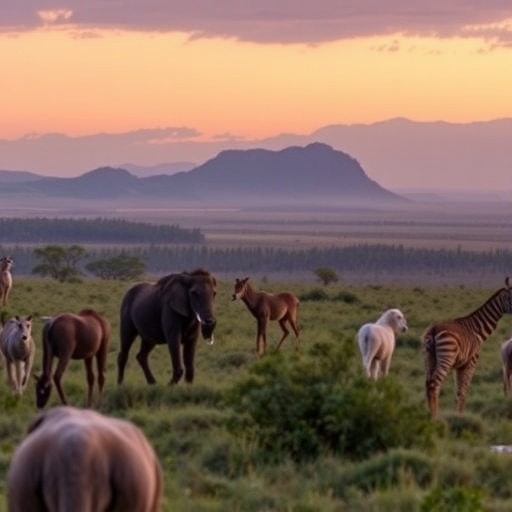
The 15th Meeting of the Conference of the Parties (COP15) to the Convention on the Conservation of Migratory Species of Wild Animals (CMS) commenced in Campo Grande, Brazil, marking a pivotal moment in global biodiversity conservation. Against the backdrop of alarming data revealing that nearly half—49%—of all CMS-listed migratory species are experiencing declining population trends, and almost a quarter face the threat of extinction, this assembly underlines an urgent call to action. The CMS, a legally binding UN treaty, serves as an international framework aimed at protecting migratory fauna whose survival transcends national borders, facilitating multilateral cooperation to counteract the intricate web of threats these species endure.
Migratory species play indispensable roles in maintaining ecosystem stability and function, acting as agents of pollination, seed dispersal, pest regulation, and nutrient cycling across continents. However, their migratory pathways and habitats are increasingly compromised by anthropogenic pressures. The latest “State of the World’s Migratory Species: Interim Report (2026)” elucidates the severity of these pressures, enumerating the synergistic impacts of overexploitation, habitat degradation, chemical and noise pollution, invasive species, and climate change disruptions. This comprehensive scientific assessment provides the empirical foundation for policy deliberations at COP15, ensuring negotiations are grounded in robust ecological data and trend analyses.
Hosting over 2,000 participants, including official delegates from 133 countries party to the treaty, alongside indigenous representatives, scientific experts, and conservation organizations, COP15 convenes at a critical juncture. The chosen venue, Campo Grande in the state of Mato Grosso do Sul, lies at the northern gateway of the Pantanal—the world’s most expansive tropical wetland ecosystem. The Pantanal itself is emblematic of South America’s rich biodiversity and ecological interconnectedness, yet it faces escalating risk from drought, wildfires, and land-use transformation, all exacerbated by global warming trends and changing precipitation patterns.
Brazilian President Luiz Inácio Lula da Silva emphasized the symbolic and strategic significance of hosting COP15 at Campo Grande, highlighting the Pantanal’s vital importance as a biodiverse sanctuary and a testament to transboundary ecological interdependence. His counterpart, President Santiago Peña of Paraguay, reinforced the perspective that migratory species conservation intertwines with socio-economic development, underscoring the inseparability of ecological health and human well-being.
The COP15 agenda is extensive, covering over 100 negotiation items that confront the broad spectrum of threats imperiling migratory species. Deliberations will aim to formulate enhanced regulatory frameworks to combat illegal and unsustainable hunting practices, mitigate the ecological fallout from bycatch in fisheries, impede habitat loss and fragmentation, and critically evaluate the environmental impacts of deep-sea mining. Additional considerations include addressing the disruptive influx of artificial light and noise that fragment migratory corridors and monitoring the accelerating ramifications of climate change, which alter migratory behaviors and habitat suitability at unprecedented rates.
A notable aspect of the assembly is the review of species listings within the CMS appendices, protocols that delineate the conservation status and requisite protections for various taxa. COP15 will assess proposals to add 42 new migratory species to the treaty, encompassing iconic and ecologically significant animals such as the snowy owl (Bubo scandiacus), the great hammerhead shark (Sphyrna mokarran), and the striped hyena (Hyaena hyaena). These additions signify an adaptive and responsive conservation policy framework that evolves in alignment with contemporary scientific findings and emerging threats.
Throughout the weeklong session, plenary meetings and specialized working groups will dissect scientific, legal, and technical aspects influencing migratory species conservation. A highlight event will unveil the “Global Assessment of Migratory Freshwater Fishes,” the first comprehensive scientific study cataloging the status and challenges facing migratory freshwater ichthyofauna, a group notably underrepresented in conservation discourse despite their critical ecological roles. In addition, the introduction of the “Americas Flyways Atlas,” an innovative online geospatial platform developed in collaboration with the Cornell Lab of Ornithology, will provide dynamic visualization tools identifying essential migratory corridors and stopover habitats for avian species throughout the Americas, advancing data-informed conservation strategies.
COP15 is also poised to launch the Global Initiative on Taking of Migratory Species (GTI), a novel global endeavor designed to address the often overlooked but pervasive issue of illegal and unsustainable harvesting of migratory fauna. Unlike initiatives predominantly focused on regulating international wildlife trade, the GTI directs attention to domestic-level usage, recognizing that unregulated local exploitation can constitute a disproportionately significant threat. The GTI aspires to unite governments, scientific experts, and local communities around sustainable use practices, reaffirming commitments made under the Kunming-Montreal Global Biodiversity Framework.
The significance of COP15 resonates beyond environmental circles, reflecting a geopolitical shift acknowledging migratory species conservation as an ethical and political imperative. Brazil’s Environment Minister Marina Silva articulated the intrinsic challenges inherent in protecting migratory wildlife, emphasizing that their conservation demands cross-national collaboration and governance mechanisms capable of overcoming jurisdictional boundaries to address the multifaceted crises of climate change, ecological degradation, and governance deficits. UNEP Executive Director Inger Andersen supplemented this perspective by highlighting migratory fauna as integral components of Earth’s “circulatory system,” whose disruption portends cascading consequences for ecosystem services vital to human survival.
Amy Fraenkel, Executive Secretary of CMS, underscored the critical role of COP15 as a juncture for consolidated action. The consistent identification of principal drivers of decline—habitat loss, overexploitation, climate change, and pollution—across successive reports signals both the challenging inertia and the clarity of focus required. The conference offers a platform to calibrate and enhance conservation measures that ensure resilient migratory wildlife populations and the ecosystems they inhabit, underpinned by the best available science and international cooperation.
The CMS’s existence as a legally binding multilateral treaty, encompassing 132 parties and several affiliated agreements with non-party states, establishes a global governance architecture specifically tailored to migratory species. Its unique appendices categorize species according to urgency and necessary conservation measures. Appendix I lists species at imminent risk of extinction, mandating strict protective policies that prohibit taking and mandate habitat conservation and restoration. Appendix II captures species requiring international cooperation for effective management, facilitating agreements on joint objectives, monitoring, and coordinated actions across migratory routes, thus ensuring conserving gains are not negated by national-level discrepancies.
COP meetings, held triennially, serve as essential milestones for reflecting on achievements, updating species listings, and responding adaptively to emerging scientific knowledge and environmental challenges. COP15’s strategic focus on integrating scientific assessments, enhancing cooperative frameworks, and fostering political commitment may well set the trajectory for migratory species conservation in the face of accelerating anthropogenic pressures.
In conclusion, the 15th COP event in Brazil symbolizes a critical convergence of science, policy, and international diplomacy. It seeks to galvanize action that transcends borders to safeguard migratory species—vital indicators and stewards of ecosystem health—thereby sustaining biodiversity, ecosystem services, and ultimately, human livelihoods for generations to come.
Subject of Research: Conservation of migratory species and global biodiversity.
Article Title: COP15 in Brazil Ignites Global Action for Migratory Species Amid Worsening Biodiversity Crisis.
News Publication Date: March 23, 2026.
Web References:
- CMS Official Website: https://www.cms.int/
- CMS COP15 Information Hub: https://www.cms.int/cop15
- COP15 Media Accreditation: https://bit.ly/cms-cop15-media-registration
- Americas Flyways Atlas (Cornell Lab of Ornithology): Linked within CMS resources
Image Credits: CMS (Convention on the Conservation of Migratory Species)
Keywords: Migratory species, biodiversity crisis, CMS COP15, international conservation, habitat loss, overexploitation, climate change, pollution, migratory corridors, migratory freshwater fish, Global Initiative on Taking, international cooperation, Pantanal ecosystem.


