

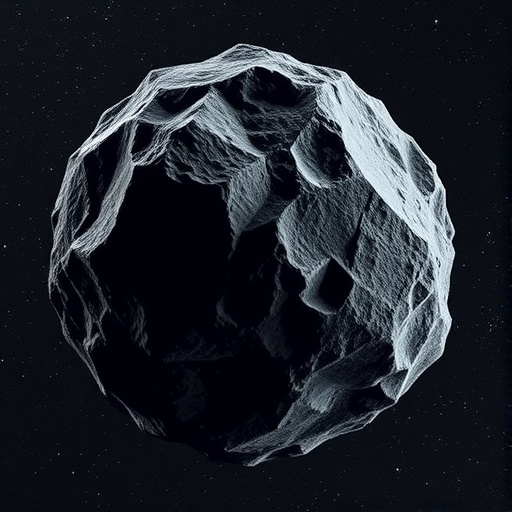
In a startling revelation from NASA’s celebrated OSIRIS-REx mission, its target—asteroid Bennu—has defied prior expectations, presenting a surface marked by rugged, jagged terrain rather than the smooth expanses once predicted by Earth-based observations. When OSIRIS-REx arrived in 2018, scientists anticipated vast regions blanketed by fine, easily collectible regolith. Instead, they encountered a world predominantly composed of large boulders, confounding earlier thermal measurements and seismic analyses. This discovery forced the scientific community to reconsider longstanding assumptions about asteroid surface compositions and thermal behaviors.
Prior thermal observations conducted by NASA’s Spitzer Space Telescope in 2007 had indicated Bennu exhibited low thermal inertia, a property suggesting rapid surface temperature fluctuations akin to a sandy beach on Earth. Low thermal inertia typically implies a surface that heats up quickly during sunlight exposure and cools just as rapidly once in shadow. However, this was seemingly at odds with the boulder-strewn landscape OSIRIS-REx documented. Boulders, with their presumably dense, concrete-like structure, would theoretically retain and dissipate heat more slowly, maintaining warmth further into the night. This contradiction ignited a quest to understand the true physical nature of Bennu’s surface materials.
Analyses spearheaded by Andrew Ryan’s team at the University of Arizona’s Lunar and Planetary Laboratory began unraveling the mystery once samples painstakingly collected by OSIRIS-REx were returned to Earth. Employing an array of sophisticated laboratory techniques, researchers meticulously examined microscopic particles from Bennu’s surface, aiming to reconcile the thermophysical discrepancies. Their investigations revealed that while Bennu’s boulders are indeed porous, allowing for some degree of heat loss, this factor alone could not account for the low thermal inertia measured remotely.
The breakthrough came with the observation that many of these rocks were pervaded by intricate networks of microscopic cracks. These fissures introduced additional pathways for heat to escape, dramatically altering thermal behavior beyond what simple porosity would suggest. To rigorously assess this hypothesis, a collaborative effort involving Japanese researchers from Nagoya University applied lock-in thermography—a laser-based technique that provides precise measurements of how heat propagates through minuscule sample areas. This method revealed that heat diffusion through the cracked samples was significantly different than originally modeled, providing a new dimension to understanding asteroid surface thermodynamics.
Intriguingly, laboratory thermal inertia measurements obtained from the Bennu samples exhibited consistently higher values than those recorded in situ by OSIRIS-REx instruments. This discordance was reminiscent of findings in the Hayabusa-2 mission, JAXA’s counterpart to OSIRIS-REx, which also observed discrepancies between sample-based and remote sensing thermal properties. This pattern suggested that the transition from minuscule laboratory samples to full-scale boulders was non-trivial, necessitating a method to effectively upscale thermal property measurements.
NASA’s Johnson Space Center played a pivotal role in bridging this gap by utilizing airtight glove boxes to prevent terrestrial contamination and preserve sample integrity throughout analysis. The samples were placed within nitrogen-filled containers, shielding them during transport to X-ray computed tomography (XCT) facilities. This non-destructive imaging allowed scientists to create detailed three-dimensional maps of the samples’ interior architecture, enabling unprecedented visualization of fracture networks and pore spaces within the rock.
XCT scanning technology, central to this effort, utilizes penetrating X-rays to construct volumetric images of the sample’s interior without physically altering or damaging the specimen. The resulting 3D digital models provide invaluable insight into both external shapes and subtle internal features, thereby supplying critical data for advanced computational simulations. These simulations, focusing on heat flow and thermal inertia, were then scaled from the particle level to boulder-sized constructs to directly compare with spacecraft observations.
The computational results demonstrated a remarkable alignment with OSIRIS-REx’s thermal inertia data when fracture networks were accounted for, validating the cracked-boulder hypothesis as the missing link in Bennu’s thermal behavior puzzle. Contrary to earlier beliefs that Bennu’s surface material might be fluffy or spongy, the findings underscored a complex interplay of porosity and fissuring that governs heat transfer on the asteroid. This nuanced understanding illuminates the delicate balance between asteroid surface geology and its thermal signature observable from distant instruments.
The implications of this research extend far beyond Bennu itself. Ron Ballouz from Johns Hopkins University Applied Physics Laboratory emphasized that these insights provide a critical calibration for interpreting thermal data from telescopes, enabling more accurate inferences about surface properties of other celestial bodies. This fusion of laboratory sample analysis with remote sensing data marks a pivotal step in planetary science, enhancing our ability to read the stories encoded in asteroid surfaces across the solar system.
Furthermore, the study’s approach of preserving sample integrity through strict contamination protocols and employing cutting-edge imaging technology sets a new standard for extraterrestrial material examination. The integration of multidisciplinary techniques—from laser thermography to computed tomography—exemplifies how modern planetary science harnesses diverse tools to solve complex puzzles. This research not only aids in scientific comprehension but also informs future asteroid exploration and potential resource utilization missions.
As we delve deeper into understanding asteroids like Bennu, this convergence of remote spacecraft observations and precise laboratory analyses heralds a new era of planetary exploration. The revelation that extensive cracking within asteroid boulders significantly influences thermal properties reshapes our interpretation of the regolith environment, surface evolution, and mechanical behavior of these primordial bodies. Ultimately, such knowledge enriches preparation strategies for asteroid sample return missions, planetary defense considerations, and the broader quest to unravel the solar system’s formation history.
The study published in Nature Communications on March 17, 2026, confirms how the initially unexpected jaggedness and cracked nature of Bennu’s surface materials explain the asteroid’s unusual thermal characteristics, providing a powerful example of how direct sample analysis can revolutionize astrophysical understanding. By dissecting these extraterrestrial rocks in our laboratories with unprecedented clarity, we are unlocking secrets that were once obscured in the shadows of space, bringing the mysteries of the early solar system to light in vivid detail.
Subject of Research: Thermal Properties and Surface Structure of Asteroid Bennu
Article Title: Low thermal inertia of carbonaceous asteroid Bennu driven by cracks observed in returned samples
News Publication Date: March 17, 2026
Web References:
DOI: 10.1038/s41467-026-68505-1
Image Credits: NASA/Scott Eckley
Keywords
Asteroid Bennu, OSIRIS-REx, thermal inertia, crack networks, porosity, X-ray computed tomography, lock-in thermography, planetary science, sample return mission, surface geology, heat flow modeling, extraterrestrial materials


