

Wednesday, November 11, 2026
Science
No Result
View All Result
  • Login
  • HOME
  • SCIENCE NEWS
  • CONTACT US
  • HOME
  • SCIENCE NEWS
  • CONTACT US
No Result
View All Result
Scienmag
No Result
View All Result
Home Science News Biotechnology

Nano-Hypericin Therapy Reduces S. mutans Viability

November 9, 2026
in Biology, Biotechnology
Gregory Coleman
By Gregory Coleman Scienmag Editorial Profile - Synthetic Biology
Reading Time: 2 mins read
0
Nano-Hypericin Therapy Reduces S. mutans Viability

Nano-Hypericin Therapy Reduces S. mutans Viability

65
SHARES
587
VIEWS
Share on FacebookShare on Twitter
ADVERTISEMENT

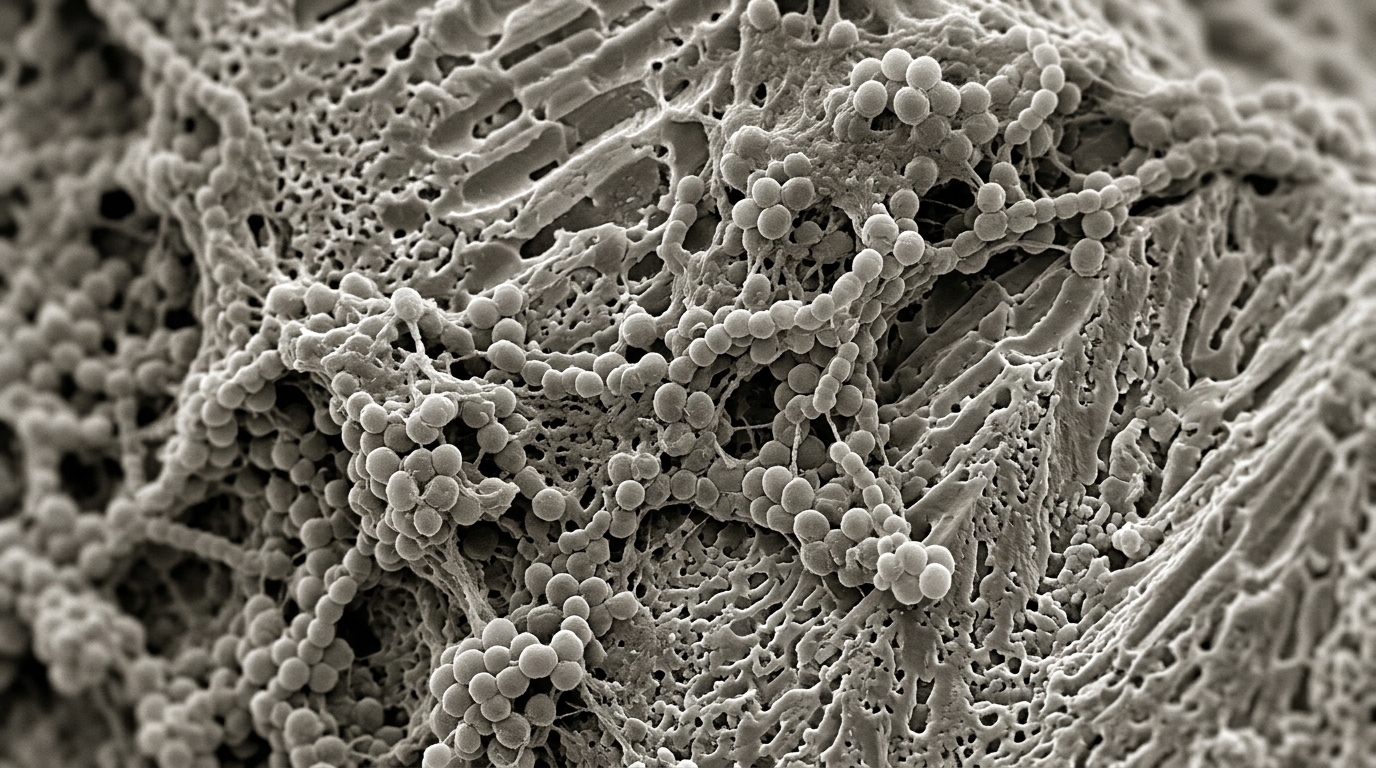
Researchers evaluated a combined antimicrobial strategy targeting Streptococcus mutans, a major pathogen responsible for dental caries. The study, published in AMB Express, investigated the antimicrobial and anti-virulence potential of nano-hypericin-mediated antimicrobial photodynamic therapy combined with a postbiotic derived from Lactobacillus casei. This approach aims to address the growing challenge of antibiotic resistance by offering a non-antibiotic alternative for modulating cariogenic bacterial pathogenicity under in vitro conditions.

The experimental design involved the synthesis and characterization of nano-hypericin, referred to as nHyp. Using transmission electron microscopy, UV-Vis spectroscopy, and dynamic light scattering, the team confirmed that the nanoparticles were quasi-spherical with an average size of approximately 47 nanometers. Concurrently, the Lactobacillus casei-derived postbiotic, designated PSLC, was purified via acid precipitation. Chemical profiling through gas chromatography-mass spectrometry revealed that PSLC contains a diverse mixture of diketopiperazines, fatty acids, hydrocarbons, and phenolic compounds.

Planktonic Streptococcus mutans were treated with nHyp at concentrations ranging from 1.9 to 1000 micrograms per milliliter. These treatments were applied with or without blue laser irradiation at a wavelength of 450 plus or minus 5 nanometers for durations between 1 and 5 minutes.

Bacterial viability was measured by quantifying colony forming units per milliliter, while the expression of the gtfB gene was analyzed using quantitative reverse transcription polymerase chain reaction. The gtfB gene is relevant to glucan synthesis, a process critical for biofilm formation. By measuring both viability and gene expression, the study provided a comprehensive view of how the treatments affected bacterial survival and virulence factors.

The results demonstrated that nHyp-mediated antimicrobial photodynamic therapy induced dose- and time-dependent reductions in bacterial viability. The maximum reduction in viability observed with this therapy alone was up to 81 percent. When the postbiotic PSLC was added to the treatment regimen, the antimicrobial effect was further enhanced, achieving a maximum reduction in viability of up to 90.5 percent.

Regarding anti-virulence effects, sub-lethal antimicrobial photodynamic therapy using a concentration of 15.6 micrograms per milliliter of nHyp and a 2-minute irradiation period downregulated gtfB expression by 4.25-fold. When this sub-lethal treatment was combined with PSLC, the suppression of gtfB expression increased to 7.86-fold. This significant downregulation suggests that the combination therapy effectively inhibits glucan synthesis, thereby potentially reducing the ability of S. mutans to form biofilms.

The study highlights the promise of a dual-mechanism, antibiotic-free approach to managing dental caries. The findings are based on in vitro conditions, meaning that the results reflect laboratory observations rather than clinical outcomes in human patients.

As antibiotic resistance continues to pose a threat to public health, the development of non-antibiotic strategies is essential.

Subject of Research: In vitro evaluation of nano-hypericin photodynamic therapy and postbiotic effects on Streptococcus mutans

Article Title: Combined nano-hypericin antimicrobial photodynamic therapy and postbiotic on Streptococcus mutans

Article References: Ghasemi, N., Pourhajibagher, M., Azizi, A., & Bahador, A. (2026). Combined nano-hypericin antimicrobial photodynamic therapy and postbiotic on Streptococcus mutans. AMB Express, 16(1), Article 105. https://doi.org/10.1186/s13568-026-02097-3

Image Credits: AI Generated

DOI: 10.1186/s13568-026-02097-3

Keywords: Streptococcus mutans, Antimicrobial photodynamic therapy, Nano-hypericin, Postbiotic, Dental caries, gtfB expression, In vitro study, AMB Express, Combined, antimicrobial, photodynamic, therapy

Cite Scienmag News

Gregory Coleman. (November 9, 2026). Nano-Hypericin Therapy Reduces S. mutans Viability. Scienmag. https://scienmag.com/nano-hypericin-therapy-reduces-s-mutans-viability/

Gregory Coleman. "Nano-Hypericin Therapy Reduces S. mutans Viability." Scienmag, 9 November 2026, https://scienmag.com/nano-hypericin-therapy-reduces-s-mutans-viability/. Accessed 11 November 2026.

Gregory Coleman. "Nano-Hypericin Therapy Reduces S. mutans Viability." Scienmag. November 9, 2026. https://scienmag.com/nano-hypericin-therapy-reduces-s-mutans-viability/

Tags: AMB Expressantimicrobialantimicrobial photodynamic therapycombineddental cariesgtfB expressionin vitro studyNano-hypericinPhotodynamicpostbioticStreptococcus mutansTherapy
Share26Tweet16
Previous Post

Xenopus Blastocoel Roof Alone Builds Complete Dorsal Structures During Chordate Gastrulation

Next Post

Study Finds Pakistan Wildfire Risk Stems Largely From Social Vulnerability

Related Posts

TFAP2A Enables Gallbladder Cancer Survival Under Bile Acid Stress via GOLIM4
Biology

TFAP2A Enables Gallbladder Cancer Survival Under Bile Acid Stress via GOLIM4

November 11, 2026
Circular RNA circLAMC1 suppresses non-small cell lung cancer progression in preclinical models
Biology

Circular RNA circLAMC1 suppresses non-small cell lung cancer progression in preclinical models

November 11, 2026
Prenatal Cannabidiol Exposure Disrupts Testicular Germ Cell Development in Mice
Biology

Prenatal Cannabidiol Exposure Disrupts Testicular Germ Cell Development in Mice

November 11, 2026
Microglia Dynamically Shift Functional States Rather Than Following Rigid Programs, Review Finds
Biology

Microglia Dynamically Shift Functional States Rather Than Following Rigid Programs, Review Finds

November 11, 2026
Geraniol Nanoemulsion Reduces Panax notoginseng Root Rot Severity by 56 Percent
Biology

Geraniol Nanoemulsion Reduces Panax notoginseng Root Rot Severity by 56 Percent

November 11, 2026
Abattoir Study in Ghana Identifies Caprine Pneumonia Patterns in Slaughtered Goats
Biology

Abattoir Study in Ghana Identifies Caprine Pneumonia Patterns in Slaughtered Goats

November 11, 2026
Next Post
Study Finds Pakistan Wildfire Risk Stems Largely From Social Vulnerability

Study Finds Pakistan Wildfire Risk Stems Largely From Social Vulnerability

  • Mothers who receive childcare support from maternal grandparents show more optimized

    Mothers who receive childcare support from maternal grandparents show more parental warmth, finds NTU Singapore study

    27656 shares
    Share 11059 Tweet 6912
  • University of Seville Breaks 120-Year-Old Mystery, Revises a Key Einstein Concept

    1061 shares
    Share 424 Tweet 265
  • Bee body mass, pathogens and local climate influence heat tolerance

    682 shares
    Share 273 Tweet 171
  • Researchers record first-ever images and data of a shark experiencing a boat strike

    546 shares
    Share 218 Tweet 137
  • Groundbreaking Clinical Trial Reveals Lubiprostone Enhances Kidney Function

    531 shares
    Share 212 Tweet 133
Science

Embark on a thrilling journey of discovery with Scienmag.com—your ultimate source for cutting-edge breakthroughs. Immerse yourself in a world where curiosity knows no limits and tomorrow’s possibilities become today’s reality!

RECENT NEWS

  • Power-Law Fluid Model Yields Highest Velocity in Simulated Stenosed Arteries
  • Plant-Synthesized Zinc and Cerium Nanoparticles Show Distinct Antibacterial and Antioxidant Profiles
  • Combining Lipid Indices and Frailty Scores Improves Cardiovascular Disease Risk Prediction
  • Metabolic Biomarkers Correlate with T Cell Senescence and Frailty in Review

Categories

  • Agriculture
  • Anthropology
  • Archaeology
  • Athmospheric
  • Biology
  • Biotechnology
  • Blog
  • Bussines
  • Cancer
  • Chemistry
  • Climate
  • Earth Science
  • Editorial Policy
  • Marine
  • Mathematics
  • Medicine
  • Pediatry
  • Policy
  • Psychology & Psychiatry
  • Science Education
  • Science News
  • Social Science
  • Space
  • Technology and Engineering

Subscribe to Blog via Email

Enter your email address to subscribe to this blog and receive notifications of new posts by email.

Join 5,150 other subscribers

© 2026 Scienmag - Science Magazine

Welcome Back!

Login to your account below

Forgotten Password?

Retrieve your password

Please enter your username or email address to reset your password.

Log In
No Result
View All Result
  • HOME
  • SCIENCE NEWS
  • CONTACT US

© 2026 Scienmag - Science Magazine

Discover more from Science

Subscribe now to keep reading and get access to the full archive.

Continue reading

