


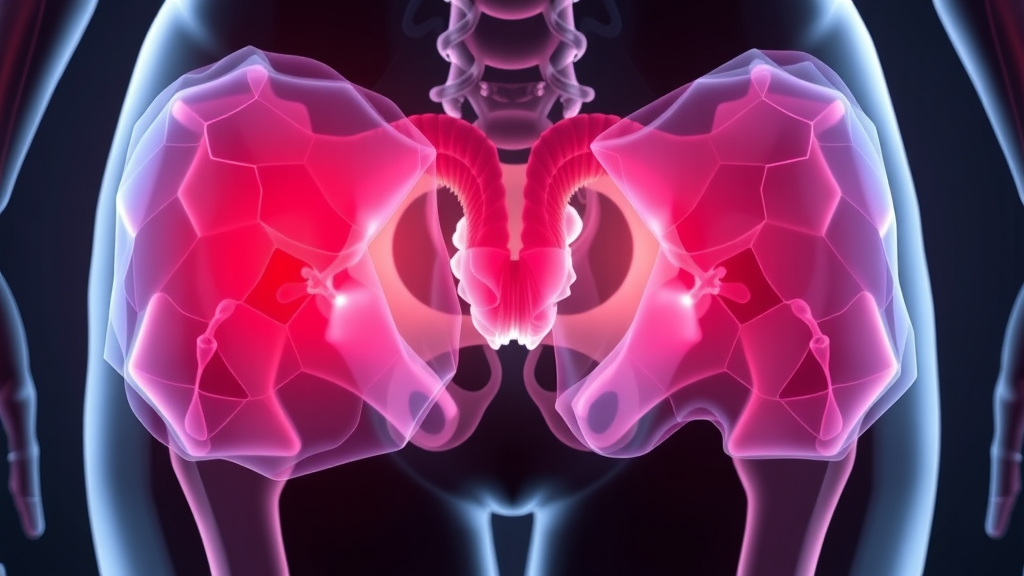
Pelvic organ prolapse is one of the most common yet least discussed conditions in women’s health, affecting roughly half of all women who have given birth and nearly a quarter of elderly women. The disorder arises when pelvic floor muscles and connective tissues progressively degenerate, allowing the bladder, uterus, or rectum to descend along the vaginal axis and produce urinary, defecatory, and sexual dysfunction. Childbirth injury, aging, obesity, and sustained mechanical loading all contribute to the breakdown of collagen architecture and the loss of tensile strength in pelvic fascia. As life expectancy rises, the demand for surgical repair is expected to climb sharply, placing growing psychological and economic strain on patients and health systems alike.
The current standard of care relies on polypropylene mesh implants, and here the clinical record is troubling. Polypropylene is rigid, hydrophobic, and non-degradable, creating profound biological and mechanical mismatches with soft pelvic tissues. While the mesh provides short-term passive support, its stiffness imposes persistent mechanical overstimulation, and its water-repelling surface promotes nonspecific protein adsorption and inflammatory cell adhesion. The result is often chronic inflammation, foreign body reactions, fibrotic encapsulation, and ultimately mesh curling, displacement, exposure, or erosion. A team of researchers in China, led by Xinting Yang and Quan Lin of Jilin University, has now proposed a radically different approach: a degradable, soft, electrically active scaffold that does not merely hold tissue in place but actively instructs the body to rebuild it. Their work, published in Materials Today Bio, describes an oriented hydrogel designed to mimic the parallel-aligned architecture of skeletal muscle fibers.
The material, named PGZA, is assembled from four biocompatible components: poly(vinyl alcohol), glycyrrhizic acid, zinc ions, and an aniline tetramer grafted onto oxidized alginate. Each ingredient plays a distinct role. Glycyrrhizic acid and zinc ions self-assemble into a first crosslinked network that stabilizes the gel, while simultaneously acting as a synergistic antioxidant system that scavenges reactive oxygen species, molecules known to drive inflammation and push immune cells toward a destructive pro-inflammatory state. The aniline tetramer component supplies electroactivity, enabling electron transfer through conjugated structures and pi-pi interactions. Critically, the entire network is frozen directionally against a chilled brass block, so that ice crystals growing in one direction organize the polymer chains into parallel aligned microchannels, just as muscle fibers align along lines of force in living tissue.
The structural order is not merely aesthetic. Small-angle X-ray scattering revealed a Hermans orientation factor of 0.37 for the directionally frozen gel, compared with 0.01 for a randomly structured control, confirming a genuinely aligned microstructure. That alignment translates directly into performance. In the parallel direction, the optimized PGZA2 formulation, containing 2 milligrams per milliliter of the aniline-grafted alginate, withstood tensile stress of about 229 kilopascals, nearly twice the 122 kilopascals tolerated by the random network version. Its Young’s modulus reached 65 kilopascals with toughness of 181 kilojoules per cubic meter, roughly double the random control in both measures. Conductivity along the alignment direction measured 0.32 siemens per meter, about twenty percent higher than the isotropic version, because ordered conductive chains propagate electrical signals more efficiently. The gel could be stretched to 150 percent and compressed to 60 percent of its original dimensions without breaking, and it retained its mechanical properties after a week in body-temperature fluid, degrading gradually to about 60 percent mass loss over twelve weeks, a timeline that could allow newly formed tissue to assume load-bearing duties as the scaffold disappears.
Electrical stimulation itself has an established role in pelvic medicine, activating signaling cascades such as PI3K/AKT and MAPK/ERK that promote cell migration, differentiation, and extracellular matrix synthesis, and clinical studies have already explored intravaginal stimulation for urinary incontinence. The Jilin team reasoned that a scaffold capable of transmitting such signals along the body’s natural fiber axes would amplify these benefits. In laboratory cultures of fibroblasts, cells grown on the oriented PGZA2 hydrogel showed significantly higher viability by day seven than cells on control materials, and adding electrical stimulation pushed viability higher still. A scratch assay demonstrated the same pattern for migration: the hydrogel accelerated cell movement into wounded areas, and stimulation enhanced the effect further. Under the microscope, cells on the oriented gel aligned preferentially with the microchannels, and with electrical stimulation the alignment became strikingly more pronounced, suggesting that the scaffold and the external field act together as compass and road for migrating tissue-building cells.
The hydrogel also attacked a key biochemical enemy of healing: oxidative stress. Mechanical injury to the pelvic floor triggers accumulation of reactive oxygen species, which inflame the local environment and bias macrophages, the immune system’s tissue-resident first responders, toward the M1 pro-inflammatory phenotype. Using standard DPPH and ABTS radical scavenging assays, the researchers showed that PGZA2 eliminated 66 percent of DPPH radicals and 82 percent of ABTS radicals, far outperforming plain poly(vinyl alcohol) gels. Intracellular reactive oxygen levels in treated cells dropped significantly, and in vitro vascularization assays revealed that the hydrogel, especially with electrical stimulation, promoted the formation of blood vessel-like structures, a crucial capability because regenerating tissue requires a reliable supply of oxygen and nutrients.
To test the material in a living body, the team used a rat model of full-thickness abdominal wall muscle defect, chosen as a surrogate for pelvic floor repair because both tissues are collagen-rich, load-bearing connective structures that heal through similar inflammatory and remodeling phases. Female rats received a one-centimeter circular defect and were divided into untreated controls, and groups receiving the base hydrogel without the electroactive component, the full PGZA2 hydrogel, or PGZA2 plus electrical stimulation at 15 hertz. Transcriptome sequencing of the repaired tissue told a striking story at the level of genes. Compared with controls, 385 genes were upregulated and 266 downregulated, with enrichment in innate immune response pathways, TNF signaling, and IL-17 signaling. Most tellingly, Ifit3, a marker of inflammatory M1 macrophages, was significantly downregulated, while Lgals9, a marker of reparative M2 macrophages, was significantly upregulated, indicating that the treatment had shifted the local immune environment from a state of chronic aggression toward one of resolution and reconstruction.
Histology confirmed the molecular signals. By six weeks after surgery, hematoxylin and eosin staining showed that tissue from the PGZA2 plus stimulation group was the most compact and organized, with the fewest inflammatory infiltrates. Elastica Van Gieson staining revealed the densest network of mature elastic fibers in that group, and Masson’s trichrome staining showed the greatest amount of well-structured collagen, in contrast to the disorganized early fibrosis seen in lesser formulations. Immunofluorescence sealed the case: TNF-alpha, the signature pro-inflammatory cytokine, was most strongly suppressed in the combined treatment group, while TGF-beta, a driver of anti-inflammatory repair and matrix remodeling, reached its highest expression there. The reciprocal cytokine pattern, together with the macrophage marker shift, indicates that the scaffold converts a hostile inflammatory wound bed into a pro-regenerative one.
The authors are candid about the road ahead. The abdominal wall model, while relevant, is not the pelvic cavity, and the long-term fixation stability, synchronization of degradation with tissue ingrowth, and functional restoration in anatomically accurate models remain to be demonstrated. Clinically, they envision the hydrogel first serving as an adjunct at mesh-tissue interfaces during procedures such as laparoscopic lateral suspension, providing compliant early support and calming inflammation while permanent constructs maintain suspension, before full replacement of mesh can be considered. They also sketch a wireless future in which capacitive or inductive coupling, or piezoelectric and triboelectric materials embedded in the gel, could harvest energy from body movement or ultrasound to deliver electrical cues without implanted batteries. If those steps succeed, the muscle-mimicking hydrogel would represent a genuine paradigm shift, moving pelvic floor repair away from passive structural substitution and toward active biological guidance, in which the implant’s job is to make itself unnecessary.
Subject of Research: An oriented, conductive, immunomodulatory hydrogel designed to treat pelvic organ prolapse by regenerating pelvic floor connective tissue
Article Title: Oriented hydrogel biomimicking muscle fibers to treat pelvic organ prolapse via integrated immunomodulation and electrical stimulation
Article References: Yang, X., Li, H., Feng, Y., Wei, C., Guo, Y., Yang, B., Xu, T., & Lin, Q. (2026). Oriented hydrogel biomimicking muscle fibers to treat pelvic organ prolapse via integrated immunomodulation and electrical stimulation. Materials Today Bio, 41, Article 103658. https://doi.org/10.1016/j.mtbio.2026.103658
Image Credits: AI Generated
DOI: 10.1016/j.mtbio.2026.103658
Keywords: pelvic organ prolapse, hydrogel, tissue engineering, electrical stimulation, immunomodulation, biomaterials, collagen remodeling, regenerative medicine, macrophage polarization, polypropylene mesh, glycyrrhizic acid, reactive oxygen species
Cite Scienmag News
Denise Maddox. (September 22, 2026). Muscle-Mimicking Conductive Hydrogel Offers New Hope for Pelvic Organ Prolapse Repair. Scienmag. https://scienmag.com/muscle-mimicking-conductive-hydrogel-offers-new-hope-for-pelvic-organ-prolapse-repair/
Denise Maddox. "Muscle-Mimicking Conductive Hydrogel Offers New Hope for Pelvic Organ Prolapse Repair." Scienmag, 22 September 2026, https://scienmag.com/muscle-mimicking-conductive-hydrogel-offers-new-hope-for-pelvic-organ-prolapse-repair/. Accessed 4 October 2026.
Denise Maddox. "Muscle-Mimicking Conductive Hydrogel Offers New Hope for Pelvic Organ Prolapse Repair." Scienmag. September 22, 2026. https://scienmag.com/muscle-mimicking-conductive-hydrogel-offers-new-hope-for-pelvic-organ-prolapse-repair/


