


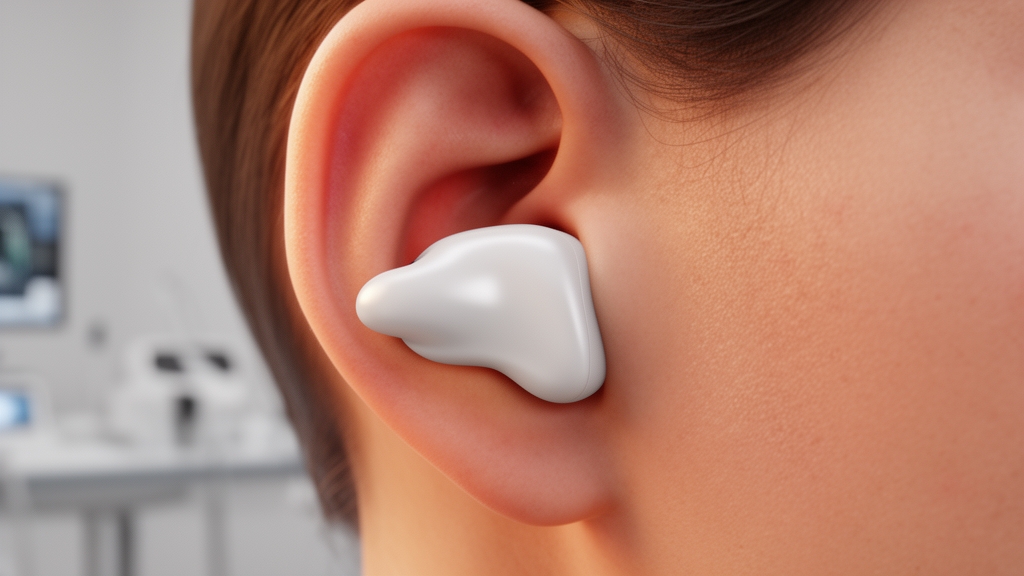
Biomedical engineers and clinical neuroscientists at Purdue University and Indiana University School of Medicine have engineered an integrated neuromodulation system, designated TEMPO-taVNS, designed to systematically explore, evaluate, and optimize thermal, mechanical, and electrical stimulation of sensory pathways linked to the auricular branch of the vagus nerve. Transcutaneous auricular vagus nerve stimulation has traditionally relied almost exclusively on electrical current delivered to the outer ear, an approach constrained by individual discomfort thresholds and characterized by inconsistent physiological responses across published trials. The newly reported framework, described as Thermal, Electrical, and Mechanical Parameter Optimization for taVNS, addresses these long-standing translational challenges by pairing custom stimulating hardware with synchronized multi-organ physiological monitoring, immersive virtual reality behavioral assessments, and a multi-objective machine learning optimization pipeline. Published as a methodological investigation in Frontiers in Neuroscience, the work details the engineering verification of the platform along with an initial proof-of-concept human deployment that establishes the technical feasibility of individualizing multi-sensory auricular neurostimulation.
The therapeutic rationale underlying transcutaneous auricular neuromodulation centers on accessing the afferent projections of the auricular branch of the vagus nerve, which uniquely innervates the cymba concha and exhibits overlapping cutaneous distributions with the auriculotemporal and greater auricular nerves across other ear regions. Afferent fibers from this branch project into the jugular ganglion and synapse directly within the brainstem nucleus tractus solitarius, the primary sensory integration center for the vagal system, which subsequently communicates with the locus coeruleus and higher cortical networks. Conventional electrical stimulation protocols predominantly recruit large-diameter myelinated A-beta sensory fibers because current magnitude is severely restricted by cutaneous pain thresholds, leaving unmyelinated C-fibers and thinly myelinated A-delta fibers largely unengaged even though A-beta axons represent less than one-fifth of the total nerve fiber population in the human auricular branch. Because prior clinical literature reveals substantial heterogeneity, including meta-analyses where nearly half of evaluated individuals exhibited no detectable cardiac modulation following electrical stimulation, non-electrical modalities such as controlled vibrotactile oscillation and thermal heating or cooling provide an unexplored pathway to recruit broader sensory afferent sub-populations without inducing intolerable cutaneous discomfort.
To overcome the technological limitations of off-the-shelf laboratory devices, the investigators fabricated dedicated stimulating apparatus specifically tailored to the unique anatomy of the human external ear. For mechanical neuromodulation, the engineers housed an eight-millimeter miniature vibration motor inside a custom earpiece modeled in computer-aided design software and fabricated out of polylactic acid filament using fused deposition modeling with a zero-point-four-millimeter nozzle. The mechanical actuator is driven by an external microcontroller circuit that modulates motor supply through a power metal-oxide-semiconductor field-effect transistor, implementing two distinct operating regimes. Continuous voltage regulation enables smooth operating frequencies from sixty hertz up to a maximum dominant frequency of two hundred eighty-eight point seven hertz, while low-frequency regimes at ten and twenty hertz are delivered using software-gated pulse trains at one point seven six volts. Benchtop verification using a rigidly coupled triple-axis analog accelerometer sampled at ten kilohertz confirmed stable, predictable frequency scaling and acceleration responses across repeated trials, establishing the electromechanical reliability of the custom earbud hardware.
Thermal stimulation required the engineering of a specialized thermoelectric assembly capable of delivering bidirectionally regulated heating and cooling to the cymba concha with high spatial precision. The thermal transducer incorporates a fifteen-by-fifteen-millimeter Peltier thermoelectric cell interfaced with a custom six-millimeter copper contact tip and an active liquid cooling loop connected to a standardized one-hundred-twenty-millimeter central processing unit radiator. Transducer positioning is governed by a micro-positioning mechanical fixture providing plus-or-minus one millimeter adjustments along the vertical axis, ensuring standardized, repeatable tissue contact. To guarantee human participant safety during experimental sessions, the thermoelectric controller is powered through a medical-grade supply that provides two-fold means of patient protection isolation and enforces strict operational limits between zero and sixty degrees Celsius and a four-ampere electrical ceiling.
Dynamic benchtop calibration of the thermal transducer demonstrated high precision and stable steady-state thermal regulation across both cooling and warming regimes. Across a wide span of target temperatures relative to ambient conditions, the relationship between commanded setpoints and measured steady-state contact temperatures remained near linear, achieving an overall root-mean-square error of zero point four two three degrees Celsius. The mean absolute deviation during thirty-second thermal hold periods remained below zero point nine six degrees Celsius, with between-trial coefficients of variation averaging three point one five percent and an absolute temperature variability standard deviation of zero point zero three five degrees Celsius. Dynamic thermal ramp testing demonstrated that overshoot was minimal at zero point three one degrees Celsius for temperatures at or below room temperature, but increased to an average of two point six seven degrees Celsius during heating steps. Consequently, safety software incorporates these empirical overshoot margins so that commanded heating setpoints never encroach within two degrees Celsius of a participant’s hot pain threshold.
Synchronized multi-channel physiological instrumentation forms the core diagnostic architecture of the TEMPO-taVNS testing environment, capturing simultaneous cardiovascular, gastrointestinal, sympathetic, and neurovascular indices. Study participants resting in a supine position are tethered to a Lead I electrocardiogram to derive heart rate and the root-mean-square of successive differences, a short-term heart rate variability metric reflecting vagal parasympathetic modulation. Continuous beat-to-beat arterial blood pressure is recorded through dual finger and wrist cuffs calibrated against baseline brachial blood pressure measurements. Gastric electrical slow-wave activity is monitored through three-lead cutaneous electrogastrography using a zero-point-fifteen-hertz lowpass filter to extract root-mean-square wave amplitude. Tonic sympathetic arousal is quantified via galvanic skin conductance recorded from the palmar phalanges of the right hand. Central auditory cortical reactivity is indexed using two-channel electroencephalography at Cz and Pz to capture N1-P2 peak-to-peak evoked potentials, supplemented in subsequent multi-block sessions by an eight-optode functional near-infrared spectroscopy cap covering right temporal and parietal cortical areas.
Human-centered subjective feedback is seamlessly embedded into the experimental workflow through an augmented and virtual reality headset that simultaneously tracks autonomic pupil diameter at two hundred hertz. While immersed in a standardized virtual reality visual environment, participants manipulate a handheld joystick controller to register perceived sensation and comfort without disrupting concurrent physiological recordings. Throughout each thirty-second stimulation epoch, a continuous visual comfort slider ranging from very uncomfortable to very comfortable allows participants to log real-time changes in comfort dynamics. Following post-stimulation recovery periods, participants complete an ordinal sensory magnitude rating scale followed by an untimed qualitative somatosensory descriptor survey adapted from peripheral nerve interface studies, allowing them to select specific qualitative sensations or report an absence of sensation. Standardized auditory tone probes presented through insert earphones provide fixed-intensity neural challenges, ensuring that evoked electrophysiological responses remain directly comparable across active stimulation levels and sham control blocks.
To transform high-dimensional physiological and subjective time series into actionable neuromodulation protocols, the researchers developed an automated multi-objective machine learning analysis pipeline. Within each experimental block, physiological features are extracted across thirty-second pre-stimulation baselines and matched thirty-second stimulation intervals, generating baseline-corrected change scores across eight distinct target outcomes. The optimization objective incorporates decreases in heart rate, systolic blood pressure, and skin conductance level alongside concurrent increases in heart rate variability, electrogastrographic slow-wave amplitude, auditory evoked N1-P2 cortical amplitude, pupil diameter, and subjective comfort scores. Because optimizing single endpoints in isolation often produces conflicting physiological consequences, the analysis fits Gaussian process regression models with squared-exponential kernels to the empirical response data, generating continuous frequency-response surfaces without numerical extrapolation. A multi-objective genetic algorithm then evaluates these response surfaces to construct a non-dominated Pareto front, selecting candidate settings using a normalized Euclidean distance-to-ideal calculation.
Feasibility of the complete methodology was confirmed through an intensive proof-of-concept experimental session conducted in a single human volunteer evaluating nine distinct cymba concha vibrotactile stimulation frequencies ranging from zero to two hundred twenty hertz. Synchronized digital event timestamps verified exact temporal alignment across all hardware datastreams, including vibration delivery, acoustic probe presentations, continuous hemodynamic tracking, and virtual reality survey submissions. In this individual participant, the Gaussian process regression models mapped divergent physiological trajectories across the frequency spectrum, and the multi-objective Pareto optimization framework converged on a continuous recommended vibration frequency of sixty-two point nine nine hertz. When restricted to the set of discrete frequencies tested experimentally, the pipeline selected sixty hertz as the parameter setting that achieved the best mathematical balance between cardiovascular modulation, autonomic tone, cortical evoked responsiveness, and self-reported participant comfort.
The study authors emphasize that this single-participant demonstration serves as a proof of methodological capability and engineering feasibility rather than clinical evidence of therapeutic efficacy. While the computational framework successfully balanced competing physiological and behavioral metrics, the identified sixty-hertz recommendation was derived within a single experimental sitting and requires replication in adequately powered cohorts to establish inter-session stability and target engagement reliability. Furthermore, because cutaneous innervation of the human pinna involves complex overlapping arborizations from the vagus, trigeminal, and cervical spinal nerves, peripheral stimulation delivered at the cymba concha cannot be assumed to activate the auricular branch of the vagus nerve in complete isolation. Prior electrophysiological literature indicates that adjacent trigeminal afferents can elicit convergent trigeminocardiac reflex responses, meaning that observed heart rate and blood pressure decreases must be interpreted as generalized auricular autonomic modulation consistent with vagal pathway recruitment rather than definitive proof of selective vagus excitation.
Additional operational considerations highlight both the discovery-oriented strengths and translational boundaries of the current TEMPO-taVNS architecture. In the mechanical domain, motor operating speed remains intrinsically coupled to vibration force and acceleration, indicating that biological responses reflect compound mechanical conditions rather than pure frequency variations. The expansive protocol structure, spanning five separate laboratory sessions exceeding an hour each, introduces significant participant burden, although future implementations could scale down recording hardware to target-specific sensors such as single-channel photoplethysmography or focused electroencephalography. Crucially, the platform was developed to characterize acute, immediate physiological reactions and does not evaluate chronic therapeutic phenomena such as neural habituation, cumulative plasticity, or long-term clinical durability.
Subject of Research: Multimodal optimization platform for transcutaneous auricular vagus nerve stimulation
Article Title: TEMPO-taVNS: a multimodal platform optimizing thermal, electrical, and mechanical auricular stimulation
Article References: Wilson, D., Shader, M. J., Steinhubl, S. R., & Ward, M. P. (2026). TEMPO-taVNS: a multimodal platform optimizing thermal, electrical, and mechanical auricular stimulation. Frontiers in Neuroscience, 20, Article 1983186. https://doi.org/10.3389/fnins.2026.1983186
Image Credits: AI Generated
DOI: 10.3389/fnins.2026.1983186
Keywords: taVNS, neuromodulation, vagus nerve, vibrotactile stimulation, thermal stimulation, bioelectronics, Pareto optimization, electrogastrography, TEMPO-taVNS, multimodal, platform, optimizing
Cite Scienmag News
Ophelia Keating. (November 8, 2026). Multimodal Auricular Platform Optimizes Non-Electrical Vagus Nerve Stimulation Parameters. Scienmag. https://scienmag.com/multimodal-auricular-platform-optimizes-non-electrical-vagus-nerve-stimulation-parameters/
Ophelia Keating. "Multimodal Auricular Platform Optimizes Non-Electrical Vagus Nerve Stimulation Parameters." Scienmag, 8 November 2026, https://scienmag.com/multimodal-auricular-platform-optimizes-non-electrical-vagus-nerve-stimulation-parameters/. Accessed 17 November 2026.
Ophelia Keating. "Multimodal Auricular Platform Optimizes Non-Electrical Vagus Nerve Stimulation Parameters." Scienmag. November 8, 2026. https://scienmag.com/multimodal-auricular-platform-optimizes-non-electrical-vagus-nerve-stimulation-parameters/




