

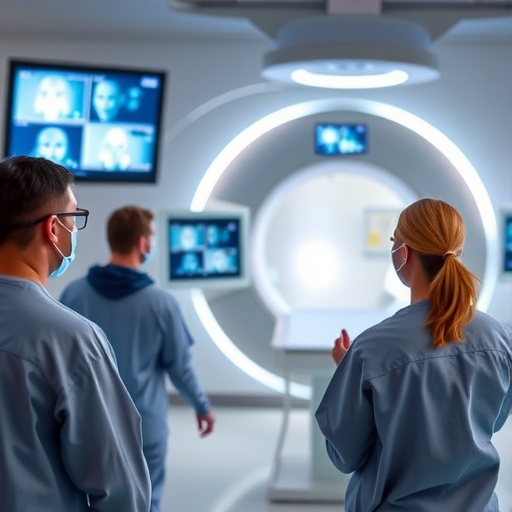
In a groundbreaking study that bridges the gap between nursing education and the rapidly evolving demands of modern operating rooms, researchers have unveiled significant insights into how multimedia-based education enhances nurses’ clinical capabilities, particularly in the crucial field of radiation protection. Conducted by an erudite team consisting of Hemati, Ghanbarzadeh, and Mohebbi, the study meticulously highlights the imperatives of adequate training within the context of the operating room environment, where exposure to radiation poses considerable risks to both healthcare professionals and patients alike.
The research stems from a growing recognition of the necessity for nursing professionals to be well-versed in the dynamics of radiation exposure. Given that operating rooms are becoming increasingly reliant on advanced imaging technologies, the potential for unmonitored radiation exposure is a glaring concern. This study posits that empirical education delivered through multimedia forms can fundamentally transform how nurses comprehend and navigate radiation protection protocols.
Multimedia-based education, defined as methods that harness audio-visual technologies and interactive platforms to convey information, is particularly adept at fostering an engaging learning environment—one that traditional lectures often lack. By utilizing videos, animations, and virtual simulations, this approach enables nurses to not only absorb critical knowledge but also apply it in practical scenarios they will encounter in operating rooms. This interactive element is pivotal, as studies suggest that active learning methods measurably improve retention rates compared to passive instructional techniques.
The randomized controlled study engaged a sample group of nursing professionals, systematically analyzing the outcomes of their educational experiences. Participants were divided into two groups: one group received the conventional training focused on radiation protection, while the other engaged with the multimedia-based curriculum designed by the research team. The outcomes from both groups were rigorously compared, revealing a stark contrast in the clinical capabilities of the nurses following the respective training pathways.
Statistical analysis of the data indicated that nurses exposed to the multimedia training exhibited significantly enhanced understanding and retention of crucial concepts regarding radiation safety. This outcome highlighted not only the immediate effectiveness of multimedia tools in education but also their potential long-term benefits for professional development. The multimedia group demonstrated improved competency in risk assessment, procedural compliance, and patient education surrounding radiation exposure, vastly outpacing their traditionally trained counterparts.
Furthermore, the study emphasizes the importance of ongoing education in the context of healthcare’s evolving landscape. As imaging technology and the complexity of surgical procedures advance, the onus is on medical institutions to ensure that their personnel are not just adequately trained but adept and confident in mitigating risks associated with radiation exposure. The results of this research advocate for a shift in nursing curricula towards models that are both innovative and responsive to the needs of the operating room environment.
The clinical implications of enhanced radiological safety training extend far beyond the operating room, as well-trained nurses play a critical role in shaping institutional protocols that prioritize both patient and staff safety. By fostering an environment where critical knowledge of radiation protection is part of the foundational training, healthcare facilities can mitigate risks and enhance the quality of care delivered to patients.
Moreover, this investigation serves as a call to action for nursing educational institutions and regulatory bodies to critically reevaluate current training methodologies. Traditional training, while developed with good intentions, may not meet the demands posed by modern technologies and their associated risks. The advent of multimedia education provides an opportunity to overhaul these methodologies, resulting in a more prepared and capable nursing workforce.
In light of these findings, it becomes evident that the incorporation of multimedia tools in nursing education is not merely an enhancement; it is an essential evolution in the teaching paradigm. As the healthcare sector grapples with complex challenges, innovative training solutions such as these can bridge gaps in knowledge and practice, leading to improved outcomes in patient safety.
As the medical field continues to embrace technological advancements, the integration of multimedia-based teaching strategies will likely resonate far beyond the confines of nursing education. Lessons learned from this research may spark broader discussions on effective training for all healthcare professionals facing similar challenges in radiation safety and training efficacy.
In conclusion, the study conducted by Hemati, Ghanbarzadeh, and Mohebbi reveals a promising frontier in how healthcare professionals can be educated about critical health and safety issues. The remarkable results underline the potential of multimedia-based education not only to reshape nursing curricula but also to enhance patient safety through vigilant practice in radiation protection. With these findings, the future of nursing education looks not only brighter but also increasingly complex and resourceful.
The health of patients and the safety of healthcare professionals are paramount. By revolutionizing educational practices and prioritizing innovative training resources, the medical community can aspire to not only meet these challenges but exceed them.
Subject of Research: The effect of multimedia-based education on nurses’ clinical capability in radiation protection in operating rooms.
Article Title: The effect of multimedia-based education on nurses’ clinical capability in radiation protection in operating rooms: a randomized controlled study.
Article References:
Hemati, M., Ghanbarzadeh, S. & Mohebbi, Z. The effect of multimedia-based education on nurses’ clinical capability in radiation protection in operating rooms: a randomized controlled study.
BMC Nurs 24, 1479 (2025). https://doi.org/10.1186/s12912-025-04108-3
Image Credits: AI Generated
DOI: https://doi.org/10.1186/s12912-025-04108-3
Keywords: multimedia education, nursing, radiation protection, clinical capability, operating rooms, randomized controlled study.


