

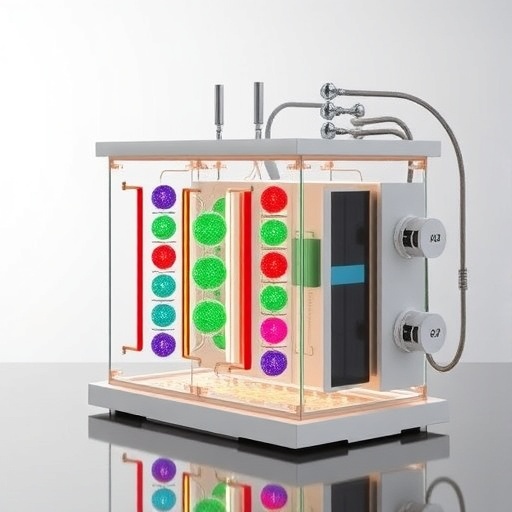
In an era where sustainable energy solutions are increasingly crucial for mitigating climate change, advancements in fuel cell technology are taking center stage. One of the promising innovations in this field is the proton exchange membrane fuel cell (PEMFC), known for its high efficiency and environmentally friendly operation. Researchers are continuously exploring ways to enhance the performance and longevity of PEMFCs, and a recent study published in the journal Ionics presents a comprehensive approach to predicting the state of health of these systems. This research not only advances academic understanding but also offers practical insights that could revolutionize how we utilize fuel cells in various applications.
This groundbreaking study by Min, Liu, and Sheng delves into the intricacies of state of health (SOH) prediction for PEMFCs using multi-scale indicators. The researchers recognized that traditional methods of assessing the health of fuel cells often fall short, primarily due to their inability to capture the complex interactions occurring at various scales within the fuel cell system. To address this gap, they employed a holistic approach that integrates information from both micro-scale mechanisms and macro-scale performance indicators.
Understanding the state of health of PEMFCs is fundamental for optimizing their performance and extending their operational lifespan. As fuel cells are integrated into critical applications like transportation and stationary power generation, reliable SOH prediction becomes paramount. It allows for proactive maintenance and timely interventions, preventing costly downtimes and enhancing the overall efficiency of fuel cells in real-world conditions. The study’s authors emphasized the importance of developing robust methodologies that leverage advanced monitoring techniques.
Utilizing a combination of data-driven algorithms and physical modeling, the researchers focused on extracting relevant indicators that can signal the health status of the fuel cells. By analyzing a wide range of data points, including temperature, pressure, and current density, they were able to establish a predictive model that accounts for both current operating conditions and historical performance data. This dual approach provides a comprehensive view of the fuel cell’s condition and enables predictive maintenance strategies to be implemented more effectively.
The multi-scale indicators identified in the study represent a significant leap forward in the realm of fuel cell diagnostics. By correlating micro-level phenomena, such as ion transport and membrane degradation, with macro-level performance metrics, the researchers were able to create a framework that transcends conventional methods. This innovative approach aligns well with the trends in predictive analytics, indicating a shift towards more intelligent energy systems that learn from their operational history.
A critical aspect of the research was its application to real-world scenarios. The authors conducted extensive experiments to validate their predictive model. By using a variety of test conditions, they ensured that their findings were not only theoretically sound but also applicable under diverse operational settings. This practical validation bolsters confidence among industry stakeholders looking to adopt these advanced methodologies in PEMFC management.
Significantly, the study’s results offer various implications for multiple industries. Industries such as automotive, aerospace, and even consumer electronics—where fuel cells are gaining traction—stand to benefit immensely from the enhanced SOH prediction methodologies. With better predictive capabilities, manufacturers can improve the reliability of their products, thereby increasing consumer trust and market acceptance.
Furthermore, this research aligns seamlessly with global efforts to transition towards cleaner energy sources. With environmental regulations becoming stricter, businesses are eager to adopt technologies that not only comply with regulations but also contribute to sustainability goals. The insights provided in this study empower organizations to adopt a more informed approach to fuel cell deployment, supporting broader environmental initiatives.
Within the context of the evolving energy landscape, the implications of this research extend to policy-makers as well. By understanding the health status of PEMFCs and employing the advanced prediction techniques described in the study, legislative bodies can better devise supportive frameworks that promote the development and adoption of fuel cell technologies. This could be pivotal in facilitating the integration of cleaner energy sources into the existing grid.
In addition to its theoretical and practical contributions, the study raises important questions about the future direction of fuel cell research. As the industry evolves, further investigations are needed to refine these predictive models and explore their applications across even broader contexts. Future research could delve into integrating machine learning algorithms that continuously optimize the SOH predictions based on ongoing data collection, thereby achieving an even higher level of accuracy.
The growing interest in PEMFCs compels researchers to explore other performance-enhancing strategies alongside SOH prediction. For example, optimizing the materials used in the membranes and catalysts can significantly influence the efficiency and durability of the cells. Coupled with improved SOH prediction, such advancements could lead to a new generation of fuel cells that are not only high-performing but also resilient under varying operational conditions.
Moreover, the collaboration between academia and industry is crucial in advancing these findings from research to practical application. Engaging with industry partners can accelerate the testing and implementation of these predictions in real-world fuel cell deployments, fostering a symbiotic relationship that drives innovation and optimizes energy solutions.
Ultimately, this study represents a significant contribution to our understanding of proton exchange membrane fuel cells. The methodologies developed provide a pathway for future research and technological advancements that can help fulfill the promise of hydrogen as a clean energy carrier. By embracing such innovations, we can leverage the potential of fuel cells to create a sustainable energy future, combating climate challenges while meeting global energy demands.
The implications of the research stretch beyond immediate academic contributions; they herald a new era in fuel cell technology. With the continued focus on sustainable solutions, the development of advanced prediction methodologies could well define the next frontier in energy innovation.
Subject of Research: State of health prediction for proton exchange membrane fuel cells using multi-scale indicators.
Article Title: State of health prediction for proton exchange membrane fuel cells using multi-scale indicators.
Article References:
Min, H., Liu, X., Sheng, X. et al. State of health prediction for proton exchange membrane fuel cells using multi-scale indicators. Ionics (2026). https://doi.org/10.1007/s11581-025-06945-3
Image Credits: AI Generated
DOI: 10.1007/s11581-025-06945-3
Keywords: Proton exchange membrane fuel cells, state of health prediction, multi-scale indicators, predictive maintenance, energy sustainability, fuel cell technology.


