


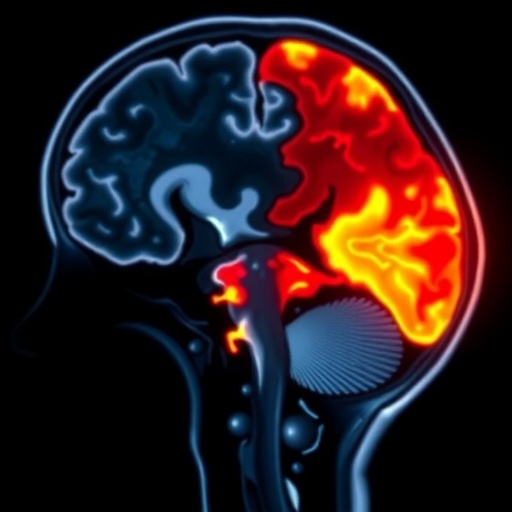
In a groundbreaking study published in BMC Cancer, researchers have unveiled a powerful new method for improving the prediction of survival outcomes in patients with isocitrate dehydrogenase wild type glioblastoma (IDH-wt GBM), a notoriously aggressive form of brain cancer. This innovative approach leverages advanced radiomics, analyzing complex imaging features extracted from MRI scans, alongside biological data, to create a more accurate model for stratifying patient risk and informing treatment strategies.
Glioblastoma remains among the deadliest brain tumors, with survival times varying widely among patients, complicating therapeutic decision-making. Despite improvements in therapy, precision in predicting patient prognosis has lagged behind, largely due to the heterogeneous nature of the tumor. The 2021 World Health Organization classification recognizes this heterogeneity, particularly highlighting the IDH-wt subtype, which lacks targeted molecular therapies and exhibits variable progression rates.
The research team retrospectively studied a cohort of 369 IDH-wt GBM patients. This sizable dataset included 273 patients from three hospitals, divided into training and testing groups, and 96 patients from The Cancer Imaging Archive (TCIA) serving as an independent validation set. Such comprehensive data pooling is rare and critical for developing robust models that generalize well across different clinical populations and imaging protocols.
Central to their methodology was the extraction of radiomics features from both the tumor core and the surrounding peritumoral edema visible on preoperative contrast-enhanced T1-weighted MRI (CE-T1WI) and T2-weighted fluid-attenuated inversion recovery (T2 FLAIR) sequences. Radiomics involves the transformation of medical images into high-dimensional data, capturing subtle textural and spatial patterns that are inaccessible to the naked eye but potentially reflect underlying pathophysiology.
Through rigorous statistical analyses including univariate screening and least absolute shrinkage and selection operator (LASSO) Cox regression, the investigators distilled numerous radiomics features into a refined radiomics-based prognostic model. This model was capable of categorizing patients into distinct high-risk and low-risk groups according to their predicted survival, demonstrating strikingly higher performance metrics than traditional clinical models that rely on well-known risk factors alone.
The clinical risk model, based on conventional clinical variables and patient demographics, showed moderate predictive ability; however, the radiomics model consistently outperformed it across training, testing, and validation cohorts, with concordance indexes (C-index) ranging from 0.69 to 0.76. The combined model, which integrated both radiomics and clinical features using an advanced machine learning technique known as Random Survival Forests, yielded the best predictive accuracy, pushing C-index values up to nearly 0.79 in the training set.
Remarkably, this combined model represented an approximate 12.57% improvement in survival stratification capability over the clinical model, underscoring the additive value of incorporating quantitative imaging biomarkers. This improvement holds the potential to significantly impact clinical decision-making, allowing clinicians to better tailor treatment regimens based on individualized risk profiles.
Beyond mere prognostication, the study also ventured into the biological underpinnings of the radiomics findings. By examining differential gene expression between molecularly defined high-risk and low-risk groups identified by the combined model, the researchers uncovered compelling evidence linking the activation of Gamma-aminobutyric acid (GABA) receptor-related pathways with aggressive tumor behavior and poorer outcomes.
GABA, best known as a central nervous system inhibitory neurotransmitter, has increasingly been recognized for its role in cancer biology, influencing tumor cell proliferation, migration, and interaction with the tumor microenvironment. The activation of GABA receptor pathways in high-risk glioblastomas could open new avenues for therapeutic targeting, shifting the paradigm toward receptor modulation alongside traditional oncologic therapies.
This intersection of imaging phenotypes with underlying molecular biology enhances our understanding of glioblastoma heterogeneity and reinforces the potential for radiogenomics—a fusion of radiomics and genomics—to revolutionize personalized oncology. The approach circumvents the need for invasive tissue sampling while generating actionable insights driving precision medicine.
Importantly, the study’s design utilizing multiple independent datasets strengthens confidence in the generalizability of their findings. The use of standardized MRI sequences and thorough validation minimizes biases commonly seen in retrospective imaging biomarker research, hence supporting potential future clinical implementation.
While the study focused on newly classified WHO 2021 criteria IDH-wt GBM, its methodologies could be readily extended to other molecularly distinct brain tumor subtypes and even beyond neuro-oncology. Leveraging radiomics for survival prediction may ultimately transform how clinicians assess tumor aggressiveness, monitor disease progression, and optimize patient-specific therapeutic choices.
As artificial intelligence and machine learning techniques continue to evolve and integrate with clinical workflows, this convergence exemplified by the combined radiomics-biological model marks a crucial step toward truly individualized cancer care. It opens exciting prospects for real-time, noninvasive tumor characterization that can adapt dynamically as tumor biology changes.
Nevertheless, translating these findings into routine clinical practice will require further prospective studies and real-world validation to assess utility, cost-effectiveness, and workflow integration. Prospective clinical trials assessing treatment response predicated on radiomics risk stratification could solidify clinical adoption.
To summarize, this landmark research not only introduces a novel survival risk stratification tool rooted in cutting-edge MRI radiomics and biological exploration but also highlights key molecular pathways amenable to future therapeutic innovation. It sets a new standard for prognostic modeling in IDH-wt glioblastoma and exemplifies the promise of precision neuro-oncology in the era of data-driven medicine.
Cite Scienmag News
Nathaniel Bowman. (October 3, 2025). MRI Radiomics Identifies Glioblastoma Survival Risks. Scienmag. https://scienmag.com/mri-radiomics-identifies-glioblastoma-survival-risks/
Nathaniel Bowman. "MRI Radiomics Identifies Glioblastoma Survival Risks." Scienmag, 3 October 2025, https://scienmag.com/mri-radiomics-identifies-glioblastoma-survival-risks/. Accessed 3 September 2026.
Nathaniel Bowman. "MRI Radiomics Identifies Glioblastoma Survival Risks." Scienmag. October 3, 2025. https://scienmag.com/mri-radiomics-identifies-glioblastoma-survival-risks/


