


Rugby has long carried a reputation as one of the most physically demanding collision sports on the planet, but a new study has put hard numbers on exactly when and how young players’ heads take the worst of it. Researchers at the University of Canterbury in New Zealand fitted high school rugby players with instrumented mouthguards and recorded thousands of head impacts across two full seasons, then used statistical modelling to untangle which gameplay conditions produce the most violent accelerations of the head. Their findings, published in the Annals of Biomedical Engineering, challenge some common assumptions about where the danger really lies on the rugby field.
The scale of head impact exposure in rugby is striking. Previous research has estimated that players experience an average of 14 to 52 significant head impacts per game, and the sport records high numbers of traumatic brain injuries. What makes the new work particularly important is its focus on youth athletes, a population that has been largely overlooked in head impact research. Even without a diagnosed concussion, repeated exposure to head acceleration events has been linked to both physical and mental health problems, making the accumulation of sub-concussive impacts a serious concern for adolescent players whose brains are still developing.
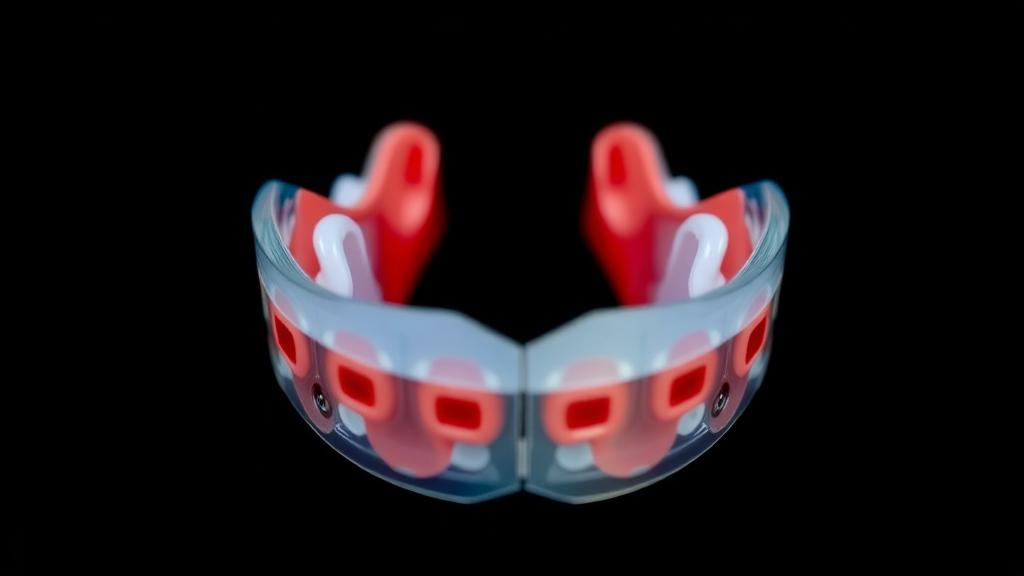
To capture the data, the team worked with three club rugby union teams from Christchurch: two male under-16 squads and one female under-17 squad. Each player underwent a preseason dental scan so that custom-fitted HitIQ Nexus A9 instrumented mouthguards could be manufactured from digital impressions. These devices packed a Bosch gyroscope and three triaxial accelerometers, sampling linear motion at 1600 hertz and rotational motion at 3200 hertz. Independent laboratory validation showed the mouthguards tracked peak linear and rotational accelerations with extraordinary fidelity, achieving coefficients of determination of 0.996 and 0.994 respectively. Events below 8 g of linear acceleration were excluded in line with World Rugby standards, and every recorded head acceleration event was verified against synchronized video footage before being included in the analysis.
The dataset was substantial: 1552 video-verified head acceleration events from male players and 647 from female players in the 2022 season, plus another 925 male events in 2023. Each event was meticulously labelled with details drawn from the video, including the impact surface involved, the location on the head, the player’s motion at the time, the match action, and, for tackles, the position of the tackler’s head and the contact point on the ball carrier’s body. The researchers then built sixteen separate linear mixed-effect models, one for each combination of four research questions and four kinematic metrics: peak linear acceleration, peak rotational acceleration, and the head injury criterion and rotational injury criterion, which capture the shape of the acceleration trace over short time windows.
The clearest pattern to emerge concerned the type of impact. Head impacts against bony body regions, such as another player’s head, knee, boot, or elbow, produced the highest linear and rotational acceleration metrics of any impact category. Crushing impacts, where a player’s head was forced into the ground, and straightforward head-to-ground impacts followed close behind. Perhaps surprisingly, impacts between the head and the ball generated higher rotational accelerations than impacts with the hip or soft body regions like arms and torsos. At the other end of the spectrum, indirect head acceleration events, where the head is whipped around without direct contact, and head impacts with tackle pads produced the lowest acceleration metrics of all.
Impact location on the head itself proved equally revealing. Impacts to the chin produced the highest peak accelerations of any location, followed by impacts to the rear of the head, while blows to the front, top, or side resulted in the lowest metrics. The researchers offer a biomechanical explanation for the chin’s vulnerability: the chin sits far from both the neck musculature and the head’s centre of mass, so a given impact force there exerts greater rotational motion on the head. They also note a possible measurement artefact, since an impact near the chin may often contact the upper jaw where the mouthguard sits, transferring acceleration more directly to the sensors.
Sex differences appeared in unexpected places. Across the full dataset, male players showed higher peak linear accelerations than females, yet no sex difference emerged for rotational metrics. However, when the interaction between sex and match action was examined, males displayed significantly lower acceleration metrics during training drills, mauls, and scrums than their female counterparts. When only direct head impacts were considered, males again showed higher peak linear and rotational accelerations. The authors suggest these patterns may reflect differences in gameplay style between male and female teams, or possibly differences in body composition, coaching approach, or neck strength relative to head mass, though the observational design of the study means the underlying causes remain unexplored.
One of the study’s more counterintuitive findings concerned tackling technique. Previous simulation studies had suggested that tackle height and technique strongly influence head kinematics, with upper-body tackles producing far greater accelerations for the ball carrier. Yet in this real-world youth cohort, the tackler’s head position had no significant effect on any acceleration metric, and tackle location only significantly affected the head injury criterion. The exception came from the interaction between the two: tackles made to the torso or hip region and to the upper leg, with the tackler’s head beside the contact point, produced the highest peak accelerations. The authors caution that overlapping tackle categories and sparse data may have muted relationships that more detailed tackle analysis could reveal.
For indirect head acceleration events, the direction of head motion mattered greatly. Events producing flexion and extension, the forward-and-backward whipping of the head, or lateral flexion, side-to-side motion, induced the highest linear and rotational accelerations, while events where players were simply stabilising themselves produced the lowest. This finding carries practical weight because indirect impacts account for roughly half of all head acceleration events, meaning that protective headgear, which only addresses direct contact, can never tackle the full problem on its own.
The researchers are careful to frame their results as hypothesis-generating rather than clinically definitive. Peak head kinematics and injury metrics indicate impact severity but do not, in isolation, predict concussion risk, and the interpretation of injury criteria in youth populations remains uncertain. The team also acknowledges limitations, including sparse data for some impact categories, the exclusion of ball-carrier tackle analysis due to insufficient data, and the absence of false-discovery corrections, which the authors judged ill-suited to their exploratory modelling with unbalanced subgroups. Still, the message is clear and actionable: the severity of head impacts in youth rugby is tightly linked to how the game is played, and modifying gameplay conditions, training, and technique may reduce head impact exposure without relying on additional protective equipment. Identifying which specific events warrant intervention, the authors argue, is the essential first step toward making the sport safer for the next generation of players.
Subject of Research: Head impact kinematics and gameplay conditions in youth rugby union
Article Title: A Mixed Effect Analysis of Head Impact Accelerations During Rugby Head Impacts Under Different Gameplay Conditions
Article References: Stitt, D., Spriggs, N., Henley, S., Alexander, K., Draper, N., & Kabaliuk, N. (2026). A Mixed Effect Analysis of Head Impact Accelerations During Rugby Head Impacts Under Different Gameplay Conditions. Annals of Biomedical Engineering. https://doi.org/10.1007/s10439-026-04225-3
Image Credits: AI Generated
DOI: 10.1007/s10439-026-04225-3
Keywords: rugby, concussion, head impact, instrumented mouthguard, youth sport, biomechanics, linear acceleration, rotational acceleration, head injury criterion, tackle technique, sex differences, player safety
Cite Scienmag News
Cassandra Pierce. (October 3, 2026). Mouthguard Sensors Reveal Which Rugby Moments Shake the Brain Hardest. Scienmag. https://scienmag.com/mouthguard-sensors-reveal-which-rugby-moments-shake-the-brain-hardest/
Cassandra Pierce. "Mouthguard Sensors Reveal Which Rugby Moments Shake the Brain Hardest." Scienmag, 3 October 2026, https://scienmag.com/mouthguard-sensors-reveal-which-rugby-moments-shake-the-brain-hardest/. Accessed 4 October 2026.
Cassandra Pierce. "Mouthguard Sensors Reveal Which Rugby Moments Shake the Brain Hardest." Scienmag. October 3, 2026. https://scienmag.com/mouthguard-sensors-reveal-which-rugby-moments-shake-the-brain-hardest/


