


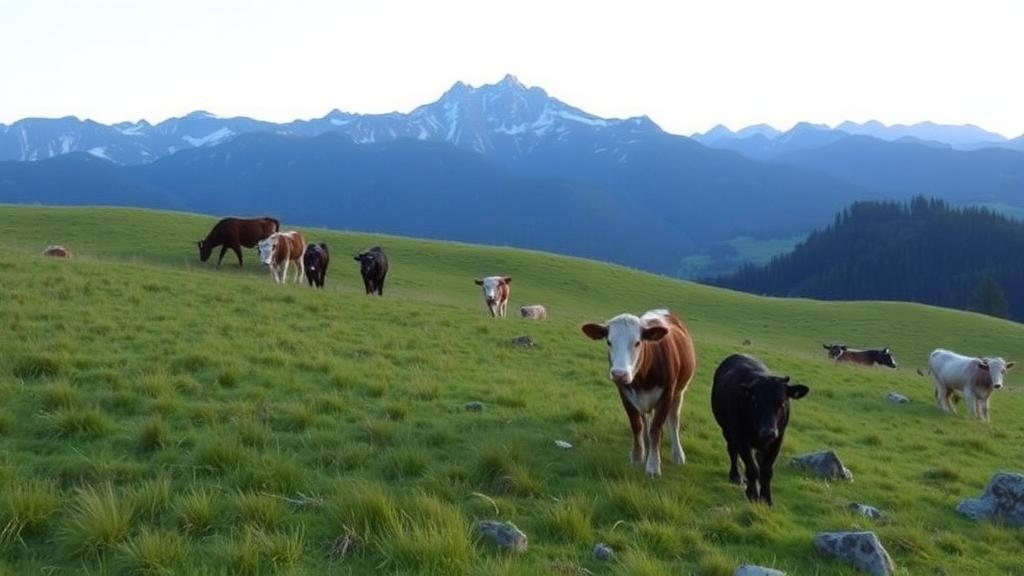
High in the summer meadows of northeastern Spain, where cattle graze on lush mountain grass between 1,100 and 1,200 meters above sea level, an invisible workforce of blood-feeding and nuisance flies is busier than anyone had systematically documented. A new study published in the journal Parasites & Vectors has now delivered the first comprehensive baseline of the fly diversity that shadows grazing cattle in these mountain pastures, and the numbers are striking: more than 6,300 fly specimens representing at least 53 species across eight families of veterinary importance were collected in a single season of sampling. For veterinarians, ranchers, and disease surveillance specialists, the survey fills a conspicuous gap in European livestock health monitoring, because high-elevation grazing habitats have long been overlooked in favor of lowland farms where most vector research traditionally takes place.
The research team, led by Mikel A. González of the SASTI Group in Madrid together with colleagues from the University of Córdoba, the Center for Rickettsiosis and Arthropod Vector-Borne Diseases in La Rioja, Clemson University, and the University of Zaragoza, focused on three summer mountain meadows in La Rioja, a region of northern Spain where transhumance-style grazing still brings cattle to upland pastures during the warm months. The choice of location was deliberate. Livestock grazing exposes animals to arthropods of veterinary importance, particularly in summer, and many fly species affect cattle both directly, through swarming and biting that cause stress and blood loss, and indirectly, by transmitting parasites and pathogens. Severe infestations can depress weight gain and milk yield and, in extreme cases, kill animals. Yet, as the authors note, knowledge of which pest species actually share these high-elevation habitats with grazing cattle remained remarkably thin.
To capture that hidden diversity, the team deployed a combination of sampling techniques rather than relying on any single method. The workhorse of the survey was the suction light trap baited with dry ice, a CDC-style design in which carbon dioxide released from sublimating dry ice mimics the breath of a large mammal and draws in host-seeking flies, which are then pulled into a collection chamber by a small fan. Traps were complemented by hand-netting flies around cattle, with ranchers supervising the collections directly on the animals, and by dipping aquatic habitats for larvae and pupae of species whose immature stages develop in water. This multi-pronged strategy matters because different fly families respond to different cues: some are strongly attracted to light and carbon dioxide, others are best caught in flight around their hosts, and some, such as bot flies, are rarely captured by conventional adult sampling at all.
The results paint a detailed picture of the summer fly fauna. In total, 6,372 specimens were collected, representing at least 53 species in eight dipteran families of veterinary importance. The single most abundant family was the Muscidae, the house fly relatives, with 2,118 specimens, including 14 individuals of the horn fly Haematobia irritans, a notorious blood-feeding pest of cattle that spends nearly its entire adult life clinging to the hides of its hosts. Close behind came the blackflies, family Simuliidae, with 1,843 specimens belonging to at least 10 species, a reminder that these small, hump-backed insects, famous for their painful bites, thrive in the cool running waters that drain mountain landscapes. Biting midges of the family Ceratopogonidae accounted for 1,072 specimens representing 20 species, making them the most species-rich group in the survey, followed by 708 mosquitoes of nine species, 505 horse flies and deer flies of the family Tabanidae spanning at least seven species, and 105 moth flies of the family Psychodidae in two species.
Two rarer finds rounded out the inventory and underscored the value of intensive sampling. Six specimens of the louse fly Hippobosca equina, a winged ectoparasite that scuttles through the hair of large mammals, and a single specimen of the horse stomach bot fly Gasterophilus intestinalis were recorded. The bot fly capture is particularly noteworthy because adult Oestridae are elusive, short-lived insects that do not feed and are almost never attracted to baited traps, so their appearance in a survey of this kind is a genuine stroke of fieldwork luck. Each of these species carries its own veterinary profile, from the mechanical irritation and disease transmission potential of muscids to the voracious blood-feeding of tabanids, which are capable of transmitting pathogens such as anaplasmosis agents between animals during interrupted blood meals.
Beyond the raw counts, the study examined when and where fly activity peaked, using generalized linear models, a flexible statistical framework that can handle the non-normal count data typical of insect surveys. The models indicated that total Diptera abundance varied significantly among sampling periods, among locations, and among the target fly groups. Most taxa peaked in early or midsummer, a seasonal pattern with direct management implications, because it identifies the windows when cattle are most heavily exposed to biting pressure and when vector-borne disease risk, if present, would be expected to climb. The variation among locations also suggests that local habitat features, such as the proximity of streams suitable for blackfly larvae or damp depressions where biting midges breed, shape the composition of the pest community at each pasture, meaning that control strategies may need to be tailored site by site rather than applied uniformly across a region.
A major technical strength of the study lies in its integration of classical morphology with DNA barcoding. Species were identified using traditional anatomical characters, then cross-checked by sequencing the COI gene, cytochrome c oxidase subunit I, the standard molecular marker for animal species identification. The resulting barcode sequences were compared against reference databases in the Barcode of Life Data System, allowing the team to confirm identifications and flag specimens whose morphology alone might have led to ambiguity. This dual approach is especially valuable in groups like blackflies and biting midges, where closely related species can be nearly indistinguishable under a microscope yet differ in their capacity to transmit pathogens such as the viruses responsible for bluetongue and epizootic hemorrhagic disease, both of which are listed among the study’s focal concerns.
To push the taxonomic resolution even further, the researchers carried out phylogenetic analyses for three of the most challenging families: the Muscidae, the Simuliidae, and the Culicidae. Using maximum likelihood methods, a statistical approach that finds the evolutionary tree best explaining the observed DNA sequence variation, and evaluating branch support with measures such as the Shimodaira–Hasegawa-like approximate likelihood ratio test and ultrafast bootstrap values, they reconstructed the relationships among the collected species. The effort generated 55 novel nucleotide sequences corresponding to 16 species, all deposited in GenBank for future researchers to consult. Genetic divergence analyses, computed with the Kimura 2-parameter model commonly used in DNA barcoding, helped delineate species boundaries within the blackfly genus Simulium, a group notorious for cryptic species complexes that can hide distinct vector capacities behind near-identical anatomy.
The practical significance of the work extends well beyond an inventory. By establishing which fly species are present, how abundant they are, and when their populations crest through the grazing season, the study provides the foundational data needed for monitoring and management programs targeting pest and vector flies in European grazing systems. Surveillance programs for diseases such as bluetongue depend on knowing where potential vector species occur and in what numbers, and this survey delivers exactly that information for a habitat type, mountain meadow pasture, that had previously been a blind spot. The findings also give ranchers a scientific basis for timing protective measures, from repellents and ear tags to pasture rotation, around the periods of peak fly activity rather than relying on guesswork.
There is also a broader ecological story here. Mountain pastures are changing under the combined pressures of shifting land use and a warming climate, and the composition of their insect communities is likely to shift in response. Species once confined to lower, warmer elevations may move upslope, bringing with them new biting pressure and new disease transmission risks for livestock that have never encountered them. Baselines like the one now established for La Rioja are the reference points against which such changes will be measured. As the authors emphasize, this is the first comprehensive dataset on the diversity and seasonal dynamics of veterinary flies associated with cattle in the mountain meadows of northeastern Spain, and it transforms a region of anecdotal observation into one of documented, quantified, and genetically verifiable entomological record, ready to support the next generation of livestock health research across Europe’s grazing highlands.
Subject of Research: Diversity and seasonal dynamics of veterinary Diptera in mountain livestock pastures of northeastern Spain
Article Title: Biodiversity of Diptera of veterinary importance in mountain livestock pastures of northeastern Spain
Article References: González, M. A., Bravo-Barriga, D., Oteo, J. A., Adler, P. H., & Ruiz-Arrondo, I. (2026). Biodiversity of Diptera of veterinary importance in mountain livestock pastures of northeastern Spain. Parasites & Vectors. https://doi.org/10.1186/s13071-026-07704-7
Image Credits: AI Generated
DOI: 10.1186/s13071-026-07704-7
Keywords: Diptera, cattle grazing, mountain meadows, COI barcoding, blackflies, biting midges, mosquitoes, horse flies, ectoparasites, vector-borne disease, La Rioja, livestock health
Cite Scienmag News
William Thompson. (October 3, 2026). Mountain Pastures Hide a Surprising Diversity of Cattle-Pesting Flies, New Survey Reveals. Scienmag. https://scienmag.com/mountain-pastures-hide-a-surprising-diversity-of-cattle-pesting-flies-new-survey-reveals/
William Thompson. "Mountain Pastures Hide a Surprising Diversity of Cattle-Pesting Flies, New Survey Reveals." Scienmag, 3 October 2026, https://scienmag.com/mountain-pastures-hide-a-surprising-diversity-of-cattle-pesting-flies-new-survey-reveals/. Accessed 4 October 2026.
William Thompson. "Mountain Pastures Hide a Surprising Diversity of Cattle-Pesting Flies, New Survey Reveals." Scienmag. October 3, 2026. https://scienmag.com/mountain-pastures-hide-a-surprising-diversity-of-cattle-pesting-flies-new-survey-reveals/


