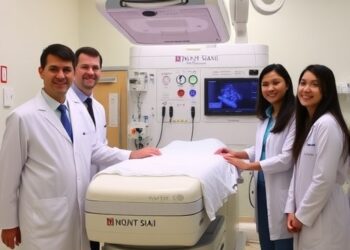
In a groundbreaking study that challenges common perceptions about age and cancer treatment, researchers at the Icahn School of Medicine at Mount Sinai and the Mount Sinai Tisch Cancer Center have demonstrated that adults aged 80 and older diagnosed with early-stage non-small cell lung cancer (NSCLC) can safely undergo surgery with outcomes comparable to their younger counterparts. This pivotal research, published recently in The Lancet Regional Health – Americas, overturns long-held beliefs that age alone should be a decisive factor in surgical candidacy, emphasizing instead a holistic approach rooted in comprehensive health evaluation.
The investigation was spearheaded by a trio of leading experts, including Dr. Raja M. Flores, Chair of Thoracic Surgery at Mount Sinai Health System, Dr. Claudia Henschke, Director of the Early Lung and Cardiac Action Program, and Dr. Emanuela Taioli, Director of the Institute for Translational Epidemiology. Their collaborative effort focused on assessing the surgical outcomes and postoperative quality of life in patients diagnosed with early-stage NSCLC, comparing a cohort of octogenarians against younger individuals to understand the true impact of advanced age on surgical recovery and survival.
A prospective cohort study design was employed to meticulously analyze 884 patients diagnosed with early-stage lung cancer, of whom 114 were aged 80 years or older. This comprehensive approach allowed the researchers to monitor not only survival rates but also the evolution of postoperative complications and the patients’ quality of life over time. Importantly, the study dispensed with age as the primary exclusion criterion, focusing instead on the broader clinical profile—including comorbidities, functional status, and physiological resilience.
The pivotal finding of this study is that octogenarians, when rigorously selected based on overall health rather than chronological age, exhibit survival rates comparable to younger patients following surgical intervention. Although initial postoperative complications were marginally higher in the older group, these did not translate into long-term detriments. Most patients in both cohorts experienced marked improvements in their quality of life within 12 months, underscoring the potential for significant restoration of health post-surgery.
These results fly in the face of conventional clinical hesitancy to recommend surgery for very elderly patients, a practice often justified by concerns over diminished physiological reserve and heightened surgical risk. As Dr. Flores articulates, the study advocates treating patients as individuals rather than by their age alone, emphasizing that “if a patient is strong enough, surgery can save their life.” This paradigm shift encourages careful preoperative assessment encompassing cardiopulmonary fitness, nutritional status, and functional capacity rather than a simplistic age cutoff.
Dr. Taioli further highlights the societal implications of the study’s findings, stressing the need to dismantle age-related biases in treatment decisions. She underscores that equitable access to curative therapies is essential in a healthcare landscape increasingly populated by aging populations. The study calls for systemic changes in clinical protocols to ensure that older adults are not systemically deprived of potentially life-saving interventions simply due to their age.
Moreover, the research has significant ramifications for lung cancer screening guidelines. Dr. Henschke advocates for the inclusion of adults over 80 in targeted screening programs, given the demonstrated benefits of early detection paired with effective treatment. Early-stage diagnosis remains critical, as it markedly enhances the probability of successful surgical resection and thus long-term survival, even in advanced years.
The data from this research emerges against the backdrop of demographic shifts globally, with increasing lifespans and a growing proportion of the population living into their eighth decade and beyond. Lung cancer remains the leading cause of cancer mortality worldwide, and optimizing treatment strategies for older adults is critical to improving outcomes and reducing the burden of disease in this vulnerable group.
The multidisciplinary team contributing to this study, belonging to the international IELCART investigators network, offers a powerful model of collaborative investigation combining surgical expertise, radiological precision, epidemiological insight, and patient-centered metrics. This integrative approach fortifies the evidence base supporting the re-evaluation of surgical candidacy criteria for elderly patients with NSCLC.
In essence, the study advocates a personalized medicine approach in thoracic oncology, where sophisticated patient stratification transcends age and embraces functional status, comorbidity profiles, and patient preferences. This nuanced framework allows clinicians to deliver care that is both safe and effective, maximizing longevity and quality of life for older individuals facing early-stage lung cancer.
Overall, this research not only redefines clinical decision-making for octogenarians with lung cancer but also sends a potent message to patients and healthcare providers alike: age should not be an insurmountable barrier to curative surgery. Rather, with appropriate selection and management, older patients can achieve outcomes on par with younger individuals, potentially transforming survival statistics and quality of life metrics in this age group.
Through this lens, the study exemplifies the critical importance of evidence-based medicine in dispelling myths and promoting equitable cancer care. Future guidelines and treatment policies must integrate these findings to realign practice with patient needs, ensuring that surgical options remain accessible to all suitable candidates regardless of chronological age.
As we look ahead, the call for inclusive screening programs and tailored therapeutic strategies echoes loudly. The mounting evidence fosters hope and optimism for improved outcomes in elderly lung cancer patients, highlighting the transformative role of early detection, vigilant assessment, and personalized treatment pathways in extending both lifespan and the quality of that extended life.
Subject of Research: People
Article Title: Surgical outcomes and quality of life in octogenarians with early-stage non-small cell lung cancer: a prospective cohort study
News Publication Date: April 2, 2026
Web References: http://dx.doi.org/10.1016/j.lana.2026.101428
Keywords: Lung cancer, Older adults, Surgery, Early-stage non-small cell lung cancer, Octogenarians, Surgical outcomes, Quality of life, Lung cancer screening, Thoracic surgery, Personalized medicine, Elderly patients, Cancer treatment