

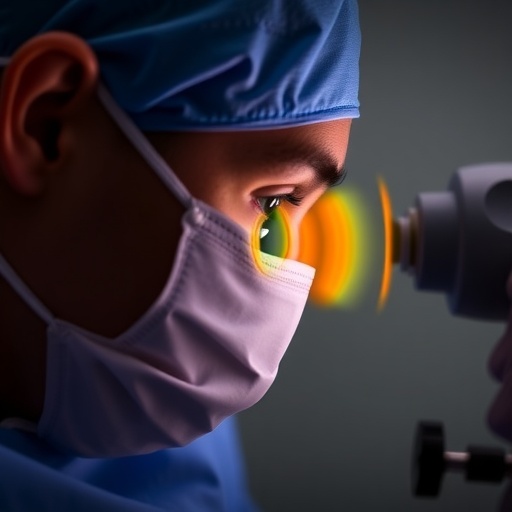
Dr. Sean Ianchulev, MD, MPH, a prominent figure in the field of ophthalmology and Director of Ophthalmic Innovation and Technology at the New York Eye and Ear Infirmary of Mount Sinai, is set to introduce a groundbreaking advancement in eye care technology. This innovation, named miDOC, promises to reshape the landscape of ophthalmic diagnostics and surgical procedures by integrating advanced imaging with streamlined clinical workflows. The reveal is scheduled for the prestigious Charles D. Kelman Innovator’s Lecture at the upcoming American Society of Cataract and Refractive Surgery (ASCRS) annual meeting, an event that draws some of the most pioneering minds in vision science and surgical innovation.
Glaucoma, a leading cause of irreversible blindness worldwide, demands precise and timely diagnosis paired with effective treatment strategies. Traditionally, the management of glaucoma and other complex ocular diseases hinges on a combination of clinical examination, imaging, and surgical intervention. Dr. Ianchulev’s miDOC system is designed to transcend these conventional methods by providing real-time, high-resolution imaging and data integration that enhances surgeons’ ability to visualize the anterior and posterior segments of the eye during surgical interventions. This brings a new dimension to ophthalmic surgery, enabling unprecedented precision and potentially improving outcomes for patients globally.
The technology behind miDOC leverages cutting-edge advancements in optical coherence tomography (OCT) combined with sophisticated image processing algorithms. OCT is a non-invasive imaging technique commonly used for detailed cross-sectional views of the retina and optic nerve. However, integrating OCT into surgical workflows has historically faced challenges related to usability, integration, and speed. miDOC addresses these challenges through a streamlined platform that delivers dynamic, high-definition imaging directly into the surgeon’s view, reducing the need for modality switching and enhancing intraoperative decision-making.
A key feature of miDOC lies in its ability to operate seamlessly within the sterile field of the operating room. Traditional ophthalmic imaging devices require frequent repositioning or removal from the surgical site, interrupting procedures and introducing potential for contamination. miDOC’s innovative design emphasizes compactness and adaptability, mounting in such a way that it provides continuous imaging without impeding the surgical process. This ensures surgeons maintain full situational awareness and can adjust techniques instantly based on real-time feedback from the ocular tissues.
Beyond hardware, miDOC incorporates an intuitive software interface that synthesizes imaging data with patient-specific clinical parameters. This interface provides multi-layered visualization options, enabling the surgeon to toggle between different imaging modalities or focus on specific ocular structures. Such integration into the surgical ecosystem exemplifies a move toward precision medicine, where interventions are tailored to the subtle anatomical and physiological differences observed within each patient’s eye.
The potential applications of miDOC extend beyond glaucoma surgery to include cataract extraction, corneal transplantation, retinal procedures, and complex anterior segment reconstructions. By facilitating enhanced visualization and surgical guidance, the technology aims to reduce complications such as improper tissue manipulation, unintended damage, and incomplete treatment of pathological areas. Moreover, this level of precision could translate into faster recoveries, better preservation of vision, and a reduced burden of postoperative interventions.
Dr. Ianchulev’s work also underscores a broader trend in ophthalmology: the intersection of innovative engineering with clinical expertise to push the boundaries of what is achievable in eye care. The development of miDOC aligns with the ongoing movement toward minimally invasive, image-guided surgeries that prioritize patient safety and procedural efficiency. Industry experts anticipate that miDOC will catalyze further innovations within the field, prompting a reevaluation of current surgical protocols and inspiring new research into intraoperative imaging technologies.
In addition to its clinical impact, miDOC represents an important milestone in medical technology development, challenging the paradigm of how devices are integrated into complex surgical environments. Its design philosophy emphasizes user-centered innovation, informed by extensive collaboration between engineers, surgeons, and healthcare technologists. This multidisciplinary approach ensures that the technology is not only technically advanced but also practical, intuitive, and responsive to the realities of surgical practice.
The announcement of miDOC at the ASCRS annual meeting will undoubtedly spark significant interest across the global ophthalmic community, from cutting-edge research departments to frontline clinical practices. As Dr. Ianchulev prepares to unveil this advancement, the anticipation grows around how it might influence training, surgical education, and the overall standard of care. By providing surgeons with enhanced tools, the potential to preserve and restore vision for millions could be realized more effectively than ever before.
The introduction of miDOC is expected to accelerate clinical outcomes research and foster a new wave of technologies leveraging real-time intraoperative imaging. Though still in the early stages of adoption, the system’s validation and initial feedback have shown promising results, with some early adopters highlighting its ability to streamline complex procedures and improve visualization in challenging cases. This trial phase sets the stage for widespread implementation and exploration of additional features driven by surgeon feedback and advancing computational capabilities.
Looking ahead, developments like miDOC exemplify how technology-driven innovation is set to redefine the field of ophthalmology in the coming decade. Tools that offer heightened precision, integration, and usability not only improve surgical performance but also empower providers to tackle more complex and diverse ocular pathologies with confidence. The promise of miDOC lies not just in a single device but in the catalytic effect it will have on the ecosystem of vision care, from diagnostics through to surgical intervention.
Dr. Sean Ianchulev’s pioneering work serves as a compelling example of how clinical vision paired with technological expertise can drive transformational advancements in healthcare. The miDOC platform will be closely watched by scientists, clinicians, and industry stakeholders eager to explore the next frontier in ophthalmic surgery, highlighting the ongoing evolution of medical technology toward smarter, more precise, and patient-centered solutions.
Subject of Research: Ophthalmic innovation focusing on intraoperative imaging technology for enhanced surgical precision
Article Title: Dr. Sean Ianchulev Unveils miDOC: Revolutionizing Intraoperative Imaging in Ophthalmology
News Publication Date: Not provided
Web References: Not provided
References: Not provided
Image Credits: Mount Sinai Health System
Keywords: Ophthalmology, Glaucoma, Surgical procedures, Intraoperative imaging, Optical coherence tomography, Medical technology innovation, Vision disorders, Eye surgery, Cataract surgery, Anterior segment reconstruction


