


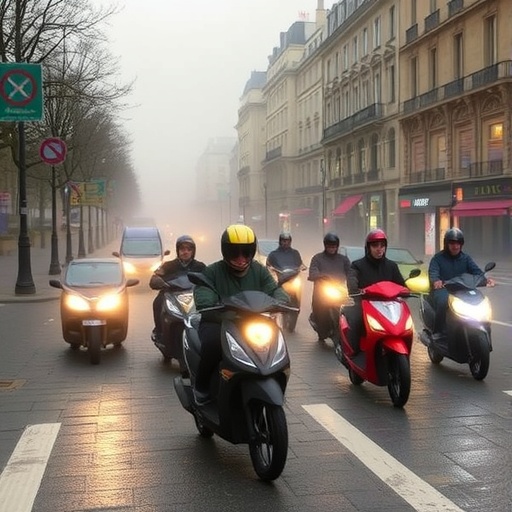
The issue of air pollution has become one of the most significant challenges faced by urban environments worldwide. A recent study conducted by Abdelhalim and Crifo shines a spotlight on the detrimental impact of motorized two-wheelers in Paris. With the rise of electric scooters and mopeds, one might presume that this mode of transport poses less of a threat; however, this research argues otherwise. As cities grow more congested and polluted, understanding the economic implications of air pollution is essential for crafting effective policy interventions.
Motorized two-wheelers, including scooters, motorcycles, and mopeds, have been increasingly popular in the bustling streets of Paris. They offer rapid mobility, escape from traffic jams, and an affordable alternative to cars. Despite these advantages, this transportation mode contributes significantly to urban air pollution, primarily due to their emissions of nitrogen oxides (NOx) and particulate matter (PM). The findings suggest that regulatory authorities must consider the often-overlooked consequences associated with their widespread use.
The air quality in metropolitan areas like Paris has faced continuous degradation. The World Health Organization (WHO) recommends that levels of PM2.5 should not exceed 10 micrograms per cubic meter. Unfortunately, many city regions fail to meet this guideline, leading to significant health implications for residents. Poor air quality is linked to respiratory ailments, cardiovascular diseases, and premature deaths – impacting public health at an alarming rate. The study focuses on quantifying the economic costs of this decline in air quality due to two-wheeler emissions.
The research highlights substantial economic losses incurred from health care costs related to diseases exacerbated by air pollution. The analysis delves into the direct and indirect expenses borne by individuals and the government. Expenses contribute to the overall economic burden that air pollution places on society. Investing in cleaner alternatives and public transportation could relieve some of this economic strain while promoting a healthier environment.
In addition to health costs, the environmental ramifications of motorized two-wheelers extend to ecosystem damage and biodiversity loss. Urban greenery suffers from pollution exposure, as seen in reduced plant respiration and impaired growth. The interplay between elevated NOx levels and plant life raises concerns about future urban sustainability. Paris, known for its parks and gardens, is at risk if measures are not implemented to curb emissions.
As cities aim for long-term sustainability goals, innovators and policymakers must tackle air pollution head-on. Transitioning from internal combustion engines to electric alternatives could play a pivotal role in reducing emissions. Governments need to invest in charging infrastructure and incentivize electric two-wheeler use to entice consumers. Through collaborative efforts, municipalities can aim for a more environmentally friendly mode of transportation that does not compromise mobility.
Furthermore, the study suggests implementing stricter emission regulations for motorized two-wheelers. Such regulations could lead to decreased emissions while ensuring better compliance from manufacturers. Although this change may require a significant investment in enforcement, it paves the way for cleaner air and healthier citizens in the long run. Policymakers must work closely with manufacturers to achieve compliance and innovate in building cleaner vehicles.
Another approach could involve public awareness campaigns aimed at educating commuters about the environmental impact of their choices. Highlighting the long-term benefits of adopting public transportation or cycling instead of using motorized two-wheelers might shift commuter behavior. Encouraging behavior change will be vital if Paris and other urban centers wish to combat air pollution effectively.
Ceasing the motorization trend may not be feasible; thus, finding a balance between urban mobility and air quality is critical. As cities like Paris continue to modernize, embracing technology-driven solutions will be essential. Additionally, researching and implementing the best practices from cities across the globe that have successfully tackled similar issues will provide invaluable insights into the problem’s complexity.
The study also emphasizes the role of urban planning in mitigating pollution. Creating designated lanes for bikes and scooters, improving public transport networks, and increasing green spaces can contribute to enhanced air quality. Each of these measures can help shift the transportation culture towards more sustainable practices.
While addressing the costs associated with air pollution from motorized two-wheelers in Paris, it becomes evident that collective action is necessary. Government authorities, manufacturers, and citizens must collaborate to embrace cleaner options. Together, they can redefine urban transportation and reduce the overall economic and health burden stemming from polluted air.
Ultimately, the investment in sustainable practices holds the key to not only improving air quality but ensuring healthier, more vibrant urban spaces for generations to come. The challenge is significant, but innovative and committed efforts can transform Paris into a model for sustainable urban mobility. Through strategic initiatives and an unwavering commitment to clean air, the public can reclaim the streets and breathe easier.
In summary, the study by Abdelhalim and Crifo compiles crucial insights into the interplay between air pollution and motorized two-wheelers in Paris, underscoring the economic, environmental, and health challenges. By fostering a culture of sustainability, cities can work toward cleaner air, healthier communities, and a more resilient future.
Abdelhalim, Z., Crifo, P. Cost of air pollution from motorized two-wheelers in Paris.
Discov Sustain 6, 1231 (2025). https://doi.org/10.1007/s43621-025-02140-6
Cite Scienmag News
Russell Cooper. (November 10, 2025). Motorbike Pollution: Paris Faces Rising Health Costs. Scienmag. https://scienmag.com/motorbike-pollution-paris-faces-rising-health-costs/
Russell Cooper. "Motorbike Pollution: Paris Faces Rising Health Costs." Scienmag, 10 November 2025, https://scienmag.com/motorbike-pollution-paris-faces-rising-health-costs/. Accessed 7 September 2026.
Russell Cooper. "Motorbike Pollution: Paris Faces Rising Health Costs." Scienmag. November 10, 2025. https://scienmag.com/motorbike-pollution-paris-faces-rising-health-costs/


