


A majority of people in Afghanistan support human rights for Afghan women, and men are especially likely to support women’s rights when primed to think about their eldest daughters, according to a study published July 17, 2024, in the open-access journal PLOS ONE, by Kristina Becvar and colleagues from the University of Massachusetts at Amherst.

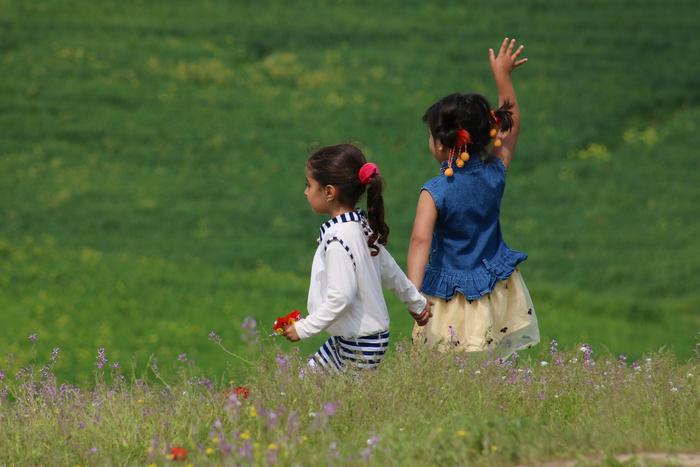
Credit: Firoz Sidiqy, Unsplash, CC0 (
A majority of people in Afghanistan support human rights for Afghan women, and men are especially likely to support women’s rights when primed to think about their eldest daughters, according to a study published July 17, 2024, in the open-access journal PLOS ONE, by Kristina Becvar and colleagues from the University of Massachusetts at Amherst.
Human rights groups have been concerned for the rights of Afghan women in particular since the Taliban took control of Kabul in 2021. Since then, Afghan women have been barred from higher education, many have lost jobs, and there are high levels of early marriage and gender-based violence. To find out how groups might effectively advocate for women’s rights in the country, the authors conducted an online survey of Afghans, asking how they felt about women’s rights to education, employment, and more.
Among the 7,513 respondents to the question of support for women’s rights, the authors found that 66 percent of respondents “agreed” or “strongly agreed” that human rights for women were a top priority for the future of Afghanistan — including 45 percent of those who strongly supported the Taliban’s control of the country. Women, people living in urban areas, and people who rated themselves lower on the economic ladder were most likely to voice support. The authors also found support for the “first daughters” effect—the research that shows that having a daughter affects a father’s attitudes toward women. The authors showed that when fathers were primed to think of their eldest daughters, they were significantly more likely to support women’s rights, with support rising to 80%. Furthermore, in the comments that survey respondents provided, after being primed to think of their eldest daughters men were four percent more likely to mention equality as an important right, two percent more likely to say women’s rights are good for society, and three percent more likely to call for international pressure on the Taliban in support for women’s rights.
While the survey could only examine the proportion of the Afghan population who use the internet, the authors suggest that human rights organizations could work to appeal to the fathers of eldest daughters to support women and girls.
The authors add: “Our data shows Afghans – even Taliban-aligned Afghans – overwhelmingly support women’s basic human rights, and that fathers of eldest daughters are a particularly receptive constituency in elevating women’s status in Afghan society.”
#####
In your coverage please use this URL to provide access to the freely available article in PLOS ONE:
Citation: Becvar K, Carpenter C, Leidner B, Young KL (2024) The “First daughter” effect: Human rights advocacy and attitudes toward gender equality in Taliban-controlled Afghanistan. PLoS ONE 19(7): e0298812.
Author Countries: USA
Funding: This research was supported by the National Science Foundation RAPID grant #2204990, “Citizen Perspectives on Peace, Security and Human Rights in a Post-Conflict Environment,” awarded to C.P. The funder had no role in study design, data collection and analysis, decision to publish, or preparation of the manuscript. There was no additional external funding received for this study. Funder information available at: https://www.nsf.gov/awardsearch/showAward?AWD_ID=2204990.
Journal
PLoS ONE
Method of Research
Randomized controlled/clinical trial
Subject of Research
People
Article Title
The “First daughter” effect: Human rights advocacy and attitudes toward gender equality in Taliban-controlled Afghanistan
Article Publication Date
17-Jul-2024
COI Statement
The authors have declared that no competing interests exist.
Cite Scienmag News
Courtney Benton. (July 17, 2024). Most Afghans support women’s rights, especially when men think of their daughters. Scienmag. https://scienmag.com/most-afghans-support-womens-rights-especially-when-men-think-of-their-daughters/
Courtney Benton. "Most Afghans support women’s rights, especially when men think of their daughters." Scienmag, 17 July 2024, https://scienmag.com/most-afghans-support-womens-rights-especially-when-men-think-of-their-daughters/. Accessed 4 September 2026.
Courtney Benton. "Most Afghans support women’s rights, especially when men think of their daughters." Scienmag. July 17, 2024. https://scienmag.com/most-afghans-support-womens-rights-especially-when-men-think-of-their-daughters/

