


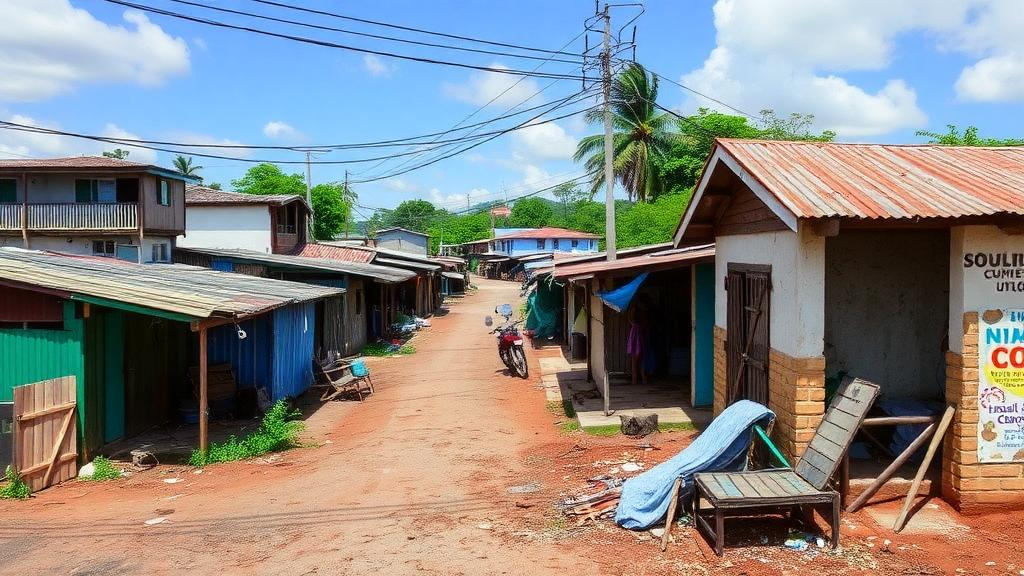
In the crowded informal settlements of Salvador, Brazil, the risk of catching chikungunya is not spread evenly from street to street. It clusters around unpaved yards, piles of garbage, and the shaded peridomestic spaces where the yellow fever mosquito, Aedes aegypti, finds ideal conditions to breed. A new high-resolution study published in PLOS Neglected Tropical Diseases has mapped these fine-scale vulnerabilities with unusual precision, combining mosquito egg counts, household surveys, serological testing, and Bayesian spatial statistics to reveal exactly where the virus finds its footholds in one low-income community.
The research, led by Jaqueline S. Cruz, Hussein Khalil, and colleagues working with long-standing infectious disease programs in Salvador, set out to answer a deceptively simple question: which socioeconomic and environmental factors determine both where Aedes aegypti mosquitoes flourish and which residents show evidence of past chikungunya virus infection? To do so, the team spent months embedded in a vulnerable informal community, deploying ovitraps and drawing blood samples from residents between October 2021 and June 2022. The result is one of the most granular portraits yet of how urban poverty, ecology, and viral transmission intersect at the scale of individual households.
Chikungunya virus, or CHIKV, is an arbovirus transmitted primarily by Aedes mosquitoes, the same vectors responsible for dengue and Zika. First identified in Tanzania in the 1950s, the virus has swept through tropical and subtropical regions in successive waves, causing explosive epidemics characterized by fever and often debilitating joint pain that can persist for months or years. In Brazil, incidence has risen sharply in recent years, with the burden falling disproportionately on socioeconomically marginalized neighborhoods where irregular water supply, poor waste collection, and unpaved surfaces create abundant breeding habitat. Despite this clear ecological logic, the microscale drivers of transmission within informal settlements have remained poorly quantified, largely because most surveillance operates at municipal or district levels too coarse to capture household-level heterogeneity.
To overcome this limitation, the researchers combined two complementary strands of evidence. The first was entomological: 194 ovitraps, simple containers holding water and a wooden paddle where female Aedes aegypti deposit their eggs, were distributed across the study area and monitored regularly. Egg counts per trap served as a proxy for vector abundance, capturing the spatial texture of mosquito proliferation at resolutions far finer than conventional indices. The second was serological: the team enrolled 888 residents aged five years and older, collecting blood samples to test for antibodies against chikungunya virus, alongside detailed questionnaires covering sociodemographic characteristics, housing conditions, and environmental exposures.
Analyzing these data required statistical machinery capable of handling both spatial autocorrelation and multiple sources of uncertainty. The team employed Integrated Nested Laplace Approximation, or INLA, a Bayesian computational framework well suited to spatial modeling, to fit models linking ovitrap egg counts and individual seropositivity to their candidate predictors. Because the models report credible intervals rather than single point estimates, the findings convey a calibrated picture of how confident one can be in each association, an important safeguard when working with complex, noisy community data.
The entomological results were striking. Ovitraps placed in peridomicile locations, the spaces immediately surrounding homes such as yards and alleys, recorded substantially higher egg counts than traps in other settings, with an incidence rate ratio of 1.99 and a 95 percent credible interval spanning 1.31 to 3.06. In other words, simply being near a house nearly doubled the expected mosquito egg density, implicating the shaded, cluttered, and water-holding niches around dwellings as primary breeding grounds. Households reporting food insecurity, a marker of deep socioeconomic deprivation, also showed higher egg counts around their properties, as did homes with unpaved yards and locations surrounded by greater garbage density, which carried a risk elevation of 25 percent per unit increase.
The serological analysis told a parallel story about human exposure. Among the 888 participants, several factors were independently associated with testing positive for chikungunya antibodies. Elderly residents faced roughly double the odds of seropositivity compared with younger adults, a pattern consistent with cumulative lifetime exposure and possibly with reduced access to protective behaviors such as air conditioning or intact window screens. Housing quality emerged as a powerful signal: living in a home with uncovered brick walls, a hallmark of unfinished informal construction, doubled the odds of prior infection, while having a yard, whether paved or unpaved, was associated with twofold to nearly threefold increases in seropositivity. Residents who reported personally seeing mosquitoes in or around their homes showed 94 percent higher odds of seropositivity, suggesting that individual perception tracks real exposure reasonably well.
Intriguingly, the model also incorporated remotely sensed satellite data, specifically Land Surface Temperature, and the spatially smoothed ovitrap egg counts as continuous covariates of seropositivity. Both variables showed positive associations with point estimates that did not exclude the null in the credible intervals, but their inclusion demonstrates a methodological advance: temperature measured from orbit at microscale resolution, and local mosquito abundance itself, can be layered into risk models alongside household characteristics. Warmer microclimates accelerate mosquito development and viral replication, and the authors argue that such fine-scale thermal variation deserves attention in future control planning, particularly as urban heat islands intensify.
Taken together, the findings paint a coherent picture of chikungunya risk as a product of converging vulnerabilities. The same environmental degradations that concentrate mosquito breeding, unpaved ground, accumulated refuse, and precarious construction, also coincide with the socioeconomic conditions, food insecurity, elderly residents, and unfinished housing, that heighten human exposure. Crucially, the spatial overlap between ovitrap hotspots and seropositive clusters suggests that where mosquitoes are most abundant, residents are indeed being infected, validating ovitraps as a cheap and actionable surveillance tool that could direct interventions before outbreaks ignite.
The authors conclude that effective chikungunya control in informal settlements cannot rely on generic campaigns alone. Instead, strategies must be tailored to the neighborhood scale: upgrading basic urban infrastructure, clearing garbage, paving and managing yards, targeting breeding sites around homes where egg densities peak, engaging communities in mosquito-source reduction, and incorporating microscale temperature data into risk maps. In an era of expanding arboviral threats across the tropics, this study offers a blueprint for precision public health, showing that with careful spatial epidemiology, the invisible geography of risk in a vulnerable community can be made visible, and ultimately, actionable.
Subject of Research: Socioeconomic and environmental drivers of Aedes aegypti distribution and chikungunya transmission risk in a low-income Brazilian community
Article Title: Socio-environmental assessment of Aedes aegypti distribution and risk of chikungunya in vulnerable community
Article References: Cruz, J. S., Argibay, H. D., Nery, N., Mogaji, H., Barreto, T. D. M., Batista, L. E. S., Silva, L. R. S., Nery, V. K., Ferreira, V. C. D., Carneiro, I. D. O., López, Y. A. A., Reis, M. G., Ko, A. I., Diggle, P., Begon, M., Costa, F., & Khalil, H. (2026). Socio-environmental assessment of Aedes aegypti distribution and risk of chikungunya in vulnerable community. PLOS Neglected Tropical Diseases, 20(10), e0014776. https://doi.org/10.1371/journal.pntd.0014776
Image Credits: AI Generated
DOI: 10.1371/journal.pntd.0014776
Keywords: chikungunya, Aedes aegypti, Brazil, spatial epidemiology, ovitraps, seroprevalence, Bayesian modeling, informal settlements, vector-borne disease, public health, land surface temperature, PLOS Neglected Tropical Diseases
Cite Scienmag News
Kristina Jarvis. (October 12, 2026). Mosquito Hotspots in a Brazilian Slum Reveal Where Chikungunya Risk Concentrates. Scienmag. https://scienmag.com/mosquito-hotspots-in-a-brazilian-slum-reveal-where-chikungunya-risk-concentrates/
Kristina Jarvis. "Mosquito Hotspots in a Brazilian Slum Reveal Where Chikungunya Risk Concentrates." Scienmag, 12 October 2026, https://scienmag.com/mosquito-hotspots-in-a-brazilian-slum-reveal-where-chikungunya-risk-concentrates/. Accessed 12 October 2026.
Kristina Jarvis. "Mosquito Hotspots in a Brazilian Slum Reveal Where Chikungunya Risk Concentrates." Scienmag. October 12, 2026. https://scienmag.com/mosquito-hotspots-in-a-brazilian-slum-reveal-where-chikungunya-risk-concentrates/


