

Thursday, October 22, 2026
Science
No Result
View All Result
  • Login
  • HOME
  • SCIENCE NEWS
  • CONTACT US
  • HOME
  • SCIENCE NEWS
  • CONTACT US
No Result
View All Result
Scienmag
No Result
View All Result
Home Science News Agriculture

Morphological and genetic analysis supports three species in Central European Veronica complex

October 22, 2026
in Agriculture
Juliet Wilcox
By Juliet Wilcox Scienmag Editorial Profile - Human Genetics
Reading Time: 2 mins read
0
Morphological and genetic analysis supports three species in Central European Veronica complex

Morphological and genetic analysis supports three species in Central European Veronica complex

65
SHARES
587
VIEWS
Share on FacebookShare on Twitter
ADVERTISEMENT

A multidisciplinary study of the Central European Veronica hederifolia group supports recognizing three distinct species: diploid Veronica triloba, tetraploid Veronica sublobata and diploid Veronica hederifolia. The researchers combined DNA sequence analysis, ploidy assessment, morphometric measurements of herbarium material and a controlled growth experiment involving variable light and water conditions to evaluate species boundaries within the weedy polyploid complex. Among the diagnostic traits, chromosome number provided a clear initial separation.

V. triloba was diploid, whereas V. sublobata was tetraploid. The researchers also identified morphological characters that can distinguish the species without relying on ploidy alone. V. triloba could be identified by a low pedicel-to-calyx length ratio, below 1.59.

V. sublobata had a longer ratio and could be distinguished more consistently from V. hederifolia by scattered hairs around the pedicel and shorter hairs on the calyx. These structural features allowed the three Central European species to be differentiated reliably using the combined evidence. Leaf characters, by contrast, were strongly influenced by light and therefore were not considered diagnostic at the species level.

The growth experiment examined plants under differing combinations of light and water availability, allowing the researchers to assess how environmental conditions affected their appearance. The results showed that leaf form was highly sensitive to light, while the pedicel-to-calyx ratio and the distribution and length of hairs supplied more dependable traits for identification. The findings therefore favor reproductive-structure measurements and hair characters over leaf shape when separating these Central European species.

The study also reported the first triploid plant found in the group and noted that such hybrids appear to be rare. The results apply most directly to the Central European material examined. The authors emphasized that phylogenetic and morphological variation within the wider group has not yet been analyzed sufficiently across the Mediterranean.

More intensive investigation is therefore needed to determine how species relationships and diagnostic characters vary across the full geographic range. Within its stated Central European scope, however, the study provides a practical framework for identifying the three recognized species and shows that chromosome state, floral measurements and hair morphology can be used together to resolve their boundaries.

Subject of Research: Species delimitation in the Central European Veronica hederifolia polyploid complex

Article Title: Species limits in Veronica hederifolia and relatives: experimental, morphometric, and phylogenetic approaches in a weedy polyploid complex

Article References: Albach, D. C., & Kúr, P. (2026). Species limits in Veronica hederifolia and relatives: experimental, morphometric, and phylogenetic approaches in a weedy polyploid complex. BMC Plant Biology, 26(1), Article 1819. https://doi.org/10.1186/s12870-026-10212-6

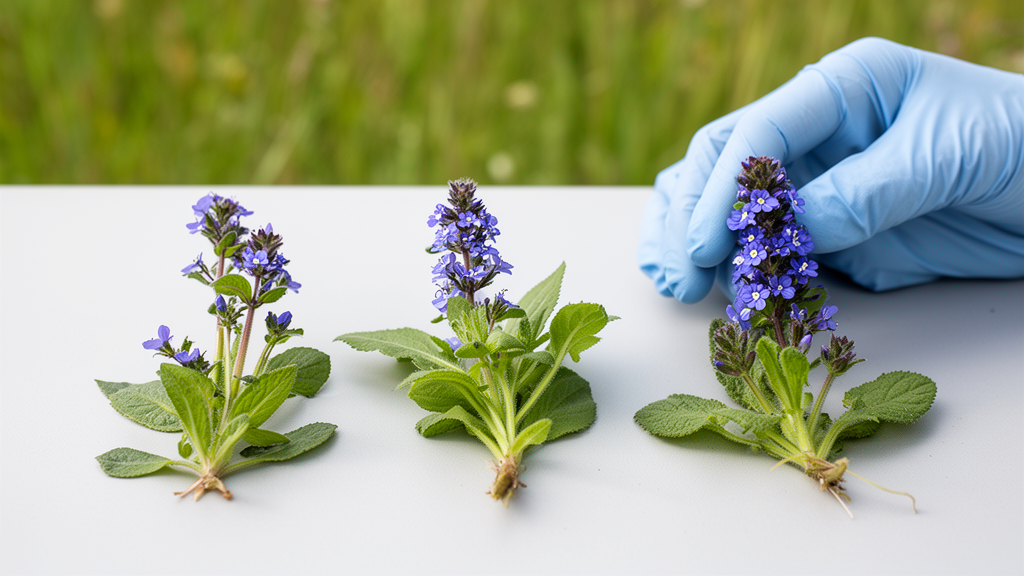
Image Credits: AI Generated

DOI: 10.1186/s12870-026-10212-6

Keywords: Veronica hederifolia, plant taxonomy, species delimitation, polyploidy, ploidy analysis, morphometrics, phylogenetics, DNA sequencing, growth experiment, Species, limits, Veronica

Cite Scienmag News

Juliet Wilcox. (October 22, 2026). Morphological and genetic analysis supports three species in Central European Veronica complex. Scienmag. https://scienmag.com/morphological-and-genetic-analysis-supports-three-species-in-central-european-veronica-complex/


Juliet Wilcox. "Morphological and genetic analysis supports three species in Central European Veronica complex." Scienmag, 22 October 2026, https://scienmag.com/morphological-and-genetic-analysis-supports-three-species-in-central-european-veronica-complex/. Accessed 22 October 2026.

Juliet Wilcox. "Morphological and genetic analysis supports three species in Central European Veronica complex." Scienmag. October 22, 2026. https://scienmag.com/morphological-and-genetic-analysis-supports-three-species-in-central-european-veronica-complex/

Tags: Central European Veronica complexchromosome number as diagnostic traitDNA sequencingDNA sequencing in plant taxonomyenvironmental influence on plant morphologygrowth experimentherbarium-based morphometricslight and water effects on plant morphologylimitsmorphological and genetic plant analysismorphometricsphylogeneticsplant growth experiments under variable conditionsplant taxonomyploidy analysisploidy assessment in VeronicaPolyploidypolyploidy in Veronica speciesspeciesspecies delimitationspecies identification using structural featuresVeronicaVeronica hederifoliaVeronica species differentiation
Share26Tweet16
Previous Post

Survey identifies counseling and access gaps in chemotherapy-related hair loss

Next Post

Review maps cardiac risk tools for inflammatory myopathies

Related Posts

Wari-La Field Survey Records 82 Vascular Plant Species
Agriculture

Wari-La Field Survey Records 82 Vascular Plant Species

October 22, 2026
Rice bran extracts ease STZ injury in cells and diabetic symptoms in mice
Agriculture

Rice bran extracts ease STZ injury in cells and diabetic symptoms in mice

October 22, 2026
Integrated application of CBDP, iPBS, and SCoT markers with DNA barcoding enables effective classification of Chinese prickly ash (Huajiao)
Agriculture

Integrated application of CBDP, iPBS, and SCoT markers with DNA barcoding enables effective classification of Chinese prickly ash (Huajiao)

October 22, 2026
Global Index Ranks Countries Most Ready for Digital Agriculture
Agriculture

Global Index Ranks Countries Most Ready for Digital Agriculture

October 22, 2026
Yak collagen peptides inhibit MMP-1 and extend worm lifespan
Agriculture

Yak collagen peptides inhibit MMP-1 and extend worm lifespan

October 22, 2026
Lavender oil shows selective muscle-fat shifts, no significant growth gain in lambs
Agriculture

Lavender oil shows selective muscle-fat shifts, no significant growth gain in lambs

October 22, 2026
Next Post
Review maps cardiac risk tools for inflammatory myopathies

Review maps cardiac risk tools for inflammatory myopathies

  • Mothers who receive childcare support from maternal grandparents show more optimized

    Mothers who receive childcare support from maternal grandparents show more parental warmth, finds NTU Singapore study

    27656 shares
    Share 11059 Tweet 6912
  • University of Seville Breaks 120-Year-Old Mystery, Revises a Key Einstein Concept

    1061 shares
    Share 424 Tweet 265
  • Bee body mass, pathogens and local climate influence heat tolerance

    682 shares
    Share 273 Tweet 171
  • Researchers record first-ever images and data of a shark experiencing a boat strike

    546 shares
    Share 218 Tweet 137
  • Groundbreaking Clinical Trial Reveals Lubiprostone Enhances Kidney Function

    531 shares
    Share 212 Tweet 133
Science

Embark on a thrilling journey of discovery with Scienmag.com—your ultimate source for cutting-edge breakthroughs. Immerse yourself in a world where curiosity knows no limits and tomorrow’s possibilities become today’s reality!

RECENT NEWS

  • Review maps cardiac risk tools for inflammatory myopathies
  • Morphological and genetic analysis supports three species in Central European Veronica complex
  • Survey identifies counseling and access gaps in chemotherapy-related hair loss
  • Supercritical CO₂ redistributes polyester dyes for fiber recycling

Categories

  • Agriculture
  • Anthropology
  • Archaeology
  • Athmospheric
  • Biology
  • Biotechnology
  • Blog
  • Bussines
  • Cancer
  • Chemistry
  • Climate
  • Earth Science
  • Editorial Policy
  • Marine
  • Mathematics
  • Medicine
  • Pediatry
  • Policy
  • Psychology & Psychiatry
  • Science Education
  • Science News
  • Social Science
  • Space
  • Technology and Engineering

Subscribe to Blog via Email

Enter your email address to subscribe to this blog and receive notifications of new posts by email.

Join 5,151 other subscribers

© 2025 Scienmag - Science Magazine

Welcome Back!

Login to your account below

Forgotten Password?

Retrieve your password

Please enter your username or email address to reset your password.

Log In
No Result
View All Result
  • HOME
  • SCIENCE NEWS
  • CONTACT US

© 2025 Scienmag - Science Magazine

Discover more from Science

Subscribe now to keep reading and get access to the full archive.

Continue reading