


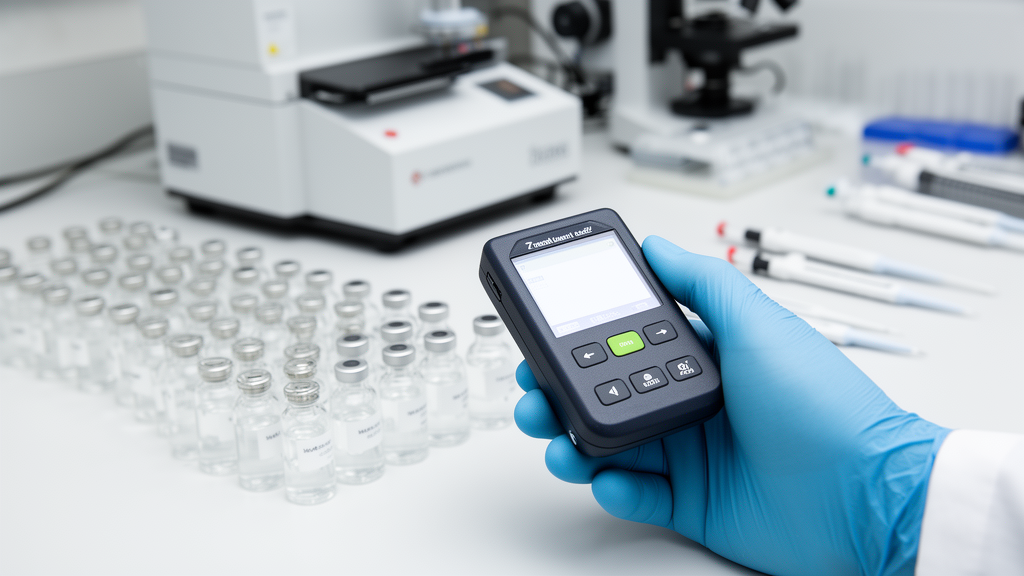
Morphine is one of the most widely used opioid analgesics in modern pain management, yet it is also one of the most abused drugs on the planet. According to the World Drug Report 2021, roughly 275 million people used illicit drugs in 2020, and morphine sits at the center of that storm. Now a comprehensive review published in Frontiers in Analytical Science has mapped out the entire analytical arsenal used to detect morphine and its metabolites in biological samples, from blood and urine to hair, saliva and even fingernails. The verdict is striking: liquid chromatography-mass spectrometry remains the undisputed gold standard, but a new generation of electrochemical sensors is rapidly emerging as a cheaper, faster and more portable alternative that could transform point-of-care drug testing.
The review, led by Xiaoyue Shan and colleagues at Hangzhou Occupational Disease Prevention and Treatment Hospital in China, critically examined liquid chromatographic and electrochemical methods published between 2018 and 2024. The stakes could not be higher. Morphine produces physical and psychological dependence, and overdoses can trigger respiratory failure, nausea, vomiting, central nervous system disorders and even death. Monitoring morphine and its transformation products in biological specimens is therefore essential for overseeing drug addicts, tracking drug abuse and supporting clinical pain management decisions.
What makes morphine analytically interesting is its metabolism. Approximately 90 percent of orally administered morphine is eliminated via urine within 24 hours, with nearly 10 percent remaining in its unmetabolized form. The majority is absorbed by the liver through the organic cation transporter and undergoes rapid metabolism predominantly mediated by the enzyme UGT2B7, generating two glucuronide metabolites with dramatically different biological activities. Morphine 6-glucuronide, or M6G, possesses potent analgesic properties and has been shown in clinical research to contribute to the effects produced by morphine itself, with antinociceptive potency roughly 50 times greater than the parent compound. In contrast, morphine 3-glucuronide, or M3G, has no analgesic potency but may exert anti-analgesic and neuroexcitatory effects. Distinguishing between these metabolites is not merely an academic exercise; it directly affects how clinicians interpret drug concentrations in patients.
Before any detection can happen, however, the biological matrix itself must be tamed. Endogenous compounds such as organic matter, fats, proteins and other interferents significantly affect the reproducibility, sensitivity and selectivity of measurements. The review details the full spectrum of sample pretreatment strategies. Simple dilution and centrifugation can minimize matrix effects, as demonstrated in one LC-MS/MS protocol that analyzed 17 abused substances in oral fluid by diluting 40 microliters of sample with 160 microliters of water before centrifugation. More commonly, liquid-liquid extraction and solid-phase extraction are the most frequently practiced approaches. Liquid-liquid extraction offers simplicity and high extraction coefficients but consumes large quantities of sample and organic solvents, with methanol, chloroform, acetonitrile and various solvent mixtures employed depending on the target analytes.
Solid-phase extraction has become the workhorse for preconcentrating morphine and its metabolites, and the choice of adsorbent greatly affects analytical performance. The review catalogs an impressive array of materials, including polyoxometalate-based frameworks, carbon nanotubes, graphene oxide and molecularly imprinted polymers. One particularly promising development is magnetic solid phase extraction, which uses environmentally friendly magnetic adsorbents. In one study, a graphene oxide-Fe3O4 nanocomposite was synthesized for simultaneous preconcentration of eight psychoactive drugs, including morphine, from urine samples prior to UHPLC-MS/MS analysis, achieving recoveries ranging from 80.4 to 105.5 percent. The magnetic approach demonstrated lower costs, easier handling and better reusability compared with conventional pretreatment methods, showing significant potential for monitoring psychoactive drugs in clinical and forensic settings.
On the chromatographic side, high-performance liquid chromatography coupled with ultraviolet or photodiode array detection remains widely used due to its easy operation and relatively low cost. One HPLC-UV method using a Fe3O4/reduced graphene oxide/silver nanocomposite for magnetic solid phase extraction achieved a limit of detection of 1.8 nanograms per liter for morphine with an enrichment factor of 1000 and relative recoveries between 97.0 and 102.5 percent in human samples. However, the review notes that some UV-based methods exhibit limited sensitivity, with the lowest limit of detection obtained using UV detection being 0.1 nanograms per milliliter. The real revolution came with mass spectrometry. LC-MS/MS methods employing electrospray ionization in positive mode, typically with triple quadrupole mass analyzers and multiple reaction monitoring, offer superior sensitivity and specificity. One validated SPE-LC-MS/MS method for plasma achieved limits of detection between 0.05 and 0.2 nanograms per milliliter for morphine and its glucuronide metabolites, with negligible matrix effects and successful validation through clinical plasma sample analysis.
Ultra-high-performance liquid chromatography has pushed these boundaries even further. UHPLC-MS/MS offers improved resolution, higher precision and dramatically reduced analysis times. One method for postmortem blood achieved a morphine retention time of just 1.24 minutes with a limit of detection of 1.23 nanograms per milliliter, analyzing 84 drugs across more than 12 classes. Another approach using dried blood spots required only 0.83 minutes of separation and was applied to 64 real samples. Perhaps most remarkably, a UHPLC-ESI-MS/MS method using TpBD-COF-functionalized magnetic nanospheres achieved limits of detection as low as 0.53 picograms per milliliter for morphine, 0.33 picograms per milliliter for M3G and 0.16 picograms per milliliter for M6G in mouse urine. These methods have been applied to over 11,000 antemortem and postmortem blood samples, demonstrating robustness at forensic scale.
Yet the review reserves its most enthusiastic attention for electrochemical sensors, which it highlights as a primary analytical approach. These devices offer high sensitivity, low cost, portability and the ability to analyze complex samples with minimal pretreatment. The technical foundation lies in modified electrodes coated with functional nanomaterials that enhance signal transduction. Carbon nanotube-based electrodes have proven particularly versatile. One MgO-decorated single-walled carbon nanotube sensor achieved a limit of detection of 0.8 nanomolar across a linear range spanning 0.003 to 320 micromolar. A Nafion/SWCNT sensor strip demonstrated direct electrochemical determination in untreated capillary whole blood with a total assay time of only several minutes and a sample volume of 40 microliters, showing real potential for point-of-care morphine testing. Graphene-based electrodes have pushed sensitivity further, with one graphene/Co3O4 composite achieving a limit of detection of 80 nanomolar and a peak current 12.5 times higher than a bare electrode.
Metal and metal oxide-based electrodes have delivered equally impressive results. A rhodium nanoparticle-decorated mesoporous carbon sensor achieved a limit of detection of 40 nanomolar for morphine and 45 nanomolar for buprenorphine. An ultrasensitive Au-Ag nanoparticle-modified ZIF-67 sensor on a screen-printed carbon electrode reached a limit of detection of just 3 nanomolar across a broad linear range of 0.05 to 600 micromolar. Polymer-based sensors have added molecular recognition capabilities, with one molecularly imprinted polymer sensor using L-lysine functionalized sodium alginate-activated carbon demonstrating that a 10-fold excess of codeine, heroin, naltrexone and buprenorphine caused no significant interference, achieving a limit of detection of 48 nanomolar in real human urine samples.
The comparison between chromatographic and electrochemical methods reveals a fundamental trade-off. Mass spectrometry offers high accuracy but is frequently time-consuming, costly and large, making it inaccessible to many clinical laboratories. Electrochemical sensors offer rapid response, cost-effectiveness and portability, but matrix effects in real samples can significantly affect sensitivity and recovery, and these issues have prevented the commercial development of many sensors, limiting their use to academic research. Most critically, the review identifies a significant gap: no electrochemical methods have yet been reported that can distinguish morphine from its major metabolites M3G and M6G, which remains a substantial challenge given their overlapping electrochemical behavior. The authors conclude that future studies should focus on enhancing the sensitivity and selectivity of both electrochemical and mass spectrometric methods, miniaturizing these systems for portable on-site analysis, and improving cost-effectiveness to facilitate large-scale application. As the opioid crisis continues to demand faster, cheaper and more accessible testing, the race between the laboratory gold standard and the point-of-care challenger is only just beginning.
Subject of Research: Analytical Chemistry
Article Title: Current methodologies to the analysis of morphine and its metabolites in biological matrices
Article References: Shan, X., Yang, B., Zhang, L., Shao, J., Jin, Y., Qiu, J., Tan, S., Ye, H., & Le, Y. (2026). Current methodologies to the analysis of morphine and its metabolites in biological matrices. Frontiers in Analytical Science, 5, Article 1680414. https://doi.org/10.3389/frans.2025.1680414
Image Credits: AI Generated
DOI: 10.3389/frans.2025.1680414
Keywords: morphine, LC-MS, electrochemical sensors, UHPLC-MS/MS, opioid detection, biological matrices, sample preparation, point-of-care testing, analytical chemistry, forensic toxicology, Current, methodologies
Cite Scienmag News
Connor Fletcher. (October 17, 2026). Morphine Detection Gets Faster, Cheaper and More Portable as New Analytical Methods Race to Keep Up With the Opioid Crisis. Scienmag. https://scienmag.com/morphine-detection-gets-faster-cheaper-and-more-portable-as-new-analytical-methods-race-to-keep-up-with-the-opioid-crisis/
Connor Fletcher. "Morphine Detection Gets Faster, Cheaper and More Portable as New Analytical Methods Race to Keep Up With the Opioid Crisis." Scienmag, 17 October 2026, https://scienmag.com/morphine-detection-gets-faster-cheaper-and-more-portable-as-new-analytical-methods-race-to-keep-up-with-the-opioid-crisis/. Accessed 17 October 2026.
Connor Fletcher. "Morphine Detection Gets Faster, Cheaper and More Portable as New Analytical Methods Race to Keep Up With the Opioid Crisis." Scienmag. October 17, 2026. https://scienmag.com/morphine-detection-gets-faster-cheaper-and-more-portable-as-new-analytical-methods-race-to-keep-up-with-the-opioid-crisis/


