


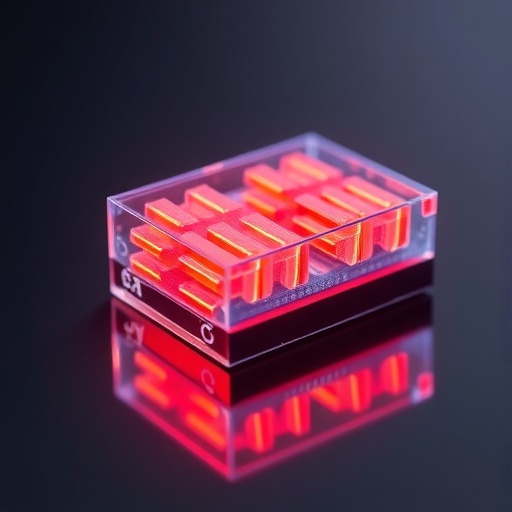
Halide cathode materials, once sidelined because they dissolve in conventional liquid electrolytes, are emerging as potential game-changers for all-solid-state lithium batteries. A comprehensive review in National Science Review by Xiaofei Yang and Xianfeng Li of the Dalian Institute of Chemical Physics, Chinese Academy of Sciences, and Xueliang Sun of the Eastern Institute of Technology, Ningbo, describes how these compounds could help push rechargeable batteries beyond the energy-density limits of today’s dominant lithium-ion technology.
The opportunity begins with chemistry. Commercial lithium-ion batteries generally rely on transition-metal oxide cathodes such as lithium cobalt oxide and lithium iron phosphate. These materials typically release and accommodate approximately one lithium ion per formula unit, limiting their practical capacities to below about 250 milliampere-hours per gram. Extracting more lithium can destabilize the crystal lattice, trigger irreversible phase transitions, and generate mechanical damage as the electrode repeatedly expands, contracts, and changes composition during cycling.
Halide cathodes, which contain fluorine, chlorine, or other halogen elements, can follow more complex electrochemical pathways. Instead of relying solely on lithium-ion intercalation, they may combine intercalation with conversion reactions. During conversion, the original cathode structure is partially reorganized as metal-halide bonds break and new phases form. This process can transfer several electrons per formula unit, creating a route to capacities substantially higher than those of conventional oxide cathodes.
Iron trifluoride, or FeF₃, illustrates the scale of the promise. It has a theoretical capacity of approximately 712 milliampere-hours per gram. At an average operating voltage near 2.7 volts, that corresponds to a theoretical specific energy of around 1,950 watt-hours per kilogram at the active-material level—several times the energy associated with many commercial cathode materials. Halide chemistry may also offer economic benefits. Recent work involving iron chloride has reported retention of 83 percent of its capacity after 1,000 cycles, while the estimated material cost was described as roughly 2 percent of that of lithium iron phosphate.
The shift to all-solid-state lithium batteries is central to making these materials viable. In liquid-electrolyte cells, many halide compounds can dissolve or react with the electrolyte, causing active material loss and rapid performance deterioration. Solid electrolytes remove the liquid solvent that drives this dissolution, allowing researchers to reconsider halides as practical cathode candidates. The solid environment may also improve safety by eliminating flammable liquid components, although the resulting batteries still face major manufacturing and interface challenges.
Another advantage is that some halide compounds can contribute to both ionic and electronic transport within a composite cathode. Conventional solid-state electrodes usually require substantial quantities of solid electrolyte and conductive carbon. These inactive components reduce the fraction of energy-storing material, while the boundaries between cathode particles, electrolyte particles, and carbon create solid-solid interfaces that can restrict charge movement. Poor physical contact can become especially damaging as particles change volume during repeated conversion reactions.
The review highlights Li₁.₃Fe₁.₂Cl₄ as an example of a halide material with unusually high transport properties. Reported ionic conductivity reaches approximately 10⁻⁴ siemens per centimeter, while electronic conductivity can approach 10⁻⁵ siemens per centimeter. Such a combination could allow the cathode itself to participate in the movement of lithium ions and electrons, reducing the need for large amounts of separate conductive additives. In an all-solid-state electrode, this “all-in-one” behavior could increase the proportion of active material and has been associated with an energy density of 529.3 watt-hours per kilogram under the reported conditions.
The same reactions that create high capacity, however, make halide cathodes difficult to control. At high voltage, excessive delithiation can weaken the structure, promote irreversible phase changes, and potentially release reactive halogen-containing gases. At low voltage, metallic products and highly lithiated halides may form passivating layers. These layers can block lithium-ion transport, isolate active particles electronically, and make subsequent charge and discharge reactions less reversible. The result is a narrow operating window in which a material must deliver high energy without undergoing destructive chemical transformation.
Researchers are pursuing several strategies to widen that window. Protective coatings can limit unwanted reactions at cathode–electrolyte interfaces, while stronger metal–halogen bonding may improve structural stability. Nanostructuring can shorten lithium-ion diffusion distances and accommodate mechanical strain, although it may increase surface reactivity and complicate large-scale manufacturing. Controlling the reaction pathway is another approach: rather than allowing uncontrolled conversion, scientists aim to guide the formation of intermediate phases that preserve electrical contact and remain accessible to lithium ions.
According to the review, the next stage of halide-cathode development will require more than discovering a material with a high theoretical capacity. Machine-learning models and high-throughput calculations could screen the vast chemical space of halides for combinations of capacity, voltage, conductivity, and stability. Advanced characterization will be needed to track phase evolution and identify the precise mechanisms governing intercalation and conversion. At the device level, cathode composition, solid electrolyte, current collector, pressure, and manufacturing method must be designed together. The researchers argue that progress in these areas could move halide cathodes from promising laboratory compounds toward safer, more affordable, and substantially higher-energy all-solid-state batteries for electric vehicles and grid storage.
Web References: https://doi.org/10.1093/nsr/nwag438
References: National Science Review, DOI: 10.1093/nsr/nwag438
Keywords
Halide cathodes, all-solid-state lithium batteries, ASSLBs, lithium-ion batteries, FeF₃, iron chloride, conversion chemistry, energy density, solid electrolytes, battery materials, machine learning, electric vehicles, grid storage
Cite Scienmag News
Faith Mcneil. (August 11, 2026). More Electrons, Fewer Interfaces: Halide Cathodes Raise All-Solid-State Battery Energy Density. Scienmag. https://scienmag.com/more-electrons-fewer-interfaces-halide-cathodes-raise-all-solid-state-battery-energy-density/
Faith Mcneil. "More Electrons, Fewer Interfaces: Halide Cathodes Raise All-Solid-State Battery Energy Density." Scienmag, 11 August 2026, https://scienmag.com/more-electrons-fewer-interfaces-halide-cathodes-raise-all-solid-state-battery-energy-density/. Accessed 4 September 2026.
Faith Mcneil. "More Electrons, Fewer Interfaces: Halide Cathodes Raise All-Solid-State Battery Energy Density." Scienmag. August 11, 2026. https://scienmag.com/more-electrons-fewer-interfaces-halide-cathodes-raise-all-solid-state-battery-energy-density/


