

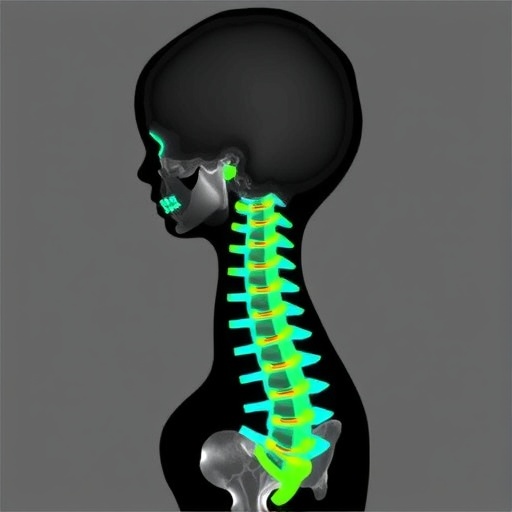
The field of pediatric radiology has always been at the forefront of medical imaging, aiming to strike a balance between diagnostic accuracy and the safety of young patients. In a recent study conducted by Katsunuma and Sato, age-dependent evaluations of organ and effective doses in pediatric full-spine radiography have been rigorously analyzed, revealing essential insights into how radiation exposure varies with age, projection types, and filtration methods. This research is pivotal, as the detrimental effects of radiation are particularly concerning in children, who are more sensitive to its potential long-term risks.
Utilizing advanced Monte Carlo simulations, this study meticulously investigates how different radiographic techniques affect the amount of radiation absorbed by children during full-spine imaging. The particular focus on anteroposterior and posteroanterior projections allows for a comparative analysis that is both innovative and insightful. The adoption of Monte Carlo methods in this research offers a sophisticated way to model the complex interactions of radiation with biological tissues, ensuring that the findings are both accurate and applicable in clinical settings.
A significant finding of the research is the variation in organ doses based on age. As children grow, their body composition and the anatomical distance between organs change, leading to differences in radiation absorption. This discovery underlines the necessity for age-specific protocols in pediatric radiography. Tailoring the imaging techniques not only reduces unnecessary exposure but also enhances the overall quality of care that clinicians can provide to their young patients.
Moreover, the study investigates the impact of copper filtration on radiation doses. Copper filters are known to enhance the quality of radiographic images while simultaneously reducing patient dose. The incorporation of such filtration techniques could revolutionize standard practices in pediatric radiography, emphasizing safety without compromising the diagnostic efficacy of imaging studies. Understanding how different configurations affect radiation exposure is essential in establishing guidelines that ensure the well-being of pediatric patients undergoing radiographic examinations.
In practical terms, implementing the findings from this study could significantly alter existing protocols in pediatric radiology departments. Radiologists and technicians might leverage this information to customize exposure settings based on a patient’s age and anatomical factors, ensuring the least amount of radiation without sacrificing image quality. Such adjustments are critical considering the ongoing discussions about radiation safety and its implications for young patients.
While the benefits of personalized imaging protocols are clear, it’s equally important to consider the education and training of medical professionals. Continuous updates in radiological training programs about the latest research findings can equip healthcare providers with the tools they need to make informed decisions about pediatric imaging. This emphasis on education will empower practitioners to adopt safer practices, reducing the long-term risks associated with radiation exposure in children.
Also noteworthy is the findings related to the efficacy of different projection techniques. Anteroposterior and posteroanterior projections provide varied insights into pediatric spinal health, with each method presenting unique advantages in specific clinical scenarios. The study’s detailed analysis offers a wealth of knowledge that clinicians can tap into when deciding on the optimal approach for a particular case, ensuring that every child receives the most appropriate imaging study tailored to their needs.
What sets this study apart is not only the use of cutting-edge simulations but also the holistic approach taken to assess the cumulative impact of various factors on radiation dose. By combining age-related anatomical variations, projection types, and the influence of filtration, researchers have painted a comprehensive picture of pediatric radiology that will serve as a valuable resource for practitioners moving forward.
As discussions surrounding patient safety continue to grow in importance, findings such as those from Katsunuma and Sato carry profound implications. Policymakers, healthcare organizations, and practitioners all have a shared responsibility to prioritize the health and safety of pediatric populations. This study underscores the importance of evidence-based practices in radiology that can help mitigate risk while enhancing the effectively diagnostic capabilities of radiographic imaging.
Finally, as we advance into an era of personalized medicine, adapting radiographic protocols to meet the distinct needs of pediatric patients will be essential. This requires a concerted effort from all stakeholders in the healthcare system, emphasizing the importance of research-backed initiatives in pediatric radiology. Engaging with ongoing studies like this will ensure that practices keep pace with advancements in technology and medical understanding, ultimately leading to better health outcomes for children across the globe.
In conclusion, the findings from this critical study offer a new lens through which pediatric radiology can be viewed. Understanding the nuances of age, projection types, and filtration techniques presents an opportunity for clinicians to transform how they approach imaging for children, reinforcing the imperative to prioritize safety and quality in every aspect of care. As this research gains attention in the scientific community, it stands poised to inspire further investigations that may lead to enhanced protocols and practices that cater to the unique challenges presented within pediatric healthcare.
Subject of Research: Pediatric full-spine radiography and radiation dose evaluation using Monte Carlo simulations.
Article Title: Age-dependent evaluation of organ and effective doses in pediatric full-spine radiography: influence of anteroposterior and posteroanterior projection and copper filtration using Monte Carlo simulation.
Article References:
Katsunuma, Y., Sato, K. Age-dependent evaluation of organ and effective doses in pediatric full-spine radiography: influence of anteroposterior and posteroanterior projection and copper filtration using Monte Carlo simulation.
Pediatr Radiol (2025). https://doi.org/10.1007/s00247-025-06452-7
Image Credits: AI Generated
DOI:
Keywords: Pediatric, radiology, radiation dose, Monte Carlo simulation, anteroposterior projection, posteroanterior projection, copper filtration.


