


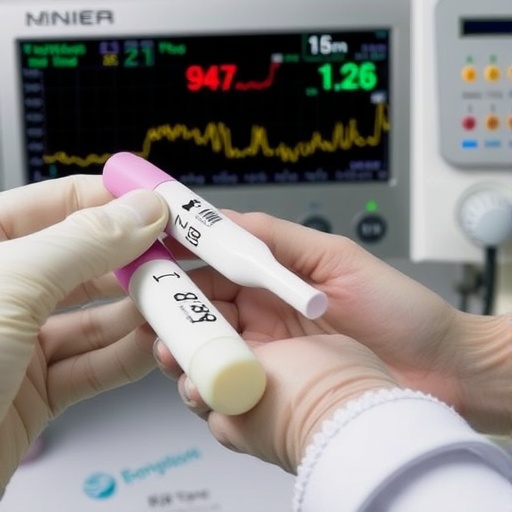
In an intriguing advancement shaping neonatal care, recent research highlights the potential impact of routine six-hour transcutaneous bilirubin (TcB) surveillance on the rate at which bilirubin levels rise in newborns. This pivotal study conducted by Al-Abdi S.Y., published in the Journal of Perinatology, delves into how regular monitoring could refine our understanding and management of neonatal jaundice, a common yet serious condition affecting countless infants globally.
Neonatal jaundice is characterized by elevated levels of bilirubin in the blood, leading to a yellowing of the skin and eyes. If left unchecked, severe jaundice can escalate into kernicterus, causing irreversible neurological damage. Consequently, timely and accurate monitoring of bilirubin levels is essential. Traditional methods primarily rely on serum bilirubin measurements, but these are invasive, necessitating heel pricks, which can be distressing for neonates and stressful for parents.
The emergence of transcutaneous bilirubinometry presents a non-invasive alternative, offering real-time, painless bilirubin level estimates via the skin surface. This method holds promise in enhancing surveillance while easing the clinical workflow. Al-Abdi’s investigation focuses specifically on the rate of rise (ROR) of bilirubin concentrations over six-hour intervals using TcB, examining how these measurements correspond with established American Academy of Pediatrics (AAP) thresholds that dictate clinical decision-making.
By meticulously tracking the bilirubin ROR via TcB every six hours, the study assesses whether this intensified monitoring paradigm could identify infants who surpass critical age-specific AAP cut-points earlier than conventional monitoring schedules. The underlying hypothesis is that frequent surveillance may facilitate earlier detection of rapid bilirubin increases, enabling timely intervention and potentially averting the progression toward harmful levels.
Data extracted from this research indicate a compelling correlation between routine 6-hour TcB measurements and the identification of bilirubin ROR values that meet or exceed AAP guidelines. Importantly, the utilization of TcB for regular checks could streamline the monitoring process by reducing reliance on invasive blood sampling without compromising clinical vigilance.
Moreover, the study probes the sensitivity and specificity of TcB-derived ROR values in recognizing at-risk neonates. Early detection through this method may translate into prompt phototherapy initiation, lowering the risk of bilirubin neurotoxicity. The feasibility of incorporating such rigorous surveillance protocols into hospital practice is also considered, promising both improved patient comfort and clinical outcomes.
This research infuses new energy into the ongoing discourse surrounding bilirubin management strategies, amplifying the role of non-invasive tools in neonatal intensive care units. The implications stretch beyond mere convenience; they touch on paradigms of patient safety, cost-effectiveness, and holistic care.
Another intriguing aspect addressed is the age-specific AAP cut-points for bilirubin levels, which differ based on the neonate’s postnatal age in hours and other risk factors. By aligning TcB surveillance with these nuanced thresholds, clinicians can tailor interventions with higher precision, potentially minimizing unnecessary treatments and hospital stays.
However, the evaluation also acknowledges limitations inherent in TcB technologies, including variability due to skin pigmentation, gestational age, and instrument calibration. The study advocates for a balanced integration of TcB monitoring within a comprehensive clinical framework, emphasizing that TcB is an adjunct rather than a replacement for serum bilirubin testing.
The potential impact of this routine six-hour TcB monitoring extends to public health realms, where early and accurate identification of neonatal jaundice could help decrease global morbidity associated with bilirubin-induced neurological dysfunction. In low-resource settings, where access to laboratory facilities is limited, TcB represents a promising solution for widespread jaundice screening.
Furthermore, the study explores operational challenges, such as training requirements for healthcare personnel and device maintenance, underscoring that successful implementation hinges on more than technological availability. Embedding TcB monitoring into standardized workflows demands interdisciplinary collaboration and continuous quality control.
The study’s findings invite a broader conversation about integrating digital health innovations with traditional clinical care to optimize newborn outcomes. Routine six-hour TcB surveillance could exemplify a shift toward data-driven, patient-centered monitoring, enhancing both safety and efficiency.
In summary, Al-Abdi’s pioneering research provides robust evidence supporting the adoption of routine six-hour transcutaneous bilirubin monitoring to detect critical rises in bilirubin levels in neonates. This approach promises to refine jaundice management, reduce invasive procedures, and align treatment decisions with established clinical guidelines, representing a substantial leap forward in neonatal healthcare.
As the medical community continues to embrace technological innovations, routine TcB surveillance may soon become a standard of care, reshaping protocols and advancing neonatology toward safer, more effective practices. This research lays the groundwork for further investigations into long-term outcomes and broader applicability across diverse populations.
The study also highlights vital questions for future research, including how artificial intelligence and machine learning integration with TcB devices could predict and preempt bilirubin toxicity, personalizing surveillance and treatment. This forward-looking perspective underscores the dynamic nature of neonatal care innovation.
Ultimately, this research acts as a beacon illuminating the path toward improved neonatal monitoring, promising tangible impacts on infant health and reinforcing the critical importance of early, frequent, and precise bilirubin surveillance.
Cite Scienmag News
Harold Sullivan. (April 27, 2026). Monitoring Bilirubin Rise in 6-Hour Routine Tests. Scienmag. https://scienmag.com/monitoring-bilirubin-rise-in-6-hour-routine-tests/
Harold Sullivan. "Monitoring Bilirubin Rise in 6-Hour Routine Tests." Scienmag, 27 April 2026, https://scienmag.com/monitoring-bilirubin-rise-in-6-hour-routine-tests/. Accessed 5 September 2026.
Harold Sullivan. "Monitoring Bilirubin Rise in 6-Hour Routine Tests." Scienmag. April 27, 2026. https://scienmag.com/monitoring-bilirubin-rise-in-6-hour-routine-tests/


