


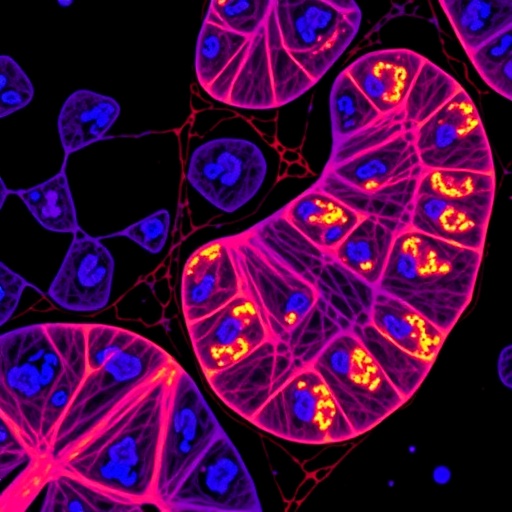
In a groundbreaking study poised to redefine therapeutic strategies for renal cancers, researchers have unveiled an unprecedented molecular portrait of fumarate hydratase (FH)-deficient renal cell carcinoma (RCC). This aggressive and notoriously hard-to-treat subtype of RCC has long eluded effective targeted therapies, largely due to incomplete understanding of its underlying molecular architecture. The team led by Zhang, Zhao, Yin, and colleagues employed comprehensive multi-omic profiling to decipher the complex landscape of FH-deficient RCC, exposing distinct molecular subtypes and unveiling a palette of druggable pathways that promise to transform clinical intervention.
Renal cell carcinoma, a heterogeneous group of kidney cancers, varies widely in terms of genetic and metabolic alterations. Among these, FH-deficient RCC represents a particularly virulent form, characterized by the loss of function in the gene encoding fumarate hydratase—an enzyme critical in the tricarboxylic acid (TCA) cycle. The deficiency induces a metabolic shift that fuels tumor progression and immune evasion, yet the precise molecular events driving this phenotype have remained elusive. By integrating genomic, transcriptomic, proteomic, and metabolomic datasets, the authors meticulously mapped the unique hallmarks defining FH-deficiency, illuminating pathways that could be exploited therapeutically.
At the genomic level, the study revealed recurrent mutations and copy number variations that cluster into distinct molecular subclasses within FH-deficient RCC. These subclasses exhibit differential alterations in key oncogenic drivers and tumor suppressors, hinting at diverse evolutionary trajectories and vulnerabilities. The identification of these subtypes is not merely academic: it sets a foundation for more personalized treatment regimens tailored to the molecular signature of each tumor, moving away from one-size-fits-all therapies that have yielded limited success in FH-deficient cases.
Transcriptomic profiling further underscored the metabolic rewiring inherent in these tumors. Consistent with FH loss, the researchers observed upregulation of hypoxia-inducible factors (HIFs) and activation of pseudohypoxic signaling pathways. This hypoxia mimicry fosters a tumor microenvironment conducive to angiogenesis, immune cell infiltration skewing, and metabolic adaptation. Intriguingly, the study delineated subtype-specific transcriptomic landscapes, where certain molecular groups demonstrated enhanced glycolytic flux while others showed pronounced alterations in amino acid metabolism, suggesting alternative metabolic dependencies that could be therapeutically targeted.
Proteomic analyses complemented these findings by identifying aberrant expression of kinases, metabolic enzymes, and stress-response proteins that reinforce the malignant phenotype. Notably, several kinases overexpressed in specific subtypes were highlighted as potential candidates for pharmacologic inhibition. This layered approach—bridging genomic mutations with proteomic effectors—provides a roadmap for developing small molecule inhibitors or repurposing existing kinase inhibitors in this difficult-to-treat patient population.
Metabolomics added another dimension, exposing accumulations of oncometabolites such as fumarate itself, which exerts profound epigenetic and signaling effects. The aberrant buildup of fumarate drives the formation of succination adducts on proteins, altering their function and fostering oncogenesis. By characterizing metabolite profiles across subtypes, the authors provided insights into metabolic vulnerabilities that could be disrupted to stifle tumor growth. For example, targeting pathways that buffer reactive oxygen species or modulate redox homeostasis may represent viable strategies.
A particularly exciting aspect of the study involves the immune landscape associated with FH-deficient RCC. Immune profiling revealed that FH loss engenders an immunosuppressive microenvironment through upregulation of checkpoints such as PD-L1 and recruitment of myeloid-derived suppressor cells. These findings not only explain the limited efficacy of immunotherapies in these tumors but also suggest combinatorial strategies. By concurrently targeting metabolic pathways alongside immune checkpoints, a synergistic therapeutic effect may be achieved, overcoming resistance mechanisms.
The study’s integrative methodology allowed the authors to catalog actionable targets with unprecedented resolution. Among the panoply of therapeutic opportunities, inhibitors of HIF signaling, metabolic enzymes such as glutaminase, and epigenetic modulators emerged as frontrunners. Some of these agents are already in clinical development or approved for other cancers, raising the possibility of repurposing them for FH-deficient RCC. Furthermore, the molecular subtyping provides biomarkers that can guide patient selection for these interventions, optimizing response rates.
Beyond the immediate clinical implications, the comprehensive dataset generated serves as a rich resource for future research. The identification of subtype-specific molecular circuits lays groundwork for mechanistic studies dissecting tumor evolution, metabolic plasticity, and drug resistance. In addition, the authors’ open-access approach to data sharing accelerates collaborative efforts to harness these findings for therapeutic innovation.
This study also prompts a paradigm shift in the classification of renal cell carcinomas. Traditional histopathological and imaging-based diagnostics fall short of capturing the molecular complexity illuminated here. Incorporating molecular profiling into routine clinical workflows will enable more precise diagnoses, prognostications, and treatment planning, heralding a new era of precision oncology in nephrology.
Moreover, the findings deepen understanding of metabolic oncogenesis broadly. FH mutations are characteristic not only of RCC but also hereditary leiomyomatosis and related syndromes, implicating a wider spectrum of diseases. The metabolic disruptions elucidated may inform therapeutic approaches in other fumarate-driven pathologies, amplifying the impact of this work beyond kidney cancer alone.
Remarkably, the study integrates sophisticated bioinformatic analyses with experimental validation, lending robustness to the conclusions. Functional assays confirmed the dependency of certain subtypes on identified pathways, reinforcing their candidacy as therapeutic targets. This bench-to-bedside continuum exemplifies translational research’s potential to rapidly inform and improve patient care.
In summary, the comprehensive molecular profiling conducted by Zhang, Zhao, Yin, and colleagues profoundly advances our understanding of FH-deficient renal cell carcinoma. By delineating molecular subtypes and pinpointing actionable vulnerabilities, this research provides a beacon of hope for patients facing this formidable malignancy. The study’s insights set the stage for personalized, mechanism-driven therapies that could dramatically improve outcomes and transform the therapeutic landscape.
As this work gains traction, it will be critical to expand clinical trials incorporating these molecular classifications to validate efficacy and safety in diverse patient cohorts. Additionally, ongoing research into the dynamic interplay between tumor metabolism and immune modulation will refine combination treatment strategies. The prospect of finally decoding the molecular mysteries of FH-deficient RCC and converting that knowledge into lifesaving therapies has never been closer.
Ultimately, this landmark investigation exemplifies how integrative omics and precision medicine converge to tackle previously intractable cancers. It underscores the necessity of multidisciplinary approaches and next-generation technologies in unraveling cancer’s complexities. For the thousands diagnosed annually with FH-deficient renal tumors, this research lights a path toward more hopeful futures.
—
Zhang, X., Zhao, J., Yin, X. et al. Comprehensive molecular profiling of FH-deficient renal cell carcinoma identifies molecular subtypes and potential therapeutic targets.
Nat Commun 16, 4398 (2025). https://doi.org/10.1038/s41467-025-59513-8
Cite Scienmag News
Nathaniel Bowman. (May 12, 2025). Molecular Profiling Reveals FH-Deficient Renal Cancer Targets. Scienmag. https://scienmag.com/molecular-profiling-reveals-fh-deficient-renal-cancer-targets/
Nathaniel Bowman. "Molecular Profiling Reveals FH-Deficient Renal Cancer Targets." Scienmag, 12 May 2025, https://scienmag.com/molecular-profiling-reveals-fh-deficient-renal-cancer-targets/. Accessed 4 September 2026.
Nathaniel Bowman. "Molecular Profiling Reveals FH-Deficient Renal Cancer Targets." Scienmag. May 12, 2025. https://scienmag.com/molecular-profiling-reveals-fh-deficient-renal-cancer-targets/


