

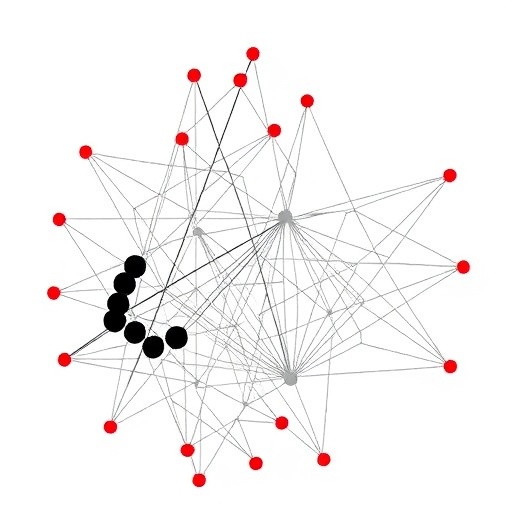
In an era where collaborative learning is becoming increasingly essential in educational environments, the need to analyze student interactions within the classroom setting has taken center stage. Recent research conducted by Oumelaid, El Boukari, and El Ghordaf introduces a novel approach to understanding these dynamics through a graph-theoretical framework. This innovative methodology provides profound insights into classroom collaboration, ultimately enhancing educational experiences and learner outcomes.
The study employs a sophisticated graph-theoretical model to dissect and interpret student interaction networks. This mathematical tool allows educators and researchers to visualize relationships and connections between students in a more structured manner. By translating classroom interactions into a mathematical framework, the researchers aim to uncover patterns and structures that may not be immediately apparent through conventional observational methods. This approach leverages the power of graphs to represent data, transforming complex social dynamics into analyzable metrics.
At the core of the inquiry lies the understanding that collaboration in the classroom is not merely a byproduct of group work or pair activities. Instead, it represents a multifaceted network characterized by various degrees of interaction intensity, types of relationships, and the diverse roles that students adopt during collaborative tasks. The graph-theoretical framework assigns specific nodes for students and edges to represent interactions, thus allowing researchers to quantify the nature and efficacy of collaborative efforts across different learning contexts.
The authors emphasize that student interaction networks are not static; rather, they evolve throughout the learning experience. By employing dynamic graph-theoretical techniques, the study meticulously tracks these changes, offering insights into how collaboration facilitates a learning environment. This dynamism, which may reflect shifts in group composition, interaction styles, and task complexity, underscores the significance of adaptability in educational strategies.
Moreover, the research investigates various configurations of student interaction, such as leader-follower dynamics and peer-to-peer collaboration. Through this lens, it unpacks the roles that individuals play within the collaborative network. Interestingly, the findings indicate that certain configurations are more conducive to successful learning outcomes than others. For instance, groups with a balanced distribution of leadership roles tend to exhibit higher levels of engagement, knowledge sharing, and ultimately, better academic performance.
One of the critical innovations explored in this study is how educational technologies, such as online collaborative platforms, integrate with the graph-theoretical framework. Digital tools that facilitate interaction can scale these discussions and dynamics, offering a real-time perspective on how interactions unfold. By implementing advanced algorithms, educators can receive immediate feedback about the effectiveness of peer interactions and collaboration during online and hybrid learning settings.
The research also highlights the implications for educators in terms of instructional design. By understanding how various factors influence student interactions, educators can tailor their teaching strategies to foster effective collaboration. The utilization of the graph-theoretical model serves as a decision-making tool for teachers looking to optimize group dynamics, thereby enhancing student engagement and participation during collaborative tasks.
Additionally, the study presents a call for a more interdisciplinary approach to education research. By leveraging concepts from mathematics, sociology, and psychology, the researchers advocate for a comprehensive examination of collaborative learning. This multidisciplinary perspective not only enriches the understanding of interaction networks but also informs pedagogical practices by bridging the gap between theory and application.
Furthermore, the findings suggest that fostering a culture of collaboration requires intentional design and facilitation. Educators must create environments that encourage open communication, shared responsibility, and trust among students. The graph-theoretical framework provides a concrete way to assess whether these conditions are met and how to adjust teaching methods accordingly.
While the initial findings are promising, the authors recognize that more extensive longitudinal studies are necessary to validate the framework’s effectiveness across diverse educational situations. There is immense potential for future research to delve deeper into the various dimensions of student interaction networks, exploring how cultural differences, classroom size, and subject matter impact collaborative learning.
In conclusion, Oumelaid, El Boukari, and El Ghordaf’s research paves the way for a rich dialogue on the essential role of collaboration in modern education. By harnessing the analytical power of graph theory, educators are provided with an innovative tool to enhance their understanding of student interactions. As educational environments continue to evolve, this formalized approach to classroom collaboration offers a strategic pathway toward improving both teaching effectiveness and student achievement.
The integration of complex mathematical models into educational practice represents not only an academic advancement but also a proactive step toward reshaping how collaborative learning is perceived and implemented. The implications of this research extend beyond mere academic inquiry; they are poised to influence educational policies and instructional designs that prioritize meaningful collaboration in an increasingly interconnected world.
As we move further into the 21st century, the demand for robust collaboration skills in the workforce is undeniable. The move toward instilling these skills in students through research-driven practices such as those illustrated in this study will undoubtedly prepare future generations for the complexities of modern life. The promise of a brighter, more collaborative future in education lies in the innovative frameworks that researchers like Oumelaid, El Boukari, and El Ghordaf are developing today.
Subject of Research: Analyzing student interaction networks using graph-theoretical frameworks.
Article Title: Graph-theoretical framework for analyzing student interaction networks: a formalized approach to classroom collaboration.
Article References: Oumelaid, N., El Boukari, B. & El Ghordaf, J. Graph-theoretical framework for analyzing student interaction networks: a formalized approach to classroom collaboration.
Discov Educ (2025). https://doi.org/10.1007/s44217-025-01075-4
Image Credits: AI Generated
DOI: 10.1007/s44217-025-01075-4
Keywords: Classroom collaboration, Graph theory, Student interaction networks, Educational technology, Collaborative learning.


