


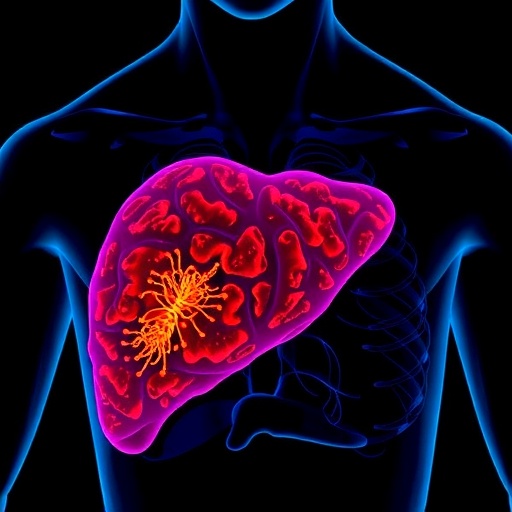
In a groundbreaking study published in Nature Metabolism, researchers have unveiled a critical metabolic checkpoint governing liver regeneration: the mitochondrial NAD⁺ content within hepatocytes. This finding reshapes our understanding of liver biology, positioning mitochondrial NAD⁺ as a crucial limiting factor in the liver’s remarkable capacity to self-repair after injury.
Liver regeneration is a complex physiological process, integral to recovery from damage caused by toxins, infections, or surgical removal of tissue. Despite decades of intensive study, the precise molecular and metabolic cues orchestrating this regenerative capacity have remained incompletely understood. Mukherjee and colleagues have now illuminated the pivotal role played by mitochondrial nicotinamide adenine dinucleotide (NAD⁺), a central coenzyme in redox reactions and cellular energy metabolism.
The study begins by detailing the metabolic adaptations that hepatocytes undergo during regeneration. Hepatocytes, the primary functional cells of the liver, require a burst of energy and biosynthetic activity to proliferate and restore lost tissue. NAD⁺, predominantly localized in mitochondria, supports critical enzymatic reactions involved in oxidative metabolism and ATP production, essential for fueling these cellular processes.
Using sophisticated genetic and metabolic tracing tools, the authors quantify NAD⁺ levels within hepatocyte mitochondria throughout liver regeneration. Intriguingly, they discover that mitochondrial NAD⁺ availability is not static but dynamically modulated during regenerative phases. Crucially, this mitochondrial NAD⁺ pool becomes limiting at key junctures, constraining the hepatocytes’ proliferative potential.
The team employed liver-specific knockout models deficient in enzymes responsible for NAD⁺ synthesis and salvage pathways, observing marked impairments in regeneration. These models exhibited reduced mitochondrial NAD⁺ levels, compromised energy metabolism, and delayed or incomplete restoration of liver mass. This strongly implicates mitochondrial NAD⁺ as a bottleneck controlling regenerative efficacy.
Beyond mere correlative data, the researchers demonstrate that pharmacological supplementation to boost mitochondrial NAD⁺—using precursors such as nicotinamide riboside—robustly enhances hepatocyte proliferation rates and accelerates liver regrowth. These interventions reinvigorate oxidative phosphorylation and integrate tightly with signaling cascades known to drive cellular proliferation.
This nexus between metabolism and regenerative biology suggests a paradigm shift: rather than simply responding to environmental or hormonal cues, liver regeneration is metabolically gated by the energetic and redox state of hepatocyte mitochondria. NAD⁺ emerges here as a master metabolic regulator, integrating bioenergetic demands with cell cycle machinery.
The findings also raise provocative questions regarding the role of mitochondrial dysfunction in chronic liver diseases. If NAD⁺ depletion constrains regenerative capacity, pathologies characterized by impaired mitochondrial function—such as nonalcoholic fatty liver disease or cirrhosis—may stem from, or be exacerbated by, failure to maintain robust mitochondrial NAD⁺ pools. Therapeutic restoration of NAD⁺ homeostasis could thus represent a novel strategy for enhancing liver repair in afflicted patients.
Detailed biochemical analyses reveal how NAD⁺ modulates key mitochondrial dehydrogenases and electron transport chain complexes that drive ATP synthesis. This fine-tuned regulation ensures a steady supply of energy and metabolic intermediates necessary for biosynthesis, epigenetic remodeling, and redox balance during proliferation. The coupling between metabolic flux and regenerative signals underscores the importance of mitochondrial health in organ homeostasis.
Moreover, the study carefully dissects compartment-specific roles of NAD⁺, distinguishing between its pools in the nucleus, cytosol, and mitochondria. While NAD⁺ is ubiquitous, it is the mitochondrial fraction that exerts the most profound influence on liver regenerative dynamics. This compartmentalization adds layers of complexity to NAD⁺ biology and points to selective therapeutic targeting.
The team’s use of cutting-edge metabolomics, live imaging, and molecular genetics lends unprecedented resolution to these findings. Their work not only charts a previously unappreciated metabolic landscape but also opens new avenues for translational research. The prospect of modulating mitochondrial NAD⁺ to amplify regenerative responses holds significant promise for clinical intervention following liver injury or resection.
Importantly, this research integrates with broader themes of aging and metabolic health. Given that NAD⁺ levels decline with age and contribute to mitochondrial dysfunction, this mechanism may partly explain the reduced regenerative capacity observed in elderly populations. Enhancing NAD⁺ metabolism could therefore rejuvenate liver function and resilience.
The implications extend beyond hepatology. Other highly regenerative tissues may similarly depend on mitochondrial NAD⁺ status. This work invites exploration into cross-organ parallels and systemic NAD⁺ regulation, potentially revolutionizing regenerative medicine and metabolic disease treatment.
In summary, Mukherjee et al. reveal mitochondrial NAD⁺ as a critical metabolic gatekeeper for liver regeneration, blending intricate biochemical pathways with cellular proliferative machinery. This breakthrough deepens our grasp of liver biology and offers compelling translational opportunities to enhance organ repair through metabolic therapeutics, with far-reaching clinical and biomedical ramifications.
Cite Scienmag News
Ophelia Keating. (November 20, 2025). Mitochondrial NAD+ Limits Liver Regeneration Capacity. Scienmag. https://scienmag.com/mitochondrial-nad-limits-liver-regeneration-capacity/
Ophelia Keating. "Mitochondrial NAD+ Limits Liver Regeneration Capacity." Scienmag, 20 November 2025, https://scienmag.com/mitochondrial-nad-limits-liver-regeneration-capacity/. Accessed 3 September 2026.
Ophelia Keating. "Mitochondrial NAD+ Limits Liver Regeneration Capacity." Scienmag. November 20, 2025. https://scienmag.com/mitochondrial-nad-limits-liver-regeneration-capacity/


