


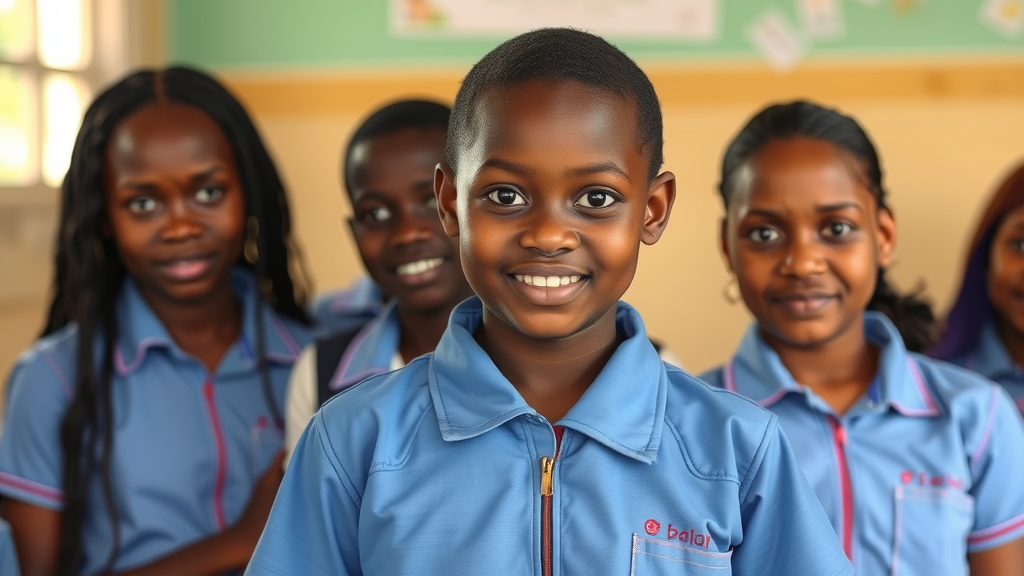
A new study published in the journal Archives of Sexual Behavior has quantified, with unusual statistical precision, what educators and public health advocates across West Africa have long suspected: the absence of comprehensive sex education in Nigerian secondary schools is measurably linked to early pregnancy and school dropout among girls. Drawing on survey data from 650 female students drawn from Nigeria’s four principal geopolitical regions—the North, South, East and West—the research team used structural equation modeling to trace the pathways connecting classroom silence about sexuality to life-altering outcomes for adolescent girls. The findings arrive at a moment when Nigeria’s adolescent reproductive health indicators remain among the most concerning in the world, and they offer policymakers an evidence base that is difficult to dismiss.
The study, led by Ekene Francis Okagbue of Southwest University in Chongqing, China, together with colleagues at Hohai University, Sanming University and Southwest University’s Faculty of Education, set out to assess how the integration—or lack of integration—of sex education within the Nigerian secondary school curriculum affects knowledge of contraceptives, access to them, family support and experiences of social stigmatization. The researchers framed their inquiry around a sobering premise: when schools decline to teach students about their own bodies, contraception and sexually transmitted infections, girls are left to navigate sexual health decisions with incomplete or inaccurate information, and the consequences ripple outward to national literacy levels and economic development.
Technically, the research relied on structural equation modeling, a statistical framework that allows researchers to test networks of hypothesized relationships among observed and latent variables simultaneously. The team evaluated respondents’ self-reported knowledge and access using validated psychometric instruments, and their measurement models satisfied conventional criteria for reliability and validity before the structural paths were estimated. The results were striking. Sex education showed a statistically significant relationship with early pregnancy, with a standardized path coefficient of β = 0.22 at p < .001, and with girls’ dropout, at β = 0.25, p < .001. In plain terms, the absence of sex education was significantly associated with both outcomes, and the associations held after the researchers accounted for the complexity of the sampling design across Nigeria’s diverse regions.
Perhaps the most policy-relevant finding concerned contraception. The study found a positive association between sex education and access to contraceptives, with a path coefficient of β = 0.10 at p = .01. Although the effect size is modest, the direction is consistent with a large international literature: students who receive formal instruction about reproductive health are more likely to know where contraceptive services exist, to feel entitled to use them and to actually obtain them. In the Nigerian context, where adolescent access to contraception is constrained by cost, geography, provider judgment and social taboo, even a small school-based effect could translate into meaningful public health gains at scale.
The mediation analyses added another layer of sophistication. Rather than treating sex education as a simple on-off switch, the researchers tested whether its influence travels through intermediate variables. Three mediated pathways emerged as statistically significant. Sex education influenced early pregnancy partly through social stigmatization, with an indirect effect of β = 0.02 at p = .03. Sex education influenced girls’ dropout partly through access to contraceptives, with an indirect effect of β = 0.04 at p < .001. And sex education influenced early pregnancy partly through contraceptive access as well, with an indirect effect of β = 0.02 at p = .05. The pattern suggests partial mediation: sex education operates both directly and indirectly, shaping not only what girls know but also the social and practical resources available to them.
The stigmatization pathway deserves particular attention. In many Nigerian communities, a pregnant student faces ostracism from peers, teachers and sometimes her own family, and this stigma frequently forces her out of the classroom permanently. By teaching adolescents about reproduction in a factual, non-judgmental setting, schools may reduce the shame that surrounds the topic and equip girls to prevent unintended pregnancies in the first place. The finding resonates with earlier Nigerian research, including a 2001 study in Port Harcourt documenting substantial sexual activity among female secondary school students, and more recent work in south-western Nigeria showing that students hold significant gaps in sexual health knowledge and often hold ambivalent attitudes toward instruction on the subject.
The study also situates itself within a global evidence base that has grown remarkably consistent over three decades. A landmark 2021 review in the Journal of Adolescent Health synthesized decades of research and concluded that comprehensive sex education does not hasten sexual initiation, as critics frequently claim, but instead delays it, reduces risky behavior and increases contraceptive use. Comparable studies in the Netherlands have demonstrated the effectiveness of school-based programs for young adolescents, while systematic reviews across multiple countries have catalogued the benefits of structured curricula. The Nigerian findings extend this literature to a setting where cultural and religious sensitivities have historically made sex education politically fraught, and where the Family Life and HIV Education curriculum, formally adopted in many states, remains unevenly implemented in practice.
The implications for Nigeria are considerable. Adolescents and young people represent a large and growing share of the country’s population, and national HIV programming has repeatedly identified this group as a priority. Previous research has documented gender differences in sexually transmitted infection treatment-seeking behavior among Nigerian youth, and systematic reviews have highlighted the scale of child sexual abuse in the country—circumstances that make accurate, age-appropriate sexual health information a matter of safety as well as development. When girls drop out of school following an early pregnancy, they face diminished lifetime earnings, higher fertility and poorer health outcomes for themselves and their children, and the national economy forfeits the human capital those girls would otherwise have contributed. The study’s authors argue that the far-reaching consequences for literacy levels justify treating sex education not as a moral controversy but as an educational and economic imperative.
The research is not without limitations typical of cross-sectional survey designs. The data capture associations at a single point in time, and causal claims, however well supported by the modeling, ultimately require longitudinal or experimental confirmation. Self-reported measures of sexual behavior and contraceptive access are vulnerable to social desirability bias, particularly on sensitive topics in conservative communities, and the researchers acknowledge that the sample, while regionally balanced, cannot capture every nuance of Nigeria’s extraordinary diversity of ethnicity, religion and educational provision. Nevertheless, the consistency of the direct and mediated pathways, and the alignment of the results with international evidence, lend the findings substantial credibility.
For policymakers, the message is unambiguous. Strengthening the sex education component of the secondary school curriculum, training teachers to deliver it competently, engaging parents and community leaders to reduce resistance, and ensuring that adolescent-friendly contraceptive services exist alongside classroom instruction together form an integrated strategy. The study’s authors underscore that sex education’s value lies not only in preventing early pregnancy and dropout but in equipping girls with strategies to protect themselves against sexually transmitted infections and to make informed decisions about their own lives. As Nigeria grapples with how to convert its youthful population into a demographic dividend, this research offers a clear, statistically grounded case that what is not taught in the classroom is exacting a measurable and preventable cost outside it.
Subject of Research: The impact of the lack of sex education in the Nigerian secondary school curriculum on early pregnancy and school dropout among girls.
Article Title: Assessing the Impact of Lack of Sex Education in the Nigerian Secondary School Education Curriculum on Early Pregnancy and School Dropout in Girls
Article References: Okagbue, E. F., Wen, X., Ezeachikulo, U. P., Ouattara, C. A. T., & Nwigwe, E. O. (2026). Assessing the Impact of Lack of Sex Education in the Nigerian Secondary School Education Curriculum on Early Pregnancy and School Dropout in Girls. Archives of Sexual Behavior. https://doi.org/10.1007/s10508-026-03514-1
Image Credits: AI Generated
DOI: 10.1007/s10508-026-03514-1
Keywords: sex education, Nigeria, secondary school, early pregnancy, school dropout, contraception, adolescent health, structural equation modeling, social stigmatization, girls education, reproductive health, curriculum policy
Cite Scienmag News
Courtney Benton. (September 12, 2026). Missing Sex Education Drives Teen Pregnancies and School Dropouts in Nigeria. Scienmag. https://scienmag.com/missing-sex-education-drives-teen-pregnancies-and-school-dropouts-in-nigeria/
Courtney Benton. "Missing Sex Education Drives Teen Pregnancies and School Dropouts in Nigeria." Scienmag, 12 September 2026, https://scienmag.com/missing-sex-education-drives-teen-pregnancies-and-school-dropouts-in-nigeria/. Accessed 4 October 2026.
Courtney Benton. "Missing Sex Education Drives Teen Pregnancies and School Dropouts in Nigeria." Scienmag. September 12, 2026. https://scienmag.com/missing-sex-education-drives-teen-pregnancies-and-school-dropouts-in-nigeria/


