

Wednesday, July 29, 2026
Science
No Result
View All Result
  • Login
  • HOME
  • SCIENCE NEWS
  • CONTACT US
  • HOME
  • SCIENCE NEWS
  • CONTACT US
No Result
View All Result
Scienmag
No Result
View All Result
Home Science News Medicine

miR-195-5p regulates apoptosis in colorectal cancer via XIAP BCL2 Survivin network

July 28, 2026
in Medicine
Reading Time: 2 mins read
0
miR-195-5p regulates apoptosis in colorectal cancer via XIAP BCL2 Survivin network

miR-195-5p regulates apoptosis in colorectal cancer via XIAP BCL2 Survivin network

65
SHARES
587
VIEWS
Share on FacebookShare on Twitter
ADVERTISEMENT

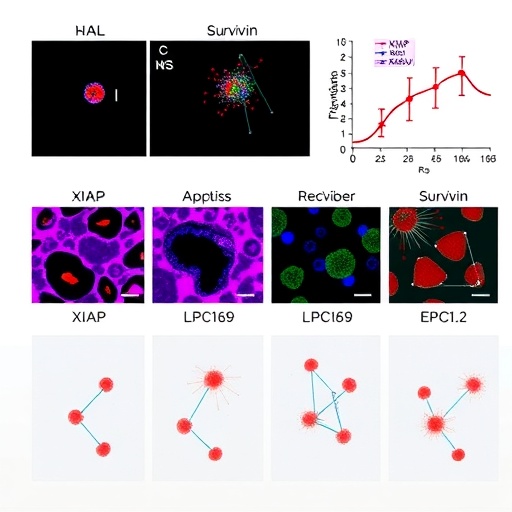
A new study in Cell Death Discovery reports that a microRNA known as miR-195-5p can steer the molecular fate of colorectal cancer cells by reshaping the network that decides whether apoptosis proceeds. Researchers highlight a regulatory chain that connects multiple survival and death regulators, suggesting miR-195-5p as a potential lever to weaken cancer cell resilience.

MicroRNAs act as post-transcriptional regulators, tuning gene expression without changing DNA sequences. In this work, miR-195-5p is positioned as a key controller of apoptotic signaling, influencing how colorectal cancer cells respond to internal stress and growth cues. Rather than affecting a single target in isolation, the molecule appears to coordinate a broader balance between pro-death and pro-survival factors.

Central to the findings is the XIAP/BCL2/Survivin axis. XIAP (X-linked inhibitor of apoptosis protein) is a well-known brake on caspase activity, helping cells avoid programmed death. BCL2, a mitochondrial guardian of survival, counteracts apoptotic membrane permeabilization. Survivin further complicates the picture by supporting cell division while also contributing to apoptosis resistance.

According to the authors, miR-195-5p suppresses this survival triad, reducing the protective effect each protein provides. By lowering XIAP and BCL2 and diminishing Survivin-mediated persistence, the cancer cells lose multiple layers of defense at once. The resulting shift promotes progression of the apoptotic cascade, increasing the likelihood that stressed tumor cells undergo programmed cell death.

This “network-level” approach is particularly notable in oncology, where single-target strategies often face rapid compensation. The study’s emphasis on coordinated regulation supports the idea that microRNA-based interventions may yield more durable biological effects than perturbing one pathway component alone.

The experimental framework links miR-195-5p expression patterns to functional outcomes in colorectal cancer models, tying molecular changes to measurable apoptosis-related responses. Overall, the data argue that miR-195-5p functions as a tumor-inhibitory regulator capable of disarming the apoptosis resistance machinery.

If these mechanisms translate beyond preclinical contexts, miR-195-5p could represent a candidate for therapeutic development aimed at restoring cell-death competency. More broadly, the work underscores how microRNAs can serve as network governors, integrating signals across apoptosis and survival pathways.

By placing the XIAP/BCL2/Survivin network under miR-195-5p control, the study offers a clear mechanistic story for how apoptosis can be reactivated in colorectal cancer. It also provides a target-rich framework for future work exploring combination strategies that pair miRNA modulation with existing anti-cancer regimens.


Subject of Research: miR-195-5p regulation of apoptosis in colorectal cancer

Article Title: miR-195-5p controls apoptotic cascade by regulating the XIAP/BCL2/Survivin network in colorectal cancer

Article References: Piccinno, E., Scalavino, V., Bianco, G. et al. miR-195-5p controls apoptotic cascade by regulating the XIAP/BCL2/Survivin network in colorectal cancer. Cell Death Discov. (2026). https://doi.org/10.1038/s41420-026-03280-y

Image Credits: AI Generated

DOI: https://doi.org/10.1038/s41420-026-03280-y

Tags: apoptosis resistance mechanisms in colorectal cancercancer cell resilience and apoptosis modulationmicroRNA impact on cell apoptosis pathwaysmicroRNA regulation in colorectal cancermicroRNA therapeutic targetsmicroRNA-basedmiR-195-5p and apoptosismolecular mechanisms of colorectal cancer progressionmolecular networks controlling apoptosispost-transcriptional gene regulation in cancerrole of BCL2 in cancer cell survivaltargeting XIAP and Survivin in cancer therapyXIAP/BCL2/Survivin signaling pathway
Share26Tweet16
Previous Post

Polygenic Liability to Loneliness Raises Psychosis Risk via Adolescent Loneliness, EU-GEI Study

Next Post

AI Model Predicts Necrotizing Enterocolitis Diagnosis and Surgical Outcomes

Related Posts

Integrated breastfeeding peer counseling improves equity in hospital lactation support
Medicine

Integrated breastfeeding peer counseling improves equity in hospital lactation support

July 29, 2026
American Society for Nutrition Names Locations for NUTRITION 2027 and 2028
Medicine

American Society for Nutrition Names Locations for NUTRITION 2027 and 2028

July 28, 2026
Ultrasensitive Imaging Detects Lung Inflammation in Male Mice With Magnetic Particles
Medicine

Ultrasensitive Imaging Detects Lung Inflammation in Male Mice With Magnetic Particles

July 28, 2026
Study Shows Lung Ultrasound Can Guide PEEP Adjustments in Newborns
Medicine

Study Shows Lung Ultrasound Can Guide PEEP Adjustments in Newborns

July 28, 2026
Justine Varieur Turco Appointed CEO and Executive Director of Society of Thoracic Surgeons
Medicine

Justine Varieur Turco Appointed CEO and Executive Director of Society of Thoracic Surgeons

July 28, 2026
Fathers’ Ultra-Processed Food Intake May Affect Babies’ Birth Weight and Size
Medicine

Fathers’ Ultra-Processed Food Intake May Affect Babies’ Birth Weight and Size

July 28, 2026
Next Post
AI Model Predicts Necrotizing Enterocolitis Diagnosis and Surgical Outcomes

AI Model Predicts Necrotizing Enterocolitis Diagnosis and Surgical Outcomes

  • Mothers who receive childcare support from maternal grandparents show more

    Mothers who receive childcare support from maternal grandparents show more parental warmth, finds NTU Singapore study

    27656 shares
    Share 11059 Tweet 6912
  • University of Seville Breaks 120-Year-Old Mystery, Revises a Key Einstein Concept

    1061 shares
    Share 424 Tweet 265
  • Bee body mass, pathogens and local climate influence heat tolerance

    682 shares
    Share 273 Tweet 171
  • Researchers record first-ever images and data of a shark experiencing a boat strike

    546 shares
    Share 218 Tweet 137
  • Groundbreaking Clinical Trial Reveals Lubiprostone Enhances Kidney Function

    531 shares
    Share 212 Tweet 133
Science

Embark on a thrilling journey of discovery with Scienmag.com—your ultimate source for cutting-edge breakthroughs. Immerse yourself in a world where curiosity knows no limits and tomorrow’s possibilities become today’s reality!

RECENT NEWS

  • Integrated breastfeeding peer counseling improves equity in hospital lactation support
  • Mid-Holocene Thar Desert hydroclimate patterns reveal seasonal shifts in India
  • Better Consumer Choices Could Improve Next-Gen Queueing Platforms
  • American Society for Nutrition Names Locations for NUTRITION 2027 and 2028

Categories

  • Agriculture
  • Anthropology
  • Archaeology
  • Athmospheric
  • Biology
  • Biotechnology
  • Blog
  • Bussines
  • Cancer
  • Chemistry
  • Climate
  • Earth Science
  • Editorial Policy
  • Marine
  • Mathematics
  • Medicine
  • Pediatry
  • Policy
  • Psychology & Psychiatry
  • Science Education
  • Social Science
  • Space
  • Technology and Engineering

Subscribe to Blog via Email

Enter your email address to subscribe to this blog and receive notifications of new posts by email.

Join 5,146 other subscribers

© 2025 Scienmag - Science Magazine

Welcome Back!

Login to your account below

Forgotten Password?

Retrieve your password

Please enter your username or email address to reset your password.

Log In
No Result
View All Result
  • HOME
  • SCIENCE NEWS
  • CONTACT US

© 2025 Scienmag - Science Magazine

Discover more from Science

Subscribe now to keep reading and get access to the full archive.

Continue reading
