


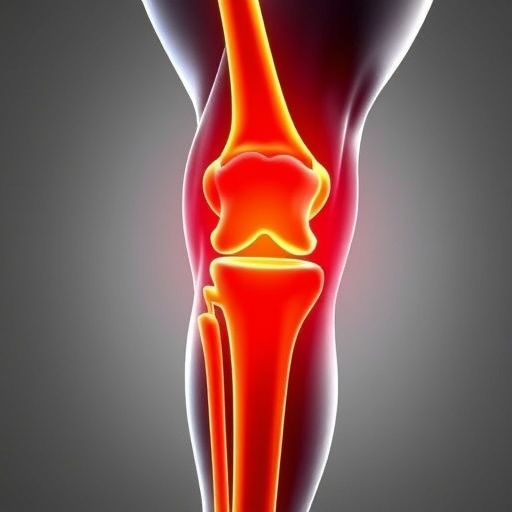
A groundbreaking study conducted by NYU Langone Health has demonstrated that genicular artery embolization, a minimally invasive procedure performed under mild sedation, can significantly alleviate chronic knee pain associated with osteoarthritis. This innovative approach, executed by interventional radiologists within a two-hour timeframe, offers new hope to millions suffering from this debilitating joint condition that commonly affects the aging population.
Osteoarthritis triggers a cascade of pathological changes in the knee joint, prominently including inflammation caused by the degradation of cartilage and surrounding tissues. This inflammation stimulates the formation of abnormal blood vessels—a process known as angiogenesis—which increases blood flow to the joint. These newly formed vessels facilitate the migration of immune cells that exacerbate inflammation and contribute to persistent pain. Genicular artery embolization targets this vascular remodeling, aiming to mitigate the pathological blood flow feeding the inflamed synovium lining the knee.
The procedure involves the targeted delivery of biocompatible hydrogel beads through an image-guided catheter inserted via a tiny incision in the thigh. These microspheres selectively occlude up to half a dozen arteries supplying the synovium, effectively cutting off the pathological blood supply and interrupting the inflammatory signaling pathways. In the recent study, over 60% of the 25 patients undergoing this therapy in Manhattan reported marked improvements in pain, function, and stiffness one year post-procedure, highlighting the clinical potential of this approach.
Published online on August 12, 2025, in the Journal of Vascular and Interventional Radiology, this prospective single-arm trial closely monitored symptomatic patients with moderate to severe knee osteoarthritis unresponsive to conventional treatments such as corticosteroid injections, arthrocentesis, platelet-rich plasma therapy, and physiotherapy. Patient-reported outcomes, including standardized surveys assessing pain, stiffness, and mobility, were coupled with biomarker analyses to objectively evaluate treatment success.
One of the most compelling findings was the significant decline in serum levels of vascular endothelial growth factor (VEGF) observed at one-year follow-up, with an average reduction of 12%. VEGF is a pivotal protein driving angiogenesis, and its decline suggests that genicular artery embolization may directly alter the pathological vascular and inflammatory milieu within the osteoarthritic joint. Similarly, levels of interleukin 1 receptor antagonist (IL-1Ra), a key modulator of inflammation, decreased by 15%, further underscoring the anti-inflammatory effects of this intervention.
Dr. Ryan Hickey, associate professor and section chief of vascular and interventional radiology at NYU Grossman School of Medicine, emphasized the broader implications of the findings. He noted that genicular artery embolization not only provides symptomatic relief but might also influence the natural history of osteoarthritis by modifying underlying disease processes. The minimally invasive nature and favorable safety profile, with mild and transient side effects limited to localized skin discoloration and minor incision discomfort, render it particularly appealing to patients contraindicated for surgery.
Patients selected for this study ranged in age from 50 to 78 years, encompassing individuals for whom total knee replacement might be premature or medically risky due to comorbidities such as obesity, uncontrolled diabetes, cardiovascular disease, or tobacco use. This procedure fills a critical therapeutic void, offering a viable alternative for those in intermediate disease stages who have failed first-line therapies.
The technical execution of genicular artery embolization leverages advanced imaging techniques—primarily fluoroscopy—to guide catheters through the femoral artery to target knee vessels precisely. The delivery of embolic material is carefully calibrated to avoid ischemic damage to surrounding tissues, underscoring the expertise required in interventional radiology to navigate the intricate vascular anatomy of the knee.
In addition to clinical assessments, the study underscores the value of incorporating biochemical biomarkers such as VEGF as objective measures of treatment efficacy. Unlike subjective pain scales, these blood tests quantify molecular changes reflective of underlying pathophysiology, potentially serving as benchmarks for future clinical trials and long-term monitoring.
The research team, led by principal investigator Dr. Bedros Taslakian, now vice chair for research at the University of Miami Miller School of Medicine, highlighted the need for larger, randomized controlled trials to validate these findings and determine the longevity of benefits derived from embolization. Understanding patient-specific predictors for response will be crucial to refining indications and optimizing outcomes.
Further investigations are underway to elucidate the precise molecular and cellular mechanisms by which vascular occlusion translates into reduced joint inflammation and pain relief. Insights gained could pave the way for combination therapies or refinements in embolic materials to enhance the durability and scope of clinical benefits.
As osteoarthritis continues to impose a growing burden on healthcare systems — with approximately 24 million new knee cases diagnosed annually in the United States alone — the development of safe, effective, and minimally invasive treatment modalities like genicular artery embolization holds transformative potential. This intervention may ultimately delay or reduce the need for joint replacement surgeries, improving quality of life for a vast patient population.
In summary, the NYU Langone Health study propels genicular artery embolization into the spotlight as a promising therapeutic frontier in osteoarthritis management. Through strategic vascular intervention and evidence-based biomarker monitoring, this technique unlocks new possibilities to address chronic pain and joint degeneration that have long challenged clinicians and patients alike.
News Publication Date: 12-Aug-2025
Web References: http://dx.doi.org/10.1016/j.jvir.2025.08.009
References:
Taslakian B, Hickey R, et al. A Prospective Single-Arm Trial of Genicular Artery Embolization for Symptomatic Knee Osteoarthritis: Clinical and Biomarker Outcomes. Journal of Vascular and Interventional Radiology. 2025 Aug 12. DOI: 10.1016/j.jvir.2025.08.009.
Cite Scienmag News
Ophelia Keating. (August 15, 2025). Minimally Invasive Procedure Eases Painful Symptoms of Knee Osteoarthritis. Scienmag. https://scienmag.com/minimally-invasive-procedure-eases-painful-symptoms-of-knee-osteoarthritis/
Ophelia Keating. "Minimally Invasive Procedure Eases Painful Symptoms of Knee Osteoarthritis." Scienmag, 15 August 2025, https://scienmag.com/minimally-invasive-procedure-eases-painful-symptoms-of-knee-osteoarthritis/. Accessed 3 September 2026.
Ophelia Keating. "Minimally Invasive Procedure Eases Painful Symptoms of Knee Osteoarthritis." Scienmag. August 15, 2025. https://scienmag.com/minimally-invasive-procedure-eases-painful-symptoms-of-knee-osteoarthritis/


