


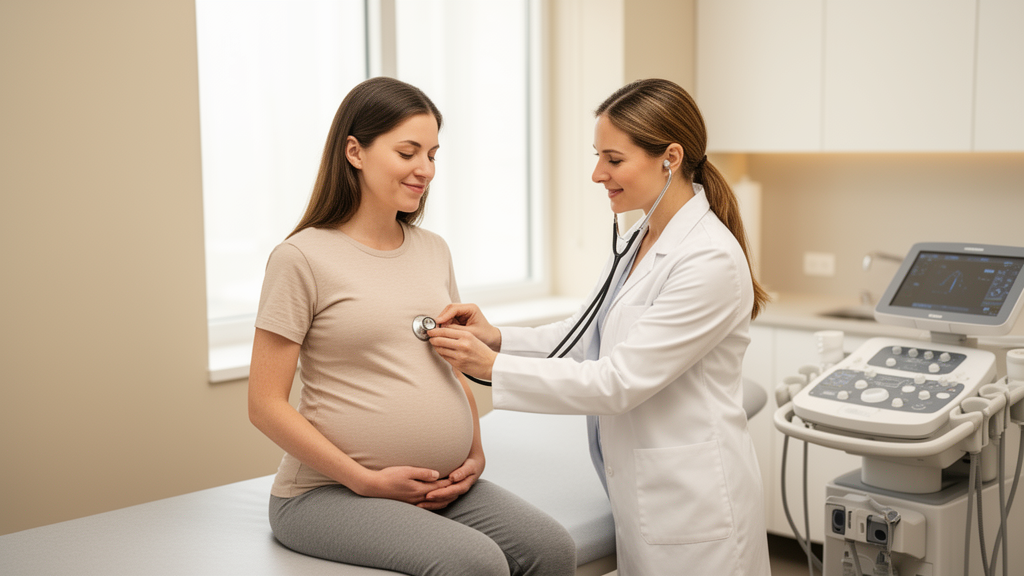
Most of what the medical community knows about the cardiovascular dangers of COVID-19 has been learned from hospitalized patients, intensive care units, and delivery wards. A new population-based study now offers a different and largely reassuring perspective: among pregnant women who contracted SARS-CoV-2 and were managed in routine community outpatient settings, the risk of serious cardiovascular complications was not elevated compared with matched pregnant women who never tested positive for the virus.
The study, published in Frontiers in Cardiovascular Medicine, was led by Ilia Davarashvili of the cardiology department at Leumit Health Care in Jerusalem, together with colleagues at Tel Aviv University, Ariel University, and Laniado Medical Center in Israel. The team conducted a retrospective, population-based matched cohort study using longitudinal electronic health records from Leumit Health Services, a nationwide health maintenance organization in Israel serving approximately 730,000 members. The analysis covered pregnancies documented between January 2020 and December 2025, a period spanning the original pandemic waves through the Omicron era.
The researchers identified 5,879 candidate pregnancies with a first documented COVID-19 infection during pregnancy, of which 5,776 met eligibility criteria. These were matched one-to-one, without replacement, to women without documented COVID-19 during pregnancy, drawn from a pool of 48,965 eligible pregnancies. Matching variables included ethnic sector, socioeconomic status, birth year, body mass index category, number of fetuses, number of prior COVID-19 vaccine doses, the calendar quarter of the estimated last menstrual period, and first-pregnancy status, with maternal age used to rank candidates within strata. The final analytical cohort comprised 4,068 COVID-19-exposed women and 4,068 matched controls, a total of 8,136 pregnancies.
The matching process was effective. Mean maternal age was 28.79 years in the exposed group versus 28.67 years in controls, pre-pregnancy weight was nearly identical, and chronic conditions were well balanced: pre-existing hypertension affected 9.05 percent of the COVID-19 group and 8.81 percent of controls, smoking 6.95 versus 7.64 percent, and diabetes mellitus 0.93 versus 0.69 percent, none of which differed significantly. Baseline cardiac histories, including valve disease and prior myocarditis, were similarly comparable between the two groups.
The primary outcome was a composite of major adverse cardiovascular events: myocarditis, cardiomyopathy, atrial fibrillation or flutter, congestive heart failure, myocardial infarction, pulmonary embolism, or deep venous thrombosis. Outcomes were assessed from 30 days after the estimated last menstrual period through one year thereafter, anchored to the pregnancy rather than to the infection date. The result was striking in its symmetry: six major cardiovascular events occurred in each group, an incidence of 0.15 percent in both, with an odds ratio of exactly 1.00 and a 95 percent confidence interval of 0.27 to 3.74. No cases of atrial fibrillation or flutter were recorded in either group during follow-up, and individual components such as myocarditis, cardiomyopathy, heart failure, pulmonary embolism, and deep venous thrombosis showed no statistically significant differences.
What did differ were symptoms rather than structural cardiac diagnoses. Cough was recorded in 6.88 percent of the COVID-19 group versus 4.87 percent of controls, an odds ratio of 1.45 with a confidence interval of 1.19 to 1.75. Backache was recorded in 13.8 percent versus 11.8 percent, an odds ratio of 1.20. Chest pain showed a non-significant trend toward higher rates in the infected group, at 2.11 versus 1.60 percent, and headache followed a similar pattern. The authors note that these symptom differences may relate to post-acute manifestations described after COVID-19, but that the study did not apply a formal Long-COVID definition and cannot establish that these symptoms represent that syndrome. Notably, the excess in backache was accompanied by a baseline imbalance in the same symptom, so differences in care-seeking or symptom-reporting behavior cannot be excluded.
The biological backdrop made the null result somewhat unexpected. Pregnancy imposes a substantial physiological stress test on the maternal cardiovascular system, with blood volume increasing by 40 to 50 percent, cardiac output rising, and baseline heart rate elevated. SARS-CoV-2, meanwhile, is known to cause myocardial injury through direct viral effects, hypoxia, and COVID-19-associated coagulopathy, a syndrome involving endothelial dysfunction, platelet activation, immunothrombosis, and dysregulated coagulation. Because pregnancy itself is a hypercoagulable state, the interaction of these two processes seemed biologically plausible as a driver of cardiac complications. The authors suggest that the maternal cardiovascular reserve proved resilient enough to compensate for this combined burden in the majority of community-managed cases.
The findings align with the multicenter CORONA-VTE-Network study by Bikdeli and colleagues, which followed 169 pregnant outpatients with COVID-19 for 90 days and observed only two venous thromboembolic events and no non-thrombotic cardiovascular events. They contrast, however, with studies such as those by Metz and colleagues at 17 US hospitals and Ferrara and colleagues in California, which reported increased serious maternal morbidity associated with SARS-CoV-2 infection. The authors emphasize that those studies measured broad composites of obstetric, respiratory, thrombotic, and systemic complications rather than specific cardiovascular endpoints, and largely focused on hospitalized or peripartum populations exposed to greater physiological stress. Their message is that cardiovascular risk observed in hospitalized cohorts should not necessarily be extrapolated to ambulatory pregnant women with generally mild disease.
One important caveat concerns thrombosis. The absence of a statistically significant increase in pulmonary embolism or deep vein thrombosis in this cohort should not be read as evidence that SARS-CoV-2 poses no thrombotic risk in pregnancy. Large registry studies have reported elevated relative risks: Bruno and colleagues found an adjusted hazard ratio of 2.62 for venous thromboembolism from pregnancy through six weeks postpartum among infected women, and Örtqvist and colleagues, using Swedish and Norwegian registry data, reported a hazard ratio of 4.63 in the first two weeks after infection, although absolute event numbers remained low. With only a handful of events in the present cohort, the study was underpowered to detect such differences, and the authors caution that their findings demonstrate uncommon clinically apparent events rather than the absence of any effect on thrombotic risk.
The authors also propose a possible protective mechanism rooted in the immunology of pregnancy. Successful pregnancy involves a shift toward a Th2-type cytokine profile that promotes fetal tolerance, a state associated with spontaneous remission of certain autoimmune diseases such as rheumatoid arthritis. Because severe COVID-19 myocardial injury is thought to be driven by dysregulated immune activation, endothelial inflammation, and cytokine-mediated tissue damage, the relatively controlled inflammatory environment of uncomplicated pregnancy might partially blunt the cytokine storm seen in severe infection. The researchers stress that this hypothesis remains speculative and requires confirmation in prospective mechanistic studies.
For clinicians, the practical message is one of reassurance with vigilance. In the absence of severe respiratory distress or red-flag clinical signs, COVID-19 infection in an ambulatory pregnant patient does not appear to warrant a radical departure from standard obstetric and cardiac monitoring protocols. The study has limitations typical of retrospective electronic record research, including possible documentation bias, incomplete data on in-hospital clinical course, the inability to classify infection severity by objective measures such as oxygen saturation, and a design that excluded pregnancies ending in first-trimester loss. Variant-specific viral data were also unavailable. Still, sensitivity analyses restricted to unvaccinated pregnancies and stratified by pre-Omicron versus Omicron-dominant periods, as well as matched-pair analyses using conditional logistic regression and exact McNemar tests, all yielded consistent results. For the vast majority of pregnant women managed in the community, the cardiovascular course of COVID-19 appears favorable.
Subject of Research: Cardiovascular outcomes of COVID-19 infection during pregnancy in ambulatory care settings
Article Title: Cardiovascular complications as a consequence of coronavirus infection in pregnant women managed in ambulatory settings
Article References: Davarashvili, I., Israel, A., Vinker, S., & Hochler, H. (2026). Cardiovascular complications as a consequence of coronavirus infection in pregnant women managed in ambulatory settings. Frontiers in Cardiovascular Medicine, 13, Article 1907396. https://doi.org/10.3389/fcvm.2026.1907396
Image Credits: AI Generated
DOI: 10.3389/fcvm.2026.1907396
Keywords: COVID-19, pregnancy, cardiovascular complications, myocarditis, venous thromboembolism, ambulatory care, matched cohort study, electronic health records, SARS-CoV-2, maternal health, epidemiology, Frontiers in Cardiovascular Medicine
Cite Scienmag News
Harold Sullivan. (October 16, 2026). Mild COVID-19 in Pregnancy Shows No Rise in Major Heart Complications, Large Cohort Finds. Scienmag. https://scienmag.com/mild-covid-19-in-pregnancy-shows-no-rise-in-major-heart-complications-large-cohort-finds/
Harold Sullivan. "Mild COVID-19 in Pregnancy Shows No Rise in Major Heart Complications, Large Cohort Finds." Scienmag, 16 October 2026, https://scienmag.com/mild-covid-19-in-pregnancy-shows-no-rise-in-major-heart-complications-large-cohort-finds/. Accessed 16 October 2026.
Harold Sullivan. "Mild COVID-19 in Pregnancy Shows No Rise in Major Heart Complications, Large Cohort Finds." Scienmag. October 16, 2026. https://scienmag.com/mild-covid-19-in-pregnancy-shows-no-rise-in-major-heart-complications-large-cohort-finds/


