

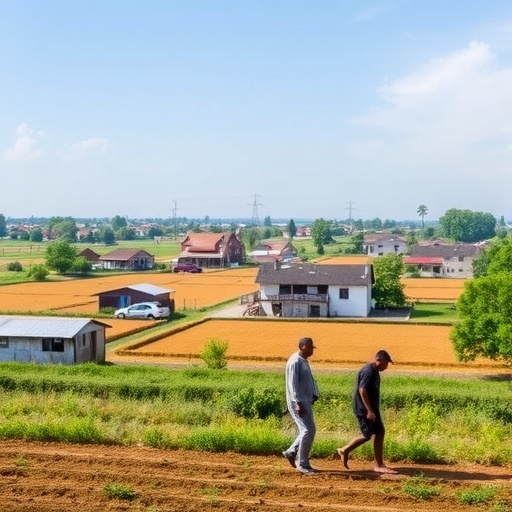
In recent years, the phenomenon of urbanization has captured the attention of scholars and policymakers alike, especially concerning its implications for migrant workers. A newly published study by researchers Li, Huang, and Zhou delves into the intricacies of urban and rural land demand trajectories of migrant workers throughout their life course. This comprehensive analysis, featured in the journal Discover Cities, investigates how the shifting lifestyle, economic stability, and social responsibilities of these individuals influence their land demands over time. With the rapid urbanization across the globe, the insights presented in this study are timely and essential.
The researchers aim to provide a clearer understanding of how the life stages of migrant workers—encompassing youth, adulthood, and old age—correlate with their varying demands for housing and land. The study is set against the backdrop of China’s urbanization policy, which has seen a significant migration from rural to urban areas. As individuals relocate, their land requirements adapt, influenced by pivotal life events such as job changes, marriage, and parenthood. This dynamic creates complex patterns in land demand that merit thorough investigation.
One of the primary findings of the research highlights the distinct phases of life that correlate with differing land demand characteristics. For instance, younger workers, often in the initial stages of their careers, may prioritize proximity to urban job hubs over the need for spacious housing. Conversely, as they settle into family life, their preferences begin to shift towards larger living spaces, signaling a critical turning point in land demand. This transition further emphasizes the need for urban planners to accommodate the varied requirements of the population as they advance through different life stages.
The study employs rich qualitative and quantitative datasets obtained from several regions across China, providing a robust framework for analysis. Researchers mapped the geographical movements of migrant workers and coupled this data with demographic details to assess how land preferences transform. This combination enables a nuanced understanding of urban-rural dynamics that is often overlooked in more conventional studies focused on static snapshots rather than evolving trajectories.
Moreover, the research uncovers critical socio-economic factors that affect land demand, such as income levels and the prevalence of informal housing markets. Economic shifts, including rising living costs and wage disparities, play a crucial role in dictating whether migrant workers can afford urban land or if they must seek alternatives in peri-urban and rural areas. This socio-economic lens facilitates a broader comprehension of the pressures faced by these workers, thereby illuminating the challenges unique to their lived experiences.
Additionally, the study addresses the policy implications of these findings. As migrant workers contribute significantly to economic development while often remaining marginalized in urban settings, there is a pressing need for policies that address their land requirements. This could take the form of affordable housing initiatives, investment in infrastructure, and targeted regulations that seek to stabilize the housing market for workers who frequently transition between urban and rural locations.
While the focus of the research is on China, the implications extend far beyond its borders. Countries experiencing similar migration phenomena can glean insights from these findings. The phenomena associated with urbanization are universal in nature, and understanding the nuanced relationship between land demands and migrant workforces can inform global urban policies, aiming to enhance living conditions for marginalized groups.
Another crucial aspect explored is social integration. The ability of migrant workers to cultivate roots in urban communities substantially influences their land demand trajectories. The researchers emphasize that housing stability is fundamentally linked to individual social networks and sense of belonging. Those who successfully integrate into urban environments find themselves fostering greater demand for stable housing options, as opposed to those who remain transient.
As societies evolve, so too do the expectations surrounding migrant workers and their roles within labor markets and communities. The study invites an examination of the responsibilities that governments have towards this demographic, highlighting a dual imperative to foster economic growth while safeguarding the rights and needs of workers whose labor powers urban economies.
Critical to this discourse is also the notion of sustainability in urban planning. The increasing influx of migrant workers complicates land use and environmental considerations. Researchers advocate for sustainable planning initiatives that address the ecological implications of urban expansion while accommodating the growing populations. Investing in sustainable models of housing could alleviate pressure on both urban resources and rural land.
In conclusion, the research sheds light on the evolving landscape of land demands exhibited by migrant workers as they navigate through the complexities of their life courses. By drawing connections between life stages, socio-economic factors, and urban policies, Li, Huang, and Zhou’s study compels stakeholders to rethink the narratives surrounding migration and urbanization within a framework that prioritizes human experience and sustainable development. As the future of urban spaces continues to unfold, understanding these trajectories will be essential in designing cities that serve all inhabitants equitably.
The trends and data shared through this pioneering work offer a foundation for future research endeavors aimed at unpacking the multifaceted interactions between migration, urbanization, and land use. It heralds the need for ongoing dialogue among policymakers, urban planners, and researchers alike to foster inclusive practices that reflect the realities of an ever-changing world.
As urban landscapes adapt to the realities brought forth by migration trends, the research stands as a vital resource for comprehending the systemic demands placed on both rural and urban land. The findings underscore the urgent need to align policy frameworks that support migrant populations grappling with their housing needs during significant life changes. As such, the study serves as both a warning and a roadmap—a chance to improve conditions for millions of workers whose contributions to society remain pivotal yet often unrecognized.
Ultimately, the work of Li, Huang, and Zhou not only anticipates a pressing narrative of our time but also provides viable solutions that could enhance the living experiences of migrant workers, chasing promise across urban and rural divides.
Subject of Research: Urban-rural land demand trajectories of migrant workers across the life course.
Article Title: Urban-rural land demand trajectories of migrant workers across the life course.
Article References:
Li, Y., Huang, Y., Zhou, Y. et al. Urban-rural land demand trajectories of migrant workers across the life course.
Discov Cities 3, 5 (2026). https://doi.org/10.1007/s44327-026-00186-3
Image Credits: AI Generated
DOI: https://doi.org/10.1007/s44327-026-00186-3
Keywords: Urbanization, migrant workers, land demand, socio-economic factors, housing policy, sustainability.


