

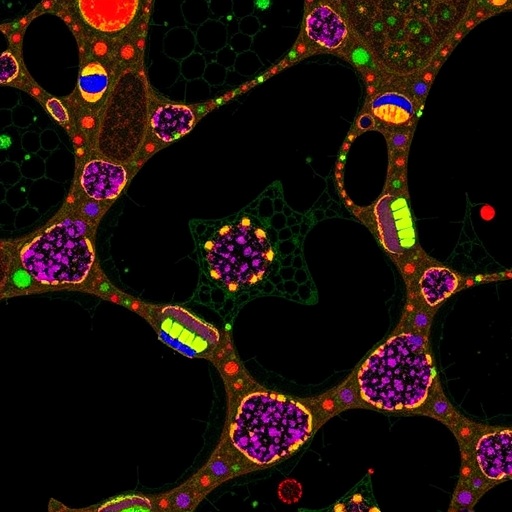
In a groundbreaking advancement poised to revolutionize biomedical imaging, researchers have unveiled a novel modality that harnesses mid-infrared dichroism combined with photoacoustic microscopy to reveal intricate tissue architectures previously concealed from conventional imaging techniques. This pioneering work, recently published in Light: Science & Applications, introduces a sophisticated approach capable of decoding the molecular orientation and structural organization within biological tissues, offering unprecedented insights into tissue composition and pathology.
At the core of this innovative imaging technique is the strategic exploitation of mid-infrared (mid-IR) light, whose energy resonates with fundamental vibrational modes of biomolecules such as lipids, proteins, and nucleic acids. Unlike visible or near-infrared wavelengths commonly used in optical microscopy, the mid-infrared spectrum facilitates direct probing of molecular vibrations, granting chemical specificity in mapping biological samples. However, the intrinsic challenge with mid-IR imaging stems from its strong absorption and scattering in biological media, significantly limiting penetration depth and spatial resolution.
To circumvent these limitations, the research team ingeniously integrated mid-infrared excitation with photoacoustic detection, a hybrid modality that converts absorbed optical energy into ultrasonic waves via thermoelastic expansion. This approach leverages the superior penetration and spatial resolution of ultrasound, thereby enabling high-fidelity imaging beyond the optical diffusion limit. By orchestrating the interplay between mid-IR light absorption and ultrasonic detection, the system captures not only the spatial distribution of molecular species but also their orientation-dependent optical responses—a phenomenon termed dichroism.
Dichroism, the differential absorption of polarized light depending on molecular alignment, imbues this technique with the capability to resolve anisotropic structures within tissues. Biological macromolecules often exhibit preferential alignment in organized structures such as collagen fibers, myelin sheaths, or cytoskeletal assemblies, which significantly influence tissue function and pathology. Through meticulous polarization control of the mid-IR excitation and detailed analysis of the resulting photoacoustic signals, the method discerns subtle variations in molecular orientation, revealing complex tissue architectures obscured to conventional microscopy.
A compelling demonstration of this technique’s prowess was conducted on various biological samples, including complex tissues where traditional histological methods tend to falter. The imaging system unveiled the layered arrangement and directional alignment of collagen fibers, as well as delineated lipid-rich domains with exceptional contrast and specificity. Importantly, this differentiation was achieved label-free, harnessing endogenous molecular contrast, thereby eliminating the need for extrinsic stains or fluorescent markers, which often introduce artifacts or toxicity.
Moreover, the mid-IR dichroism photoacoustic microscopy surpasses existing imaging modalities by offering simultaneous chemical and structural mapping with micrometer-scale spatial resolution. This dual-contrast mechanism not only enhances the interpretability of tissue microenvironment but also paves the way for early-stage diagnostics, where minute alterations in molecular orientation and composition can signify pathological transformations.
The instrumental innovation underlying this advance integrates finely tunable quantum cascade lasers (QCLs) as mid-IR light sources, whose high brightness and spectral agility facilitate selective excitation of specific molecular vibrations. Coupled with a highly sensitive ultrasonic transducer array for photoacoustic detection, the system achieves rapid acquisition rates conducive to practical biomedical applications. Additionally, the researchers implemented advanced polarization modulation schemes and signal processing algorithms that optimize the extraction of orientation-dependent dichroic signals amidst complex tissue scattering backgrounds.
Another remarkable aspect of this technology is its potential adaptability to in vivo or clinical settings. Considering the non-destructive nature of photoacoustic imaging and the specificity afforded by mid-IR dichroism, this methodology holds promise for real-time monitoring of tissue health, detecting early pathological changes such as fibrosis, cancerous transformations, or neurodegenerative alterations. Enabling surgeons and clinicians to visualize tissue microstructures live during procedures could improve surgical precision and outcomes.
Beyond immediate biomedical applications, the principles demonstrated here open new frontiers in materials science, where elucidating molecular orientation impacts understanding of polymer composites, biomimetic materials, and nanostructured substrates. The label-free, orientation-sensitive imaging capability expands the toolkit available for characterizing anisotropic materials with high spatial and chemical resolution.
Fundamentally, this approach underscores how combining complementary physical phenomena—in this case, molecular vibrational spectroscopy and photoacoustic detection—can surmount traditional imaging barriers. By carefully tuning mid-IR excitation polarization and harnessing the resultant ultrasonic emission, the method deciphers molecular alignment within complex architectures, translating invisible biochemical patterns into vivid, interpretable images.
The research team’s validation experiments incorporated quantitative analysis of dichroic ratios correlating molecular orientation with histological benchmarks, corroborating the system’s reliability and enhancing its potential clinical relevance. This quantification capability adds an objective dimension to tissue characterization, facilitating longitudinal studies and comparative diagnostics.
However, challenges remain in translating this technology from experimental setups to widespread clinical adoption. Issues such as miniaturization of the hardware, real-time data processing, and optimizing penetration depth in thicker tissues necessitate further engineering refinements. Yet, the foundational proof-of-concept and compelling imaging results strongly advocate for continued development.
This novel imaging paradigm is poised to catalyze a paradigm shift in optical microscopy and tissue diagnostics. By making hidden architectural features of biological tissues visible through the combined lens of mid-IR dichroism and photoacoustic imaging, researchers and clinicians gain a powerful new window into molecular organization and disease mechanisms, heralding a future where diagnosis and therapy are informed by unparalleled molecular precision and spatial clarity.
As this technology matures, its integration with complementary modalities, such as multiphoton fluorescence or Raman spectroscopy, could deliver comprehensive multimodal imaging platforms, synergizing chemical specificity, functional dynamics, and structural resolution. Such convergence would enrich our understanding of biology in health and disease, ultimately fostering the development of innovative therapies.
In conclusion, mid-infrared dichroism photoacoustic microscopy represents a remarkable leap forward, fusing molecular vibrational specificity with ultrasound’s penetration and resolution capabilities. Its ability to uncover hidden tissue architectures without external labels presents transformative potential for biomedicine and beyond, igniting fresh enthusiasm in the quest to visualize life’s intricate molecular tapestry.
Subject of Research: Biomedical imaging; tissue architecture; molecular orientation; mid-infrared spectroscopy; photoacoustic microscopy.
Article Title: Revealing hidden tissue architecture with mid-infrared dichroism photoacoustic microscopy.
Article References:
McGarraugh, C., Cho, S.W. & Yao, J. Revealing hidden tissue architecture with mid-infrared dichroism photoacoustic microscopy. Light Sci Appl 15, 124 (2026). https://doi.org/10.1038/s41377-026-02218-4
Image Credits: AI Generated


