


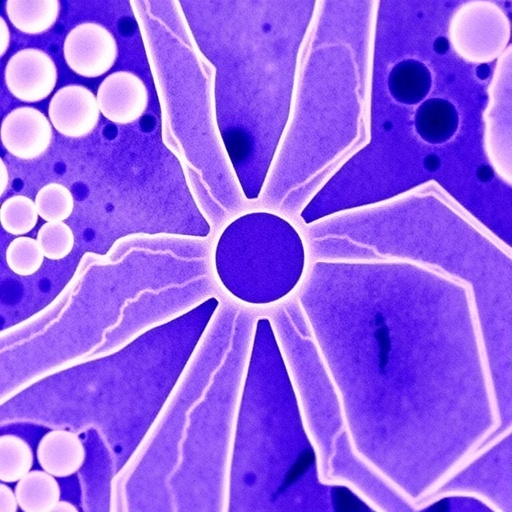
A groundbreaking study emerging from Griffith University unveils how the intricate design of microscopic “re-entrant” structures can profoundly influence the behavior of aggressive cancer cells. These specialized microstructures, characterized by their overhanging edges resembling tiny mushroom caps, offer unprecedented control over the adhesion, spreading, and proliferation of triple-negative breast cancer cells (MDA-MB-231) in vitro. This research, recently published in the prestigious journal Advanced Materials Interfaces, not only sheds light on the mechanobiology of cancer cells but also paves the way for innovative cancer drug screening models and novel biomedical surface designs.
Re-entrant microstructures possess a unique geometry that sets them apart from traditional micro- and nanostructures. Their defining feature is the presence of overhanging edges that create spatial confinement, resulting in curved surfaces and enclosed microenvironments. Fabricated in either hydrophilic silicon dioxide (SiO₂) or hydrophobic silicon carbide (SiC), these surfaces introduce variable wettability conditions combined with distinct geometrical profiles. The study meticulously compared arrays with circular, triangular, and linear “microline” cap shapes to elucidate how these physical parameters modulate the aggressive breast cancer cells’ responses.
Cancer cells are renowned not merely for their genetic mutations but also their physical interactions with the surrounding microenvironment. Traditionally, chemical signals have dominated research focusing on cancer progression; however, this study reaffirms the critical role of mechanical cues—how cells physically ‘feel’ and adapt to their substrate. Dr. Navid Kashaninejad and colleagues from Griffith’s Queensland Quantum and Advanced Technologies Research Institute and Engineering Department provide compelling evidence that altering curvature, spacing, and surface chemistry of substrates can significantly steer cellular functionality in desired directions.
The experiments conducted involved culturing MDA-MB-231 cells on these re-entrant patterned surfaces under controlled laboratory conditions. Over a three-day period, researchers employed a combination of live-cell metabolic assays (PrestoBlue), fluorescence microscopy, and scanning electron microscopy (SEM) to monitor cell viability, morphology, and cytoskeletal architecture. This multi-modal approach enabled the research team to capture both quantitative and qualitative data on how cells interact with spatial constraints and varied surface chemistry.
Findings from the study reveal that cancer cell adhesion and proliferation rates are intricately tied to the curvature of the microstructures as well as their chemical properties. For instance, hydrophilic silicon dioxide surfaces exhibited differing cellular behaviors compared to hydrophobic silicon carbide, underscoring the profound impact of substrate wettability on mechanosensitive pathways in cancer cells. Moreover, the confined overhanging architectures influenced cellular mechanotransduction mechanisms, guiding how cells reorganized their cytoskeleton and formed focal adhesions.
One of the standout implications of this study lies in the potential to engineer more accurate tumor models for drug testing. Conventional two-dimensional cell culture systems frequently fall short of replicating the heterogeneous and mechanically complex tumor microenvironment. By introducing re-entrant topographies that better mimic in vivo spatial confinement, researchers can achieve a higher fidelity platform that reflects realistic cancer cell behavior, thereby improving the predictive power of preclinical drug screenings.
Beyond cancer models, the research opens innovative prospects for biomedical device engineering. Medical implants and surface coatings designed with these microstructures may inherently discourage cancer cell attachment and colonization due to their mechanochemical properties. Such passive anti-cancer interfaces would mark a significant advancement in preventing implant-related malignancies or tumor recurrence, making this technology a promising candidate for future translational applications.
Critically, the durability and structural stability of these re-entrant microstructures were confirmed, highlighting their suitability for long-term biomedical applications. This stability ensures that their mechanobiological influence remains consistent over extended periods, vital for both in vitro research and potential clinical implementations. The design principles elucidated by the team establish foundational knowledge for future explorations into cellular mechanosensitivity and biointerface engineering.
Dr. Kashaninejad’s work, supported by the Australian Research Council’s Discovery Early Career Researcher Award (DECRA), integrates principles from mechanobiology, materials science, and cell biology. This interdisciplinary approach allows for a nuanced understanding of how physical cues integrate with biochemical signaling in the complex landscape of cancer progression. The study’s publication on the cover of Advanced Materials Interfaces attests to its significance and potential impact on the broader scientific community.
In summary, this research highlights a paradigm shift in understanding cancer cell dynamics, emphasizing the importance of three-dimensional microenvironmental structures. By manipulating minute geometrical and chemical surface features, scientists can now fine-tune cellular outcomes, moving beyond purely biochemical interventions. As such, re-entrant microstructures represent a potent new toolkit for cancer biology, advancing both fundamental knowledge and the future of therapeutic development.
The insights gleaned from this study provoke compelling questions about the integration of physical microenvironments with molecular therapies and invite continued exploration into mechanomimetic platforms. By engineering these microstructured landscapes, researchers can design more physiologically relevant models that not only elucidate cancer pathophysiology but also accelerate the discovery of interventions capable of impairing metastatic progression and tumor invasiveness.
Web References:
Cite Scienmag News
Nathaniel Bowman. (October 9, 2025). Microscopic Surface Patterns Guide Cancer Cells, Advancing Lab Testing and Implant Safety. Scienmag. https://scienmag.com/microscopic-surface-patterns-guide-cancer-cells-advancing-lab-testing-and-implant-safety/
Nathaniel Bowman. "Microscopic Surface Patterns Guide Cancer Cells, Advancing Lab Testing and Implant Safety." Scienmag, 9 October 2025, https://scienmag.com/microscopic-surface-patterns-guide-cancer-cells-advancing-lab-testing-and-implant-safety/. Accessed 6 September 2026.
Nathaniel Bowman. "Microscopic Surface Patterns Guide Cancer Cells, Advancing Lab Testing and Implant Safety." Scienmag. October 9, 2025. https://scienmag.com/microscopic-surface-patterns-guide-cancer-cells-advancing-lab-testing-and-implant-safety/


