

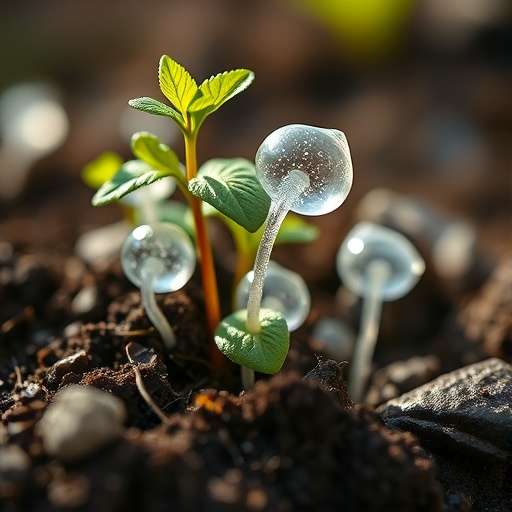
The persistent infiltration of microplastics into terrestrial ecosystems has emerged as a pressing concern, fundamentally altering the dynamics of soil carbon—a critical component of the Earth’s carbon cycle. While research has established that microplastics influence soil organic carbon (SOC) levels and carbon emissions, their exact role in the sequestration of SOC remains elusive, demanding urgent and comprehensive study. Recent investigations shed light on the multifaceted interactions between microplastics and soil organic matter, revealing complex effects that span biological, geochemical, and physical processes within soils. This burgeoning field of research not only redefines our understanding of microplastic pollution but also intricately ties into the global challenge of carbon neutrality and climate regulation.
At the heart of these interactions lies the ability of microplastics to alter the quality and quantity of SOC through various mechanisms. Microplastics, often accompanied by a mixture of co-occurring contaminants, leach dissolved organic matter (DOM) into the soil environment, thereby modifying the native soil organic carbon pools. This leaching process influences microbial communities and their metabolic activities, which are central to carbon cycling. By affecting the mineralization of native SOC, microplastics potentially disrupt the natural microbial carbon pump (MCP), a mechanism by which microbes convert labile organic compounds into more stable, mineral-associated organic carbon fractions, essential for long-term carbon storage in soils.
Recent studies underscore that the microplastic surfaces form unique microhabitats, adsorbing dissolved organic matter with considerable affinity. This adsorption not only sequesters DOM but creates hotspots for mineral-organic matter interactions that are fundamental to SOC stabilization. These hotspots enhance the formation of soil aggregates—structural units in which organic matter can be physically protected from microbial decomposition. The presence of microplastics within these aggregates alters their physical properties and the spatial organization of carbon pools, consequently reshaping carbon storage dynamics on soil micro-scales. Such changes could have cascading effects on soil carbon turnover rates and, by extension, on global carbon budgets.
Moreover, the physicochemical characteristics of microplastics—such as size, polymer type, and surface chemistry—critically determine their impact on SOC. For instance, smaller microplastics with higher surface areas may provide more adsorption sites and thus stronger interactions with organic matter and minerals. Conversely, polymer types with varying hydrophobicity and chemical stability influence the interactions differently, potentially affecting the release of additives or adsorbed pollutants that further perturb microbial processes. This complex mosaic of factors necessitates a multi-disciplinary approach combining soil science, microbial ecology, and polymer chemistry to unravel the nuanced role of microplastics in terrestrial carbon dynamics.
Adding a geochemical perspective, microplastics influence the redox status and mineral speciation within soils, which are central to the stabilization or mobilization of organic carbon. The alteration of mineral surfaces caused by microplastic presence can change the binding affinity for organic matter, thereby affecting the formation of mineral-associated organic carbon (MAOC), one of the most stable forms of soil carbon. These effects, compounded by variations in soil type and environmental conditions, mean that the role of microplastics in SOC sequestration varies spatially and temporally, complicating efforts to predict their long-term impacts on global carbon cycles.
From a biological viewpoint, the disruption of microbial communities by microplastics is profound. Microorganisms drive key transformations in soil carbon, from decomposition to carbon stabilization. When microplastics introduce physical barriers, toxic chemicals, or change the soil’s hydrophobicity, they modify microbial community structure, diversity, and function. This can lead to either a suppression or stimulation of SOC mineralization, depending on the environmental context and microbial taxa involved. Such microbial shifts bear significant implications for carbon fluxes, as microbial biomass and exudates are critical components in soil carbon stabilization processes.
One of the striking revelations in this field is the dual role of microplastics as both disruptors and facilitators of soil carbon processes. Although they may expedite the degradation of some organic compounds, increasing carbon release as CO2 or methane, they simultaneously present novel substrates for carbon adsorption and protection. This paradox underscores the complexity of microplastic impacts—wherein the net effect on soil carbon stocks depends on the balance between enhanced mineralization and augmented sequestration pathways. Understanding this balance requires dissecting the interplay of microplastic characteristics, soil properties, and microbial ecology.
This nuanced understanding brings to light an urgent need for integrating microplastic considerations into models of soil carbon cycling and climate projections. Current models often overlook microplastic-mediated processes, potentially underestimating or misrepresenting soil carbon dynamics. Incorporating the effects of microplastics on DOM leaching, microbial community shifts, mineral interactions, and physical soil structure can refine predictions of SOC sequestration potentials and carbon emissions under future environmental scenarios.
Furthermore, the implications extend beyond soil carbon stocks to the broader goals of mitigating climate change and achieving carbon neutrality. Soils constitute a massive reservoir of terrestrial carbon, and perturbations in their carbon sequestration ability could amplify atmospheric carbon emissions, offsetting global mitigation efforts. The prevalence of microplastics in soils—stemming largely from agricultural plastics, wastewater, and atmospheric deposition—means that addressing their impact is inseparable from sustainable soil management and climate strategies. Without concerted action, microplastic pollution may undermine soil health and the planet’s natural capacity to regulate greenhouse gases.
Technological advancements in analytical chemistry and molecular biology are pivotal in advancing this research frontier. Techniques such as high-resolution mass spectrometry, isotope tracing, and metagenomics allow for detailed characterization of microplastic-associated organic matter, microbial responses, and mineral-organic matter interactions at unprecedented scales. These tools facilitate the disentanglement of complex biogeochemical processes, promoting mechanistic insights rather than correlative observations, crucial for developing mitigation measures and policy interventions.
As the literature evolves, the scientific community emphasizes urgent interdisciplinary collaboration to address the ecological consequences of microplastic contamination. Bridging knowledge from polymer science, soil ecology, climate science, and environmental policy is vital for crafting holistic solutions. Moreover, public awareness and regulation of plastic usage, waste disposal, and soil protection must integrate findings on soil carbon-microplastic interactions to safeguard terrestrial ecosystems and their climate function.
In summary, emergent evidence points to microplastics as potent modifiers of soil carbon dynamics with far-reaching consequences for ecosystem function and climate regulation. Their impact manifests through leaching dissolved organic matter, disrupting microbial carbon processing, altering mineral and aggregate soil structures, and changing the balance between carbon release and sequestration. Addressing these multifactorial effects is imperative for advancing soil science and environmental stewardship in an era where plastic pollution intersects with climate change challenges. Future research must unravel these complex mechanisms across spatial and temporal scales to effectively integrate microplastic influences into soil carbon management paradigms and global climate models.
The exploration of microplastics in terrestrial soils represents a frontier in environmental science—revealing how anthropogenic materials permeate foundational Earth processes. The dynamic interactions between microplastics and organic carbon cycles not only deepen our understanding of soil ecology but also critically inform global carbon management strategies. As humanity grapples with concurrent environmental crises, the intersection of plastic pollution and soil carbon underscores the interconnectedness of human activity and planetary health, calling for transformative approaches in research, policy, and public engagement to foster resilience in Earth’s essential systems.
Subject of Research: Impacts of microplastics on terrestrial soil carbon dynamics
Article Title: Impacts of microplastics on terrestrial soil carbon dynamics
Article References:
He, G., Lu, M., Yang, Y. et al. Impacts of microplastics on terrestrial soil carbon dynamics. Nat. Geosci. (2026). https://doi.org/10.1038/s41561-026-01935-0
Image Credits: AI Generated


