


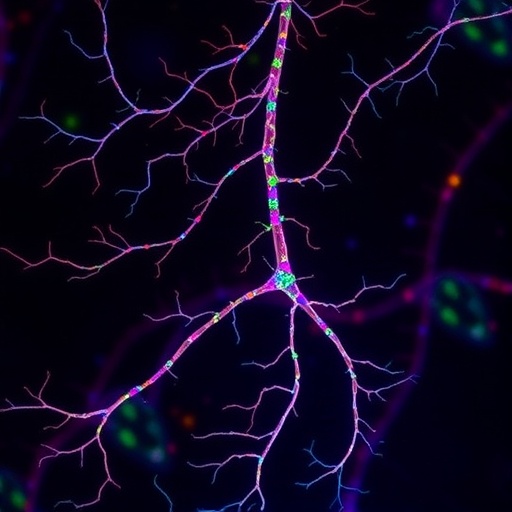
In a groundbreaking new study published in npj Parkinson’s Disease, researchers have uncovered a crucial mechanism by which microglia—the brain’s resident immune cells—contribute to the progressive loss of dopaminergic neurons characteristic of Parkinson’s disease. At the heart of this discovery lies the involvement of low-affinity Fc gamma receptors (FcγRs), a class of immune receptors previously overlooked in neurodegenerative pathology. This revelation offers a novel molecular target for slowing or potentially halting the neuronal degeneration underlying one of the most debilitating movement disorders worldwide.
Parkinson’s disease is marked by the gradual death of dopamine-producing neurons within the substantia nigra, a brain region essential for regulating movement and coordination. For decades, the neurodegenerative cascade has been understood primarily in terms of intrinsic neuronal dysfunction and protein aggregation. However, mounting evidence points to the critical role of neuroinflammation—specifically, the immune activation of microglia—in exacerbating neuronal loss. This latest research elucidates the precise receptor-mediated mechanisms by which microglia actively dispose of dopaminergic neurons through phagocytosis.
Microglia possess multiple receptors through which they interact with their environment, but the Fc gamma receptors are unique in their ability to bind the Fc portion of immunoglobulin G (IgG) antibodies. While high-affinity FcγRs have been studied extensively in peripheral immune responses, microglial low-affinity FcγRs have remained poorly characterized in the context of neurodegeneration. Casanova and colleagues have now demonstrated that this subset of FcγRs mediates enhanced phagocytic activity directed against dopaminergic neurons marked for elimination during Parkinsonian degeneration.
Using sophisticated in vivo and in vitro models of Parkinson’s disease, the researchers employed genetic and pharmacological tools to selectively modulate low-affinity FcγRs activity. They observed that microglia expressing these receptors showed increased engulfment of dopaminergic neurons, correlating with accelerated neuronal death. Conversely, blocking the receptors mitigated phagocytic clearance and preserved neuronal numbers, highlighting the receptor’s pivotal role in driving disease progression.
At the molecular level, the activation of low-affinity FcγRs triggers a cascade of intracellular signaling pathways culminating in cytoskeletal reorganization and the formation of phagosomes. This process enables microglia to physically engulf and degrade neuronal debris or stressed neurons. Intriguingly, the study revealed that dopaminergic neurons under oxidative and proteostatic stress express ‘eat-me’ signals—such as altered surface proteins and exposed phosphatidylserine—that tag them for microglial recognition via FcγRs-mediated opsonization.
The identification of these ‘eat-me’ signals adds a layer of complexity to how neuronal demise is orchestrated in Parkinson’s disease. It appears that afflicted neurons inadvertently become immunologically marked by endogenous antibodies or other opsonins, which microglial low-affinity FcγRs recognize and bind. This interaction effectively bridges the immune and nervous systems, transforming microglia into executioners that eliminate neurons deemed dysfunctional or damaged.
Importantly, the study also provides insight into the temporal dynamics of microglial FcγR signaling during the disease course. Early-stage Parkinsonian brains exhibited heightened low-affinity FcγR expression and phagocytic activity before extensive neuronal loss was detectable. This suggests that microglial-mediated clearance is not merely a consequence of neuronal death but an active driver initiating the degenerative cycle.
From a therapeutic perspective, the findings open exciting avenues for intervention. By selectively targeting low-affinity FcγRs, it may be possible to temper microglial phagocytosis and preserve dopaminergic neurons without broadly suppressing the immune system. The study’s demonstration that pharmacological inhibitors of these receptors can attenuate neuron loss in animal models reinforces the translational potential of this strategy.
Beyond Parkinson’s disease, the implications of this work extend to other neurodegenerative disorders where microglia and aberrant phagocytosis contribute to pathology. Conditions such as Alzheimer’s disease, amyotrophic lateral sclerosis, and multiple sclerosis all involve complex immune-neuronal interactions, and FcγRs might represent a shared molecular target to modulate these interactions beneficially.
On a cellular scale, the study underscores the dualistic nature of microglia as both guardians and executioners of central nervous system integrity. While they are essential for maintaining homeostasis and clearing cellular debris, their activation via FcγRs in the context of chronic neurodegeneration paradoxically accelerates neuronal loss. Understanding this balance is pivotal for designing therapies that harness protective microglial functions while inhibiting deleterious ones.
Technically, the researchers employed state-of-the-art imaging techniques, including two-photon microscopy and fluorescence-activated cell sorting, to track FcγR expression and microglial-neuron interactions in real time. Coupled with single-cell RNA sequencing, this approach allowed precise characterization of microglial subpopulations with differential FcγR expression profiles, unveiling cellular heterogeneity linked to disease vulnerability.
Moreover, the team explored the downstream signaling molecules engaged upon FcγR activation, identifying key kinases and adaptor proteins that modulate actin polymerization and vesicle trafficking. These mechanistic insights pave the way for pharmacological modulation targeting specific intracellular nodes within the FcγR-driven phagocytosis pathway, potentially offering greater therapeutic specificity.
This comprehensive investigation also addressed how systemic inflammation and peripheral immune factors influence microglial FcγR-mediated clearance. By administering systemic inflammatory stimuli, the researchers observed exacerbated microglial activation and phagocytic activity via FcγRs, suggesting that peripheral immune challenges might accelerate Parkinsonian neurodegeneration through this axis.
Critically, the human relevance of these findings was validated by examining post-mortem brain tissue from Parkinson’s patients, where elevated expression of low-affinity FcγRs on microglia was observed in substantia nigra regions undergoing active neurodegeneration. These clinical correlations substantiate the translational applicability of modulating FcγR pathways in therapeutic development.
While these results represent a significant advance, the authors acknowledge that further studies are needed to fully delineate the interactions between antibodies, opsonins, and FcγRs in vivo. Additionally, understanding how aging and genetic risk factors influence microglial FcγR expression and function will be essential to optimize treatment timing and efficacy.
In sum, the pioneering work by Casanova et al. reveals that microglial low-affinity Fc gamma receptors act as critical mediators of dopaminergic neuron phagocytosis during Parkinson’s disease progression. By illuminating the immunological underpinnings of neuronal elimination, this study charts a path toward innovative immunomodulatory therapies that may one day transform the clinical management of Parkinson’s and related disorders.
Cite Scienmag News
Cassandra Pierce. (January 16, 2026). Microglial FcγR Drives Dopaminergic Neuron Loss. Scienmag. https://scienmag.com/microglial-fc%ce%b3r-drives-dopaminergic-neuron-loss/
Cassandra Pierce. "Microglial FcγR Drives Dopaminergic Neuron Loss." Scienmag, 16 January 2026, https://scienmag.com/microglial-fc%ce%b3r-drives-dopaminergic-neuron-loss/. Accessed 3 September 2026.
Cassandra Pierce. "Microglial FcγR Drives Dopaminergic Neuron Loss." Scienmag. January 16, 2026. https://scienmag.com/microglial-fc%ce%b3r-drives-dopaminergic-neuron-loss/


