

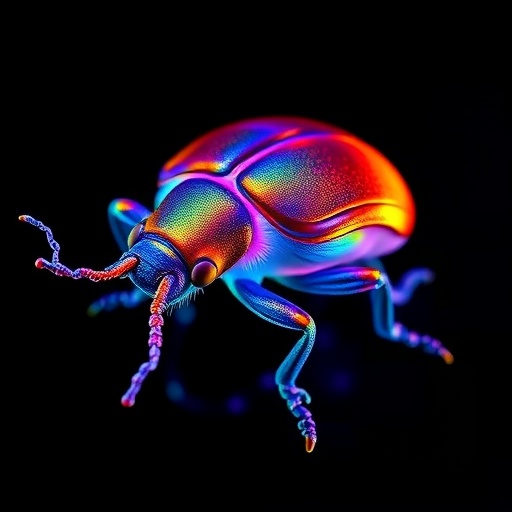
In a groundbreaking study, researchers have delved into the intricate and compelling relationship between the microfluidic and optical properties of Hoplia beetles. These remarkable insects have become the center of attention due to their unique adaptations that allow them to thrive in diverse environmental conditions. This research shines a light on the complex mechanisms at play, fueling scientific curiosity and enabling a deeper understanding of these fascinating creatures.
The study, conducted by Pavlović, Salatić, and Ćurčić, offers an unprecedented exploration into how Hoplia beetles utilize both microfluidic systems and optical properties to navigate their habitats effectively. What sets these beetles apart is their ability to manipulate fluids within their bodies, a feature that plays a vital role not only in their biological functions but also in their interactions with light. This interplay has significant implications for evolutionary biology, optics, and fluid dynamics.
One of the cornerstones of this research is the examination of the structural characteristics of the Hoplia beetles’ exoskeletons. Their outer coverings are not only aesthetically appealing but are also meticulously engineered to optimize light reflection and refraction. The microstructures present on the surface create a fascinating interaction with light, resulting in iridescence that serves multiple purposes. These adaptations can enhance camouflage, signal for mating, and even deter predators.
In addition to their optical properties, the study highlights the role of microfluidics in the life of Hoplia beetles. The intricate systems within their bodies manage the flow of liquids, aiding in processes like nutrient absorption and waste elimination. Understanding the microfluidic pathways can reveal insights into how these beetles maintain homeostasis and respond to environmental changes. This intricate relationship between fluid flow and optical effects raises important questions about the evolutionary advantages these mechanisms confer.
As the researchers explored various conditions, they found that the optical responses of the Hoplia beetles could be significantly altered by changes in environmental factors such as humidity and temperature. This dynamic adaptability underscores the robustness of their physiological systems. The findings also suggest that these beetles can fine-tune their reflective properties in response to their surroundings, ensuring optimal survival under varying conditions.
The implications of this research extend beyond just understanding Hoplia beetles. By studying these unique properties, scientists can draw parallels to advancements in material science and engineering. The principles of microfluidics and optics observed in these beetles could inspire innovative designs in biomimetic applications, such as developing advanced sensors or optical devices that mimic their natural functions.
Moreover, the intersection of microfluidics and optics presents new avenues for research in the field of biology. The unique attributes of Hoplia beetles can help inform the design of novel biological models that integrate these properties for various applications. This opens a Pandora’s box of possibilities, inviting further exploration into other species exhibiting similar traits.
As more researchers take note of these findings, the exploration of beetle biology could lead to a surge in interest, sparking discussions about biodiversity, conservation, and the potential applications of natural systems. Educators and scientists alike are encouraged to engage with the implications of this research, fostering a culture of curiosity and innovation.
The study underscores the importance of interdisciplinary approaches to scientific inquiry. By combining biology, physics, and engineering, the research reveals that nature often serves as a perfect laboratory. As scientists continue to unlock the secrets of various organisms, they pave the way for new technological advancements that can benefit society at large.
As we continue to experience a world transforming through technological advancements, the insights gleaned from the study of Hoplia beetles can spur a new generation of scientists. The intricate biology of these creatures invites students and researchers from various disciplines to collaborate and innovate.
With a growing appreciation for the complex interactions within ecosystems, this research fosters a renewed focus on conservation and environmental stewardship. A deeper understanding of how organisms adapt and thrive can inform conservation strategies, protecting biodiversity and the health of our planet.
In summary, the complex interplay between the microfluidic and optical properties of Hoplia beetles represents a significant step forward in our scientific understanding. Through careful observation and analysis, researchers are unveiling the sophisticated mechanisms that drive the success of these insects. The broader implications of this research reach across multiple fields, promoting innovation and highlighting the importance of biological diversity.
As this study garners attention, it will undoubtedly spark conversations in academic circles and beyond, emphasizing the symbiotic relationship between nature and technology—a testament to the wonders of evolution and adaptation.
Subject of Research: The interplay between microfluidic and optical properties in Hoplia beetles.
Article Title: Complex interplay between the microfluidic and optical properties of Hoplia sp. beetles.
Article References: Pavlović, D., Salatić, B., Ćurčić, S. et al. Complex interplay between the microfluidic and optical properties of Hoplia sp. beetles. Front Zool 21, 28 (2024). https://doi.org/10.1186/s12983-024-00552-0
Image Credits: AI Generated
DOI: https://doi.org/10.1186/s12983-024-00552-0
Keywords: Microfluidics, Optical Properties, Hoplia Beetles, Biological Adaptation, Iridescence, Fluid Dynamics, Environmental Factors, Evolutionary Biology.


