


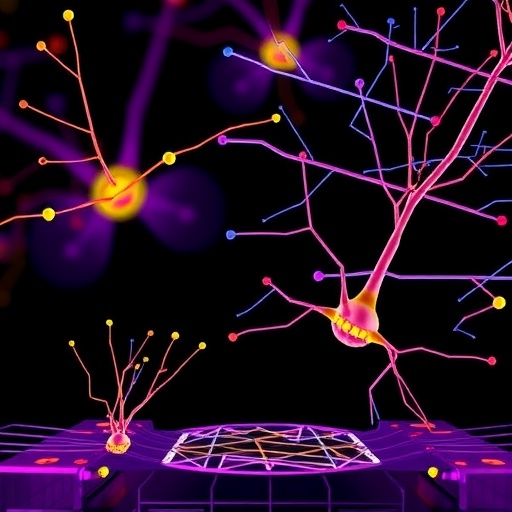
In a groundbreaking leap forward for neuroengineering and regenerative neuroscience, a team of researchers led by Watanabe, Yamamoto, and Sumi has unveiled a cutting-edge microfluidic platform designed to investigate the enigmatic processes underpinning spontaneous functional recovery in hierarchically modular neuronal networks. Published in the prestigious journal Communications Engineering in 2026, this pioneering work deciphers complex neural self-repair mechanisms with unparalleled precision and promises to reshape our understanding of how brain connectivity is restored following injury. The study opens a promising chapter for therapeutic interventions targeting neurodegenerative diseases and traumatic brain damage, leveraging bioengineered environments that mimic the sophisticated architecture of the brain.
At the heart of this research lies the construction and utilization of microfluidic devices engineered to replicate the hierarchical modularity inherent to biological neural networks. Biological brains are not uniform synaptic webs but instead exhibit layered modular organizations—small, densely connected clusters linked through sparser long-range connections—intimately related to their functionality and resilience. This naturally occurring topology confers robustness and adaptability, facilitating efficient information processing and recovery potential. The researchers meticulously designed microfluidic chambers segmented into multiple compartments, each housing distinctive neuronal populations interconnected via microchannels. This spatial compartmentalization enables the study of intermodular signaling and reinnervation dynamics in a controlled microenvironment, overcoming limitations typical of traditional homogeneous neuronal cultures.
One of the most remarkable achievements in this study is the ability to emulate spontaneous repair processes after targeted network disruption, mimicking neurological injury. By mechanically or chemically lesioning specific compartments or inter-compartment microchannels within the device, the research team observed how neural circuits reorganized themselves over time without external intervention. Using advanced electrophysiological recording techniques integrated into the platform, changes in synaptic strength, conduction velocities, and firing patterns were continuously monitored. This dynamic observation capability provides unprecedented insight into neuroplasticity’s time-dependent kinetics, revealing the intrinsic capacity of hierarchically modular networks to restore functional connectivity autonomously.
A critical technical innovation underpinning this work is the incorporation of high-resolution optogenetic stimulation coupled with live-cell calcium imaging within the microfluidic device. These combined modalities afford spatiotemporal control over neuronal activation patterns and real-time monitoring of intracellular signaling cascades during recovery phases. By selectively activating subsets of neurons in a compartment and tracking calcium influx, the research team quantified patterns of synaptic re-establishment and modulatory feedback mechanisms with subcellular spatial resolution. This level of control and observation is transformative, offering an experimental platform where hypotheses about network resilience, redundancy, and emergent properties can be rigorously tested in a living yet engineerable system.
The fabrication process of these complex microfluidic platforms leverages state-of-the-art soft lithography and biocompatible polymer materials, carefully optimized to sustain healthy neuronal growth for extended periods—sometimes surpassing several weeks in vitro. The devices’ surfaces are chemically functionalized with adhesion molecules tailored to encourage selective attachment and guidance of axons and dendrites, faithfully recreating in vivo microenvironments at the microscale. Such precise mimicry of extracellular matrix cues is critical, as it influences neuronal morphology, synapse formation, and modular boundary definition, all of which determine how effectively the networks respond to injury and undergo repair processes.
This research does not merely replicate brain architecture—it unveils fundamental principles about how modular structure influences functional recovery. The experimental data suggest that modules with highly interconnected internal circuits recover functionality faster than those with sparse internal connectivity, emphasizing the importance of intra-modular robustness. Moreover, the hierarchical arrangement amplifies recovery efficiency by allowing undamaged modules to compensate and reroute information flow during repair, dynamically reallocating computational resources. These findings resonate with computational models predicting that modularity and hierarchy are pivotal design principles facilitating brain resilience, providing empirical validation through living engineered systems.
In addition to its scientific implications, this microfluidic approach brings considerable advantages for pharmacological testing and personalized medicine. By introducing drug candidates or neurotrophic factors into selected compartments, researchers can simulate localized treatment effects on network repair and identify molecular pathways that enhance or impede recovery. Such localized administration within a multiplexed microfluidic environment offers sharp contrast to traditional bulk application methods, enabling drug screening under physiologically relevant conditions that closely mimic complex brain tissue heterogeneity. This capability accelerates the development of targeted therapies that harness or mimic endogenous recovery processes, potentially transforming clinical strategies for neurorehabilitation.
A further dimension of this study lies in the integration of computational analytics with experimental observations. The team employed advanced machine learning algorithms to analyze vast datasets generated from electrophysiological and imaging modalities, extracting subtle patterns and predictive markers of recovery trajectories. This interdisciplinary fusion of biology, engineering, and data science exemplifies the future of neuroscience research—a model where high-throughput experimentation is seamlessly coupled with algorithmic interpretation, facilitating hypothesis generation, and refining experimental design iteratively. Such synergy enhances our capacity to decipher complex biological networks beyond what purely experimental or theoretical approaches could achieve alone.
Looking forward, the implications of this research extend to the development of neural prostheses and brain-machine interfaces. Understanding spontaneous recovery in hierarchically modular neuronal networks sets the stage for engineering biohybrid systems that incorporate living neural tissue with electronic components. Such systems could self-repair and adapt in vivo, overcoming current limitations of implant longevity and functional degradation. By mimicking intrinsic recovery mechanisms demonstrated in microfluidic platforms, future neuroprosthetic devices may achieve unprecedented levels of integration and reliability, revolutionizing treatments for paralysis, sensory loss, and cognitive impairment.
The use of hierarchically modular neuronal networks in microfluidic platforms also sheds light on fundamental questions about emergent computation in the brain. Hierarchical modularity is thought to facilitate compartmentalized processing while maintaining global integration—a duality essential for complex cognitive function. By experimentally manipulating such networks, the study provides empirical evidence demonstrating how structural organization modulates both local and long-range information transmission, synaptic plasticity, and ultimately, functional output. These insights contribute to a deeper understanding of brain architecture-function relationships and may inspire novel designs in artificial intelligence and neuromorphic computing systems.
The research team’s success is also a testament to the advancements in neuroengineering fabrication techniques, enabling precise spatial control over multidimensional cell culture environments. This focus on architectural fidelity challenges the historical paradigm where neuronal cultures were largely random and uniform, offering only limited translational insight. By recapitulating not only cellular components but also their spatial/topological organization, the microfluidic models provide a more accurate proxy for in vivo neural tissue, improving predictive validity. This approach is likely to become the gold standard for investigating brain repair mechanisms and conducting preclinical drug discovery in a physiologically relevant context.
An additional notable aspect resides in the versatility of the microfluidic platform. Beyond the investigation of spontaneous repair, it may be adapted to study various neuropathological conditions involving disrupted network modularity, such as epilepsy, schizophrenia, and Alzheimer’s disease. By recreating diseased or genetically modified neurons within modules, researchers can observe how abnormal connectivity patterns affect network resilience and response to therapeutic interventions. This adaptability enhances the platform’s impact, positioning it as a powerful tool for unraveling diverse brain disorders mechanistically and developing effective treatments.
The platform’s experimental robustness also owes much to the adoption of real-time monitoring technologies enabling continuous observation without disturbing delicate cultures. Coupling microfluidics with integrated biosensors and microscopy facilitates longitudinal studies of neuronal dynamics, surpassing endpoint analyses common in conventional methods. This capability uncovers transient processes, such as initial phases of axonal regrowth or synaptogenesis in real biological time frames. Consequently, the insights gained are nuanced and temporally resolved, critical for understanding the evolving nature of neural repair and for guiding time-sensitive therapies.
Collaboration played a pivotal role in this breakthrough. The multidisciplinary team combined expertise in microfluidics, neurobiology, molecular biology, materials science, and computational modeling, exemplifying how convergent science accelerates innovation. By bridging disciplinary boundaries, the project leveraged complementary skill sets and technologies to surmount complex challenges encountered in engineering brain-like systems and decoding their functional responses. This integrative research model serves as an inspiring template, highlighting the power of collaboration in tackling the formidable enigmas of brain function and recovery.
In conclusion, this innovative study spearheaded by Watanabe, Yamamoto, and Sumi is a visionary stride toward unraveling the brain’s intrinsic capacity for spontaneous functional recovery, facilitated by hierarchically modular network architectures. Through meticulously engineered microfluidic platforms and cutting-edge observation techniques, the research demystifies the cellular and network-level dynamics driving repair after injury. Beyond fundamental scientific advancement, these findings hold immense translational potential, ushering in new paradigms for neurotherapeutics and bioinspired technology development. As neuroscience enters an era where structural complexity is faithfully emulated and functional resilience dissected in vitro, such pioneering tools will be indispensable in charting the future of brain health innovation.
Cite Scienmag News
Cassandra Pierce. (May 18, 2026). Microfluidic Platforms Reveal Neuronal Network Recovery. Scienmag. https://scienmag.com/microfluidic-platforms-reveal-neuronal-network-recovery/
Cassandra Pierce. "Microfluidic Platforms Reveal Neuronal Network Recovery." Scienmag, 18 May 2026, https://scienmag.com/microfluidic-platforms-reveal-neuronal-network-recovery/. Accessed 4 September 2026.
Cassandra Pierce. "Microfluidic Platforms Reveal Neuronal Network Recovery." Scienmag. May 18, 2026. https://scienmag.com/microfluidic-platforms-reveal-neuronal-network-recovery/


