

Saturday, July 11, 2026
Science
No Result
View All Result
  • Login
  • HOME
  • SCIENCE NEWS
  • CONTACT US
  • HOME
  • SCIENCE NEWS
  • CONTACT US
No Result
View All Result
Scienmag
No Result
View All Result
Home Science News Earth Science

Microbial Communities Reveal Genomic Potential in TNT-Contaminated Submarine Sediments

July 11, 2026
in Earth Science
Reading Time: 2 mins read
0
Microbial Communities Reveal Genomic Potential in TNT-Contaminated Submarine Sediments

Microbial Communities Reveal Genomic Potential in TNT-Contaminated Submarine Sediments

65
SHARES
587
VIEWS
Share on FacebookShare on Twitter
ADVERTISEMENT

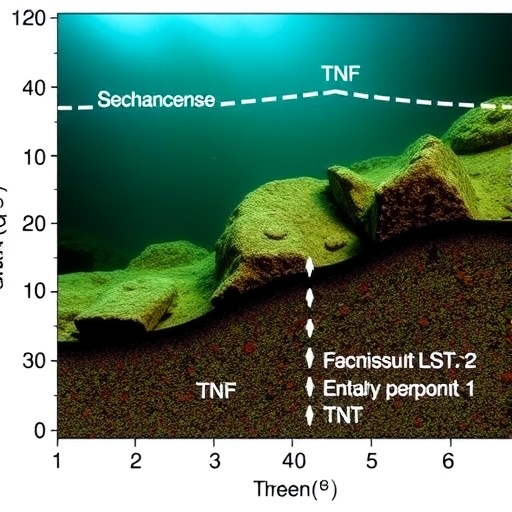
A recent study has unveiled remarkable insights into the microbial communities thriving in sediments contaminated with the explosive compound trinitrotoluene (TNT) at a historical submarine wreck site. This research provides a deeper understanding of the functional and genomic capabilities of microbes that have adapted to extreme pollution, potentially offering new avenues for bioremediation strategies.

The investigation focused on sediments enveloping the remnants of a WWII-era submarine, where TNT residues have persistently infiltrated the environment. Researchers deployed advanced metagenomic and functional analyses to characterize the microbial consortia inhabiting these toxic habitats. Their work illuminates how these microorganisms not only survive but may actively participate in the degradation of explosive pollutants.

By sequencing the collective genomes of these communities, the study identified diverse bacterial taxa equipped with gene clusters responsible for breaking down nitroaromatic compounds such as TNT. Enzymatic pathways detected suggest a high potential for reductive and oxidative transformations, which are essential steps in detoxifying such synthetic chemicals. This genomic toolkit reflects evolutionary adaptations that have possibly arisen in response to long-term contamination.

Functional assays complemented the genomic data by confirming that specific microbes could metabolize TNT intermediates, converting them into less harmful molecules. This dual approach of coupling genetic potential with actual biochemical activity strengthens the evidence that these microbial assemblages contribute to the natural attenuation processes occurring in situ.

The significance of these findings extends beyond ecological curiosity. Understanding microbial degradation pathways opens prospects for designing bioaugmentation or biostimulation protocols to accelerate TNT clean-up in marine sediments. Such environmentally friendly remediation tactics could mitigate the ongoing risks posed by submerged wartime munitions, which consistently leach toxic substances into surrounding waters.

Furthermore, this research underscores the resilience and versatility of microbial life in adapting to human-made chemical disturbances. It also emphasizes the value of mining environmental microbial genomes for novel enzymes that might be harnessed in biotechnological applications, including green chemistry and environmental detoxification.

The integration of functional genomics with environmental microbiology showcased in this study exemplifies the cutting edge of pollution research. As underwater cultural heritage sites face threats from both historical contamination and modern-day environmental changes, microbial communities emerge as unsung allies in preserving ecosystem health.

This comprehensive analysis of TNT-impacted sediments at a submerged wreck spotlights not only the challenges posed by legacy pollutants but also the promising solutions encoded in microbial DNA. The bridge between past conflicts and future sustainability may well lie in the invisible, yet potent, realm of microbial life.

Subject of Research: Microbial communities in TNT-contaminated marine sediments
Article Title: Functional and genomic potential of microbial communities in TNT-contaminated sediments at a historical submarine wreck
Article References:

Vuerstaek, R., Heyse, J., Lacoere, T. et al. Functional and genomic potential of microbial communities in TNT-contaminated sediments at a historical submarine wreck. Commun Earth Environ (2026). https://doi.org/10.1038/s43247-026-03789-1

Image Credits: AI Generated
DOI: 10.1038/s43247-026-03789-1
Keywords: TNT contamination, microbial degradation, metagenomics, bioremediation, marine sediments, explosive pollutants

Tags: bioremediation of explosive pollutantsbioremediation strategies for submarine wreck sitesdiscovery of gene clusters for explosive compound detoxificationenzyme pathways for TNT breakdownevolution of microbial communities in toxic environmentsextreme environment microbiology in pollution cleanupgenomic potential of pollutant-degrading microbesmetagenomic analysis of contaminated sedimentsmicrobial adaptation to chemical contaminationmicrobial degradation of nitroaromatic compoundsmicrobial functional assays in pollutant degradationTNT-contaminated submarine sediment microbial communities
Share26Tweet16
Previous Post

Nursing Students Explore Caring for Older Adults in Home Care Settings

Next Post

Urban Navigation Services Increase Traffic Congestion in Cities

Related Posts

Agroforestry Shapes Flower Visitor Behavior Boosting Cocoa Production
Earth Science

Agroforestry Shapes Flower Visitor Behavior Boosting Cocoa Production

July 11, 2026
Overview of Public Soil Moisture Data and the UB-SMDC Portal
Earth Science

Overview of Public Soil Moisture Data and the UB-SMDC Portal

July 10, 2026
Iron oxide melts transform structurally under Earth’s outer-core pressures
Earth Science

Iron oxide melts transform structurally under Earth’s outer-core pressures

July 10, 2026
Indian Slab Underthrusting Drives Exhumation Differences in Tibet Regions
Earth Science

Indian Slab Underthrusting Drives Exhumation Differences in Tibet Regions

July 10, 2026
Soil Microbes’ Heterotrophic Respiration in a Changing Climate
Earth Science

Soil Microbes’ Heterotrophic Respiration in a Changing Climate

July 10, 2026
Hydroclimate Drives Oxygen Output in Congo Peatlands for 10,600 Years
Earth Science

Hydroclimate Drives Oxygen Output in Congo Peatlands for 10,600 Years

July 10, 2026
Next Post
Urban Navigation Services Increase Traffic Congestion in Cities

Urban Navigation Services Increase Traffic Congestion in Cities

  • Mothers who receive childcare support from maternal grandparents show more

    Mothers who receive childcare support from maternal grandparents show more parental warmth, finds NTU Singapore study

    27656 shares
    Share 11059 Tweet 6912
  • University of Seville Breaks 120-Year-Old Mystery, Revises a Key Einstein Concept

    1061 shares
    Share 424 Tweet 265
  • Bee body mass, pathogens and local climate influence heat tolerance

    682 shares
    Share 273 Tweet 171
  • Researchers record first-ever images and data of a shark experiencing a boat strike

    546 shares
    Share 218 Tweet 137
  • Groundbreaking Clinical Trial Reveals Lubiprostone Enhances Kidney Function

    531 shares
    Share 212 Tweet 133
Science

Embark on a thrilling journey of discovery with Scienmag.com—your ultimate source for cutting-edge breakthroughs. Immerse yourself in a world where curiosity knows no limits and tomorrow’s possibilities become today’s reality!

RECENT NEWS

  • Agroforestry Shapes Flower Visitor Behavior Boosting Cocoa Production
  • Urban Navigation Services Increase Traffic Congestion in Cities
  • Microbial Communities Reveal Genomic Potential in TNT-Contaminated Submarine Sediments
  • Nursing Students Explore Caring for Older Adults in Home Care Settings

Categories

  • Agriculture
  • Anthropology
  • Archaeology
  • Athmospheric
  • Biology
  • Biotechnology
  • Blog
  • Bussines
  • Cancer
  • Chemistry
  • Climate
  • Earth Science
  • Editorial Policy
  • Marine
  • Mathematics
  • Medicine
  • Pediatry
  • Policy
  • Psychology & Psychiatry
  • Science Education
  • Social Science
  • Space
  • Technology and Engineering

Subscribe to Blog via Email

Enter your email address to subscribe to this blog and receive notifications of new posts by email.

Join 5,146 other subscribers

© 2025 Scienmag - Science Magazine

Welcome Back!

Login to your account below

Forgotten Password?

Retrieve your password

Please enter your username or email address to reset your password.

Log In
No Result
View All Result
  • HOME
  • SCIENCE NEWS
  • CONTACT US

© 2025 Scienmag - Science Magazine

Discover more from Science

Subscribe now to keep reading and get access to the full archive.

Continue reading
