

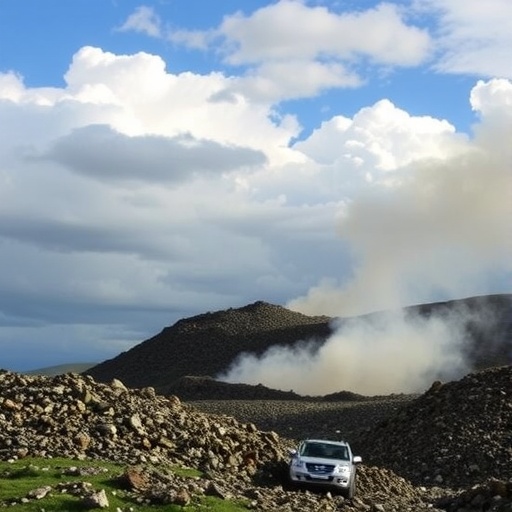
The Brahmapuram Municipal Solid Waste Treatment Plant in Kochi, India, has garnered attention due to a recent study revealing the critical impact of meteorological factors in mitigating pollution from landfill fires. The research emphasizes the intersection of environmental science, atmospheric phenomena, and public health, asserting that effective management of landfill emissions is not solely a matter of waste management, but also a matter influenced by climatic conditions, wind patterns, and atmospheric stability. This nexus between meteorology and waste management has important implications, showcasing the necessity of integrating meteorological data into strategies for pollution control.
Landfill fires, like the one at Brahmapuram, can emit a cocktail of hazardous pollutants, including volatile organic compounds (VOCs), particulate matter, and various toxic gases. These emissions pose health risks to the local population, including respiratory problems, cardiovascular diseases, and other serious health concerns. The Brahmapuram incident underscores a broader issue facing urban centers around the globe, where waste management practices often lag behind the rapid growth of urban populations. As cities expand, the challenge of effectively managing waste—and the associated fires that can occur—becomes increasingly pressing.
The study spearheaded by Sreenath and colleagues meticulously analyzed meteorological conditions surrounding the landfill fire. They used a combination of satellite data, local weather reports, and sophisticated atmospheric modeling techniques to develop a comprehensive understanding of how weather patterns influence the dispersion of pollutants. Their findings indicated that specific meteorological conditions, such as wind direction and speed, temperature inversions, and humidity levels, significantly affect the geographic spread of pollutants from burning waste.
The implications of this research are profound, particularly in terms of policymaking and urban planning. By recognizing that meteorological conditions can exacerbate the effects of landfill fires, city planners and environmental regulators can develop more effective strategies for waste management. This integration of meteorology into waste management practices could involve real-time monitoring of weather patterns to better predict and mitigate pollution events. Additionally, public health officials can use this data to warn residents about potential exposure to harmful pollutants during specific weather conditions.
Moreover, the study highlighted the urgency of developing better firefighting techniques and emission control measures at waste treatment facilities. Traditional firefighting methods may not suffice in controlling landfill fires, particularly when they are exacerbated by such meteorological conditions. Implementing new technologies for early detection of fires, combined with strategic responses based on real-time meteorological data, could significantly reduce the impact of such incidents on urban populations.
In addition to immediate health concerns, the environmental impacts of landfill fires are equally alarming. Pollutants released into the atmosphere can contribute to long-term environmental degradation, affecting local flora and fauna and contaminating surrounding water sources. With global climate change steadily intensifying, the potential for natural disasters—including increased temperatures and rainfall variability—could worsen the frequency and severity of landfill fires, posing even greater challenges to urban centers.
The researchers underscored that the interplay between climate change and waste management is a growing concern, one that merits urgent attention from both scientists and policymakers. As extreme weather events become more common, the risks associated with landfill fires could escalate, highlighting the need for proactive measures to address this looming threat. Thus, the intersection of environmental science, public health, and meteorology presents a compelling argument for more interdisciplinary collaboration among researchers and stakeholders.
In conclusion, the findings from the Brahmapuram study stimulate a dialogue about the multifaceted challenges of urban waste management in an era of climate unpredictability. The call to action is clear: integrating meteorological data and insights into waste management policies is not just advantageous; it is essential for safeguarding public health and the environment. Communities around the world should take heed of these revelations and work collaboratively to forge innovative solutions that will mitigate the risks posed by landfill fires, particularly in rapidly urbanizing areas.
This research is a significant step forward in understanding how environmental variables influence public health outcomes and highlights the critical need for integrated approaches to combat pollution. By fostering awareness and action, cities can strive towards a more sustainable future, reducing the burden of pollution while safeguarding the health of their residents.
Ultimately, the lessons learned from the Brahmapuram Municipal Solid Waste Treatment Plant will reverberate far beyond India’s borders, echoing in urban planning discussions around the world. With the unique challenges presented by landfill fires and their meteorological dependencies, this critical research serves as a blueprint for urban resilience in the face of environmental adversity. The call to address these concerns is not only prudent but essential for the health, safety, and sustainability of urban environments globally.
Subject of Research: Meteorological influences on landfill fire emissions.
Article Title: Critical role of meteorology in mitigating the impact of pollutants from landfill fire at the Brahmapuram Municipal Solid Waste Treatment Plant, Kochi, India.
Article References:
Sreenath, A., Pritam, D., Abhilash, S. et al. Critical role of meteorology in mitigating the impact of pollutants from landfill fire at the Brahmapuram Municipal Solid Waste Treatment Plant, Kochi, India.
Environ Sci Pollut Res (2025). https://doi.org/10.1007/s11356-025-37250-1
Image Credits: AI Generated
DOI: https://doi.org/10.1007/s11356-025-37250-1
Keywords: Landfill fire, meteorology, air pollution, waste management, environmental health, atmospheric modeling.


