


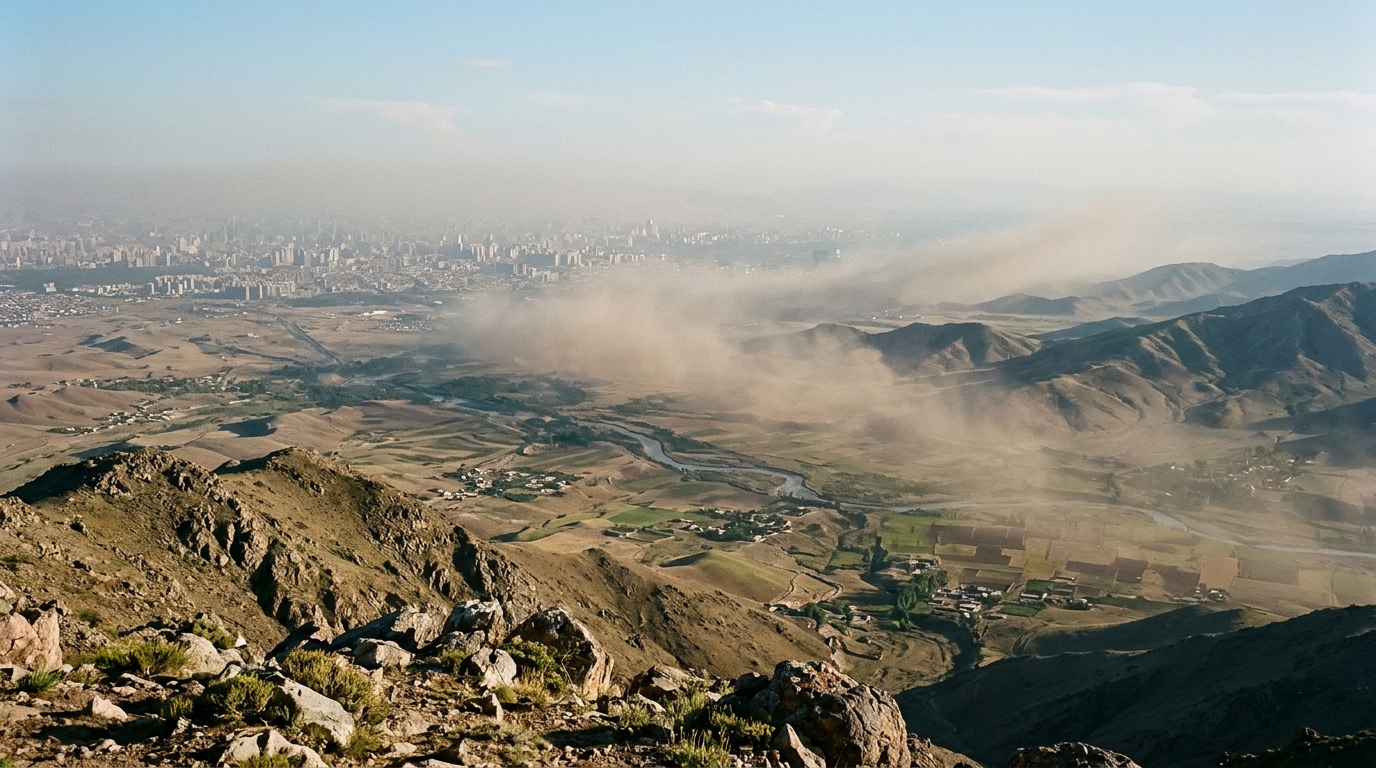
Urban air quality assessments have traditionally focused on populations residing within municipal boundaries, but a new study suggests this administrative approach significantly underestimates the true scope of pollution exposure. The study, published in Communications Earth & Environment, reveals that the area affected by pollution from these cities is substantially larger than the cities themselves, challenging the conventional geographic limits used in environmental health planning.
The team created a reduced-complexity airshed framework that combines satellite-derived pollution estimates, meteorological data, and geographic information to map where pollution actually travels. This data-driven approach allows for a more accurate representation of how atmospheric transport moves fine particulate matter, defined as particles no larger than 2.5 micrometers in diameter, away from urban centers. By integrating these diverse data sources, the researchers were able to define the specific spatial boundaries where populations are exposed to pollution originating from megacities, rather than relying solely on political or administrative borders.
The findings indicate that megacity airsheds frequently extend well beyond their corresponding municipal boundaries. On a median basis, the area of these airsheds is five times larger than the municipal regions they originate from. This expansion highlights the physical reality that air pollution is not contained by city limits, but rather disperses across a much wider geographic area. The study demonstrates that the population exposed to these pollutants is significantly larger than the population living within the city proper, necessitating a reevaluation of how urban pollution is monitored and managed.
Across the 53 megacities analyzed, approximately 44% of the exposed population resides outside municipal boundaries. This figure corresponds to roughly 400 million people who are affected by pollution from these urban centers despite living in surrounding areas. The research reveals a potential mismatch between administrative definitions of urban areas and the extended population exposure footprint.
By accounting for transboundary exposure, the airshed framework offers a more precise tool for the spatial interpretation of urban air pollution. The study highlights the need for cross-jurisdictional pollution management.
Subject of Research: Spatial extent of particulate matter exposure in global megacities
Article Title: Megacity particulate matter airsheds redefine urban pollution exposure boundary
Article References: Liao, W., Marcantonio, R., & Crippa, P. (2026). Megacity particulate matter airsheds redefine urban pollution exposure boundary. Communications Earth & Environment. https://doi.org/10.1038/s43247-026-04192-6
Image Credits: AI Generated
DOI: 10.1038/s43247-026-04192-6
Keywords: air pollution, megacities, particulate matter, urban health, airsheds, atmospheric transport, environmental policy, public health, Megacity, particulate, matter, redefine
Cite Scienmag News
Russell Cooper. (November 8, 2026). Megacity Airsheds Extend Far Beyond City Limits. Scienmag. https://scienmag.com/megacity-airsheds-extend-far-beyond-city-limits/
Russell Cooper. "Megacity Airsheds Extend Far Beyond City Limits." Scienmag, 8 November 2026, https://scienmag.com/megacity-airsheds-extend-far-beyond-city-limits/. Accessed 11 November 2026.
Russell Cooper. "Megacity Airsheds Extend Far Beyond City Limits." Scienmag. November 8, 2026. https://scienmag.com/megacity-airsheds-extend-far-beyond-city-limits/




