

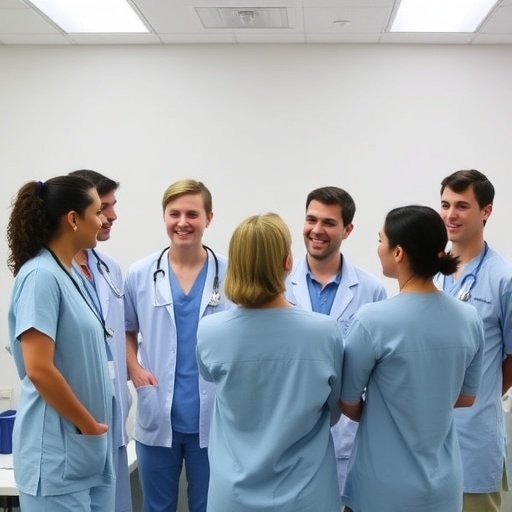
In the evolving landscape of medical education, the significance of role models cannot be overstated. A recent study conducted in Singapore sheds light on the perspectives of final-year medical students regarding their clinical role models. This mixed-methods research, spearheaded by a team of scholars, uncovers both the qualitative and quantitative dimensions of how these students perceive the influence of clinical mentors on their educational journey. In addition to traditional pedagogical approaches, the study highlights the nuanced aspects of medical role models that may serve to inspire the next generation of healthcare professionals.
The research, which involved an extensive survey and in-depth interviews with students, aimed to dissect the attributes and behaviors that contributed to an effective clinical role model. Students expressed a wide range of opinions, drawing from their unique experiences in various clinical settings. This exploration is timely, considering the increasing complexity of medical training and the diverse challenges facing healthcare professionals today. As students navigate through rigorous academic curricula while simultaneously developing their clinical skills, the role of mentors in shaping their attitudes and behaviors becomes crucial.
Many students articulated a desire for role models who embody not only clinical excellence but also demonstrate empathy and strong communication skills. The study revealed that students particularly valued those mentors who were willing to share their personal journeys, including both successes and failures. This openness allowed students to connect on a deeper level, fostering an environment where they felt safe to learn and grow. The humanistic aspects of medicine, often overshadowed by technical training, were highlighted as essential attributes of effective role modeling.
In addition to empathy and communication, the participants reported looking for role models who exhibited professionalism and integrity. Such traits were seen as foundational for building trust with patients and colleagues alike. The interaction between students and their mentors served as a microcosm for the desired physician-patient relationship, reiterating how critical these soft skills are in medical practice. As the healthcare landscape continues to evolve, the need for practitioners who can navigate both clinical tasks and interpersonal interactions is becoming increasingly apparent.
Furthermore, students emphasized the importance of diversity among their clinical role models. Exposure to a range of styles, backgrounds, and approaches provided a multifaceted perspective on patient care. By interacting with mentors from different demographics, students felt better equipped to address the needs of a varied patient population in the future. This aspect of mentorship reflects broader societal trends toward inclusivity in healthcare, as it becomes imperative for upcoming medical professionals to appreciate and respect the diverse backgrounds of their patients.
The mixed methods design of the study allowed researchers to capture both statistical data and personal anecdotes, creating a comprehensive understanding of the students’ views. The survey component quantified students’ preferences and identified key themes, while interviews provided rich, qualitative insights that illustrated the emotional and psychological effects of mentorship. This methodological approach ensured that the findings were not only robust but also grounded in the lived experiences of the students.
Implications for medical education extend beyond the confines of the study itself. Institutions could benefit from incorporating the findings into their curriculum revisions and mentorship programs. Creating a more structured mentorship framework could ensure that students have easy access to role models who can guide them throughout their training. Furthermore, such initiatives can help cultivate a more supportive learning environment, ultimately improving student retention and satisfaction.
As the findings circulate within academic circles, there is potential for widespread impact. Medical schools globally can adopt similar research methodologies to explore the role of clinical mentors within their own contexts. Just as the students in Singapore expressed these sentiments, medical trainees in other countries may share similar experiences and desires. Broadening the scope of such studies can foster an international dialogue on the importance of mentorship in medical education.
Moreover, the advancement of technology in medical training presents both challenges and opportunities for mentorship. As telemedicine and online learning platforms become more prevalent, the traditional in-person mentorship model may evolve. Students indicated that while virtual mentors can provide accessibility and convenience, they may lack the relational depth seen in face-to-face interactions. This underscores the need for innovative solutions that blend both traditional and modern mentorship dynamics.
It is essential to highlight that the relationship between students and their role models is reciprocal. While mentors impart knowledge and guidance, students also bring fresh perspectives to their mentors. This dynamic interaction can lead to mutual growth, challenging mentors to constantly reevaluate their practices and beliefs. The study suggests that fostered environments for dialogue can enrich both mentors and students, enhancing the overall educational experience.
As medical education continues to adapt to societal shifts and technological advancements, rethinking the nature of mentorship emerges as a priority. This study encourages a reexamination of how clinical role models are selected, trained, and supported within academic institutions. Both faculty and peer mentorship can play indispensable roles in ensuring that future healthcare providers are well-rounded and equipped with the skills necessary for success in their careers.
In conclusion, the perspectives of final-year medical students in Singapore on clinical role models offer invaluable insights into the nuances of mentorship in medical education. This study not only reveals the qualities that students seek in their mentors but also underscores the broader implications for medical training as a whole. As healthcare continues to evolve, so too must the approaches to mentorship, ensuring that the next generation of clinicians receives the guidance they need to thrive in a complex and demanding field.
The researchers behind this impactful study have laid the foundation for future inquiry into mentorship dynamics, opening avenues for institutions to reevaluate how they cultivate role models within their programs. It is hoped that these findings will resonate beyond the corridors of academia, influencing policies and initiatives that ensure effective mentorship remains a cornerstone of medical education worldwide.
As the medical community embraces the insights gleaned from this study, we anticipate a profound shift in how mentorship is viewed and practiced. The call for empathy, diversity, and professionalism in clinical role models extends far beyond students—it is a clarion call for a healthcare system that values human connections as much as clinical competencies.
Subject of Research: Perspectives of final-year medical students on clinical role models.
Article Title: Perspectives of final-year medical students in Singapore on clinical role models: a mixed methods study.
Article References:
Ng, I.K., Ng, Q.X., Goh, W.G. et al. Perspectives of final-year medical students in Singapore on clinical role models: a mixed methods study.
BMC Med Educ (2025). https://doi.org/10.1186/s12909-025-08488-7
Image Credits: AI Generated
DOI:
Keywords: mentorship, medical education, clinical role models, empathy, professionalism, diversity, healthcare, student perspectives, mixed methods research.


