

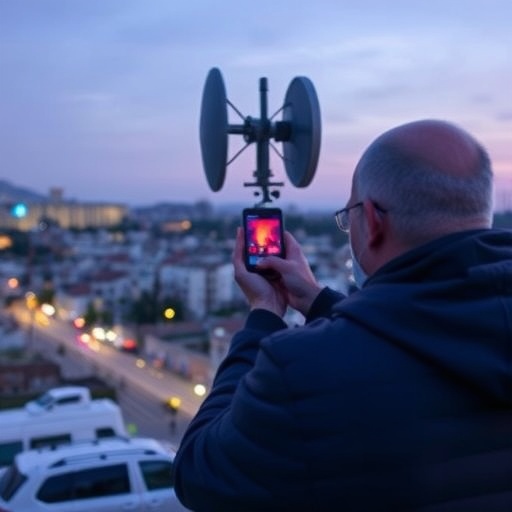
In the wake of the global transition to 5G technology, a comprehensive study has emerged, focusing on the exposure to radiofrequency electromagnetic fields (RF-EMF). Conducted in the scenic Peloponnese Region of Greece, this multi-dimensional measurement campaign highlights the increasing concerns and complexities surrounding RF-EMF exposure as society navigates through the rollout of 5G networks. The research, spearheaded by a team of experts including Zarbouti, Athanasiadou, and Tsoulos, underscores the urgency for scientific assessment as telecommunications technology evolves.
The foundation of the study rests upon measuring the levels of RF-EMF emissions across diverse environments and contexts. The researchers employed intricate measurement protocols, aimed at capturing a realistic portrayal of RF-EMF levels in both urban and rural settings. This meticulous approach ensures that the data gathered can provide a nuanced understanding of how 5G infrastructure might influence local populations. By addressing a variety of parameters, the researchers aimed to present a holistic view of the exposure profiles associated with the new technology.
As 5G technology promises unprecedented speeds and connectivity, it also raises questions regarding its impact on public health and the environment. This ongoing discourse emphasizes the critical need for rigorous scientific inquiry to illuminate potential risks linked to RF-EMF exposure. The researchers engaged in extensive data collection, utilizing state-of-the-art equipment to gauge RF-EMF levels across multiple frequency bands that are characteristic of 5G operations. This effort reflects a growing acknowledgment of the complexities tied to the electromagnetic environment.
The implications of this research extend beyond mere exposure statistics. By contextualizing the data within the broader framework of health and environmental safety, the authors plan to contribute meaningful insights to regulatory bodies and public policy makers. Ensuring that safety standards keep pace with technological advancements is a pivotal aspect of the discussion, particularly as cities gear up to accommodate next-generation wireless networks.
Furthermore, critical considerations around vulnerable populations, such as children and those with pre-existing health conditions, are incorporated into the study’s parameters. This focus exemplifies a responsible scientific inquiry that seeks not only to measure but also to mitigate potential risks. The research team is committed to providing evidence-based recommendations aimed at safeguarding public health while embracing technological progress.
One of the standout features of the study is its commitment to transparency and community engagement. The researchers sought the involvement of local stakeholders throughout the measurement processes, reinforcing community trust through collaborative practices. This open dialogue fosters a better understanding of the technology’s implications among local residents, empowering them with knowledge regarding RF-EMF exposure.
The geographical diversity of the Peloponnese Region offered a rich tapestry for studying RF-EMF exposure in contrasting environments—from densely populated urban centers to remote rural locales. This varied scope enables comparisons that can illuminate differing impacts of 5G deployment. By presenting data that reflects real-world scenarios, the researchers hope to bridge the gap between technical measurements and community perspectives.
The timing of this research is particularly significant, as many countries are actively rolling out 5G networks. International bodies are revisiting RF-EMF exposure guidelines to match the anticipated increase in emissions associated with these technologies. The findings from this study can contribute pivotal evidence to the ongoing discussions within regulatory frameworks, ensuring that exposure limits are appropriately set based on empirical data.
Additionally, the use of advanced statistical modeling techniques has allowed the researchers to predict potential future exposure scenarios based on current data trends. By simulating how RF-EMF levels may evolve as more 5G infrastructure is established, they provide a foresight that is invaluable for policymakers dedicated to public safety. These predictive models can serve as a basis for establishing precautionary measures and inform future research needs.
As the research progresses, there’s a concerted effort to publish results that are not only scientifically rigorous but also accessible to a broader audience. Public understanding of the implications of RF-EMF exposure is vital, particularly in fostering informed dialogue surrounding the benefits and risks of 5G technologies. Engaging with diverse audiences through various channels amplifies the public discourse surrounding radiation exposure and technological innovation.
Throughout the campaign, the researchers remain cognizant of the fast-paced developments in wireless communication technologies and the potential for misinformation circulating in the media. By providing clear, substantiated findings, they aim to combat myths and misconceptions about 5G and RF-EMF. As the technology evolves, so too does the need for credible scientific voices to guide public understanding and policy response.
This groundbreaking study underscores the interplay between technological advancement and health monitoring. The findings can be a catalyst for further investigations into the long-term effects of RF-EMF exposure and its implications for future generations. As society embraces the promise of 5G connectivity, understanding its potential consequences on health and the environment becomes increasingly paramount.
In conclusion, the multi-dimensional measurement campaign conducted in the Peloponnese serves as a crucial touchpoint in the ongoing exploration of RF-EMF exposure related to 5G technology. By adopting a rigorous, community-focused, and scientifically sound approach, the researchers illuminate pathways for informed decision-making amidst a rapidly transforming technological landscape. With transparency and public engagement at the forefront, the findings promise to resonate within both scientific and public domains.
As the discourse surrounding 5G continues to evolve, the work of Zarbouti, Athanasiadou, Tsoulos, and their colleagues sets a precedent for future research endeavors. In navigating the complexities of 5G and RF-EMF exposure, their study serves as a reminder of the delicate balance between harnessing innovation and safeguarding public health.
Subject of Research: RF-EMF Exposure in the Transition to 5G
Article Title: RF-EMF exposure in the transition to 5G: A multi-dimensional measurement campaign in the Peloponnese Region of Greece.
Article References: Zarbouti, D., Athanasiadou, G., Tsoulos, G. et al. RF-EMF exposure in the transition to 5G: A multi-dimensional measurement campaign in the Peloponnese Region of Greece. Environ Monit Assess 198, 27 (2026). https://doi.org/10.1007/s10661-025-14876-9
Image Credits: AI Generated
DOI: https://doi.org/10.1007/s10661-025-14876-9
Keywords: RF-EMF, 5G technology, health impact, Peloponnese, exposure measurement, public safety, telecommunications.


