


For decades, earthquake engineers have judged how badly a building fares in a quake largely by one number: how far its floors shift sideways relative to one another. This measure, known as inter-storey drift, is simple, intuitive and baked into nearly every modern seismic code, from Eurocode 8 to the FEMA rehabilitation standards. But a new study argues that the profession’s favourite yardstick may be quietly missing something crucial — the slow accumulation of damage that occurs when a structure is shaken through dozens of back-and-forth cycles during a long, powerful earthquake.
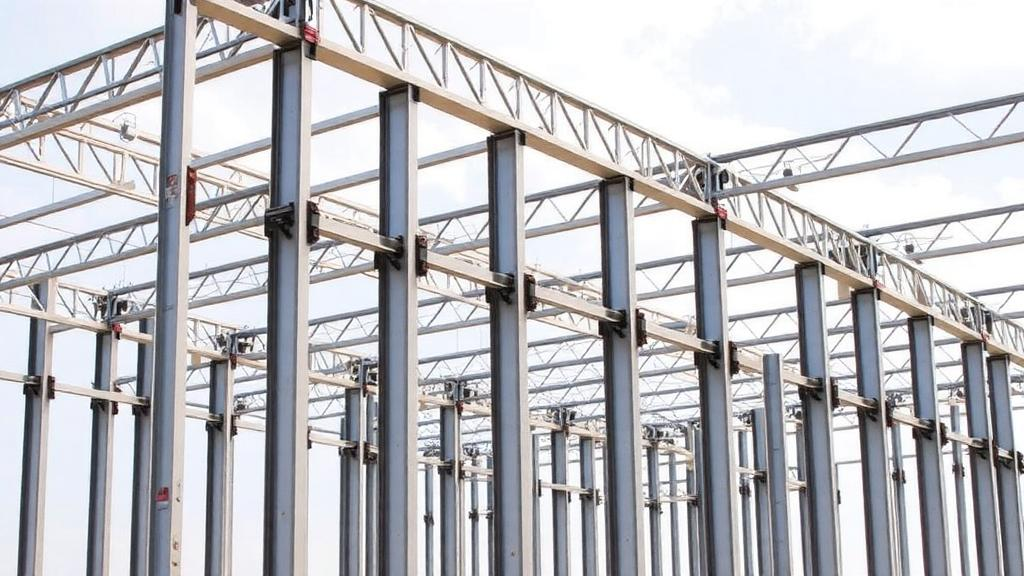
The research, published in the Bulletin of Earthquake Engineering, was carried out by Mustafa Al-Mashaykhi and Pathmanathan Rajeev of Swinburne University of Technology in Melbourne, together with Kushan Wijesundara and Sahan Bandara of the University of Peradeniya in Sri Lanka. Their focus was a workhorse of steel construction: the concentrically braced frame, or CBF, a structural system in which diagonal steel braces carry lateral forces through axial tension and compression. CBFs are popular because they are stiff, economical and efficient at controlling drift, yet their braces are notoriously vulnerable to the kind of repeated inelastic cycling that long-duration earthquakes deliver.
The problem with drift-based assessment, the authors explain, is that it captures the peak deformation a frame experiences but says nothing about how that deformation was reached or how many times the structure yielded along the way. When a brace buckles in compression and stretches back in tension, cycle after cycle, the steel accumulates low-cycle fatigue damage even if the maximum drift never changes. Two ground motions can produce identical peak drifts while leaving the structure in radically different states — one largely intact, the other with fractured braces and a frame on the verge of collapse. Classic post-earthquake surveys, including studies of the 1994 Northridge and 1995 Hyogo-ken Nanbu earthquakes, documented exactly this kind of cumulative damage in steel buildings, motivating engineers to look beyond single-deformation measures.
To capture that cumulative effect, the team turned to an energy-based damage index, building on earlier work by Rajeev and Wijesundara that applied the continuous wavelet transform to steel braced frames. The wavelet approach, rooted in mathematical techniques first formalised by Dennis Gabor in 1946 and developed extensively since, allows the seismic energy absorbed by the structure to be computed as a function of time. Instead of treating the ground motion as a single peak event, the method decomposes the response record into localised wave components, making it possible to track how hysteretic energy — the energy dissipated through plastic deformation — accumulates over the full duration of shaking. The resulting damage index blends the maximum deformation demand with the total dissipated energy, echoing the influential Park and Ang damage model of 1985 and later energy-based formulations by researchers such as Bojorquez, Teran-Gilmore and Fajfar, who explicitly linked ductility demands to low-cycle fatigue.
The mechanics of the study were ambitious in scale. The team designed eight different CBF steel structures, varying both building height and bracing configuration — the geometric arrangements of diagonals, such as diagonal and chevron patterns, that determine how forces flow through the frame. Each frame was then subjected to thirty different ground motion records spanning a wide range of seismic intensities and hazard levels, drawn from European strong-motion databases. Using the open-source simulation platform OpenSees, with brace models capable of capturing cyclic inelastic buckling as characterised by Uriz, Filippou and Mahin, the researchers ran Incremental Dynamic Analysis, the method introduced by Vamvatsikos and Cornell in 2002, in which each record is scaled to progressively higher intensities until the structure reaches defined limit states.
From this mountain of nonlinear simulations, the team built probabilistic seismic demand models — statistical relationships between ground-motion intensity and structural demand — for both the conventional drift measure and the new energy-based damage index. These models then fed into fragility curves, the standard tool of seismic risk assessment, which express the probability that a structure will exceed a given damage state at a given level of shaking. Fragility curves are what engineers and insurers ultimately rely on to estimate expected losses and to decide where retrofit money should be spent, so their statistical quality matters enormously.
The headline finding is that the energy-based approach produces fragility estimates with lower statistical dispersion. In practical terms, the record-to-record variability — the scatter that arises when different ground motions, even at the same intensity, push a structure to very different levels of damage — is reduced when damage is measured by accumulated hysteretic energy rather than peak drift. Lower dispersion means tighter, more confident fragility curves, and tighter curves mean more reliable estimates of collapse risk. For a profession that must make safety decisions under deep uncertainty, reducing this scatter is not a cosmetic improvement; it directly changes the width of the confidence intervals within which real buildings are judged safe or unsafe.
Equally significant is where the two approaches agree and where they diverge. At lower damage levels, corresponding to the Immediate Occupancy performance state — the condition in which a building remains safe to enter and use immediately after a quake — the drift-based and energy-based methods yield broadly comparable fragility predictions. This makes sense: at light damage, the structure has barely yielded, little hysteretic energy has been dissipated, and peak deformation is a reasonable proxy for the state of the frame. But at the high damage end, at the Collapse Prevention limit state, where the structure is barely standing and braces have undergone many large inelastic cycles, the two methods diverge substantially. The energy-based index, sensitive to those cumulative inelastic hysteretic cycles, paints a different — and, the authors argue, more physically faithful — picture of how close a CBF really is to collapse under severe, long-duration shaking.
The implications reach beyond braced steel frames. Energy-based damage indices have been gaining traction across earthquake engineering, with recent work applying energy concepts to mainshock-damaged buildings, to integrated displacement-and-energy design procedures, and to the plastic design of steel moment frames that explicitly account for cumulative damage. The new study adds an important probabilistic leg to that edifice: it demonstrates, quantitatively and across a family of real frame designs, that an energy-based damage measure delivers a more stable estimate of seismic performance precisely where it matters most — near collapse. For code writers, that suggests energy demands deserve a place alongside drift limits in performance-based design frameworks, particularly for structural systems whose components, like steel braces, degrade through repeated buckling and yielding.
There are, of course, practical hurdles before energy-based fragility becomes routine practice. Computing hysteretic energy requires nonlinear time-history analysis and the wavelet-based signal processing that underpins the damage index, tools that are more demanding than the elastic drift checks familiar from everyday design offices. The authors note that all data, models and code supporting the study are available from the corresponding author on reasonable request, which should help other researchers replicate and extend the method to other structural systems, longer-duration motions and site classes not covered here. But the direction of travel is clear. As earthquake engineers push toward more reliable, performance-based assessment of the buildings people depend on, measuring the total energy a quake pumps into a structure — not just how far it sways — may become the difference between a fragility curve that looks reassuring and one that tells the truth about collapse risk.
Subject of Research: Energy-based seismic fragility assessment of concentrically braced steel frames
Article Title: Energy-based seismic fragility for concentrically braced steel frames
Article References: Energy-based seismic fragility for concentrically braced steel frames. (n.d.). https://doi.org/10.1007/s10518-026-02717-0
Image Credits: AI Generated
DOI: 10.1007/s10518-026-02717-0
Keywords: seismic fragility, concentrically braced frames, energy-based damage index, inter-storey drift, incremental dynamic analysis, wavelet transform, hysteretic energy, collapse prevention, probabilistic seismic demand, steel structures, low-cycle fatigue, earthquake engineering
Cite Scienmag News
Violet Maxwell. (October 13, 2026). Measuring Earthquake Damage by Energy, Not Drift, Gives Safer Predictions for Braced Steel Frames. Scienmag. https://scienmag.com/measuring-earthquake-damage-by-energy-not-drift-gives-safer-predictions-for-braced-steel-frames/
Violet Maxwell. "Measuring Earthquake Damage by Energy, Not Drift, Gives Safer Predictions for Braced Steel Frames." Scienmag, 13 October 2026, https://scienmag.com/measuring-earthquake-damage-by-energy-not-drift-gives-safer-predictions-for-braced-steel-frames/. Accessed 13 October 2026.
Violet Maxwell. "Measuring Earthquake Damage by Energy, Not Drift, Gives Safer Predictions for Braced Steel Frames." Scienmag. October 13, 2026. https://scienmag.com/measuring-earthquake-damage-by-energy-not-drift-gives-safer-predictions-for-braced-steel-frames/


