


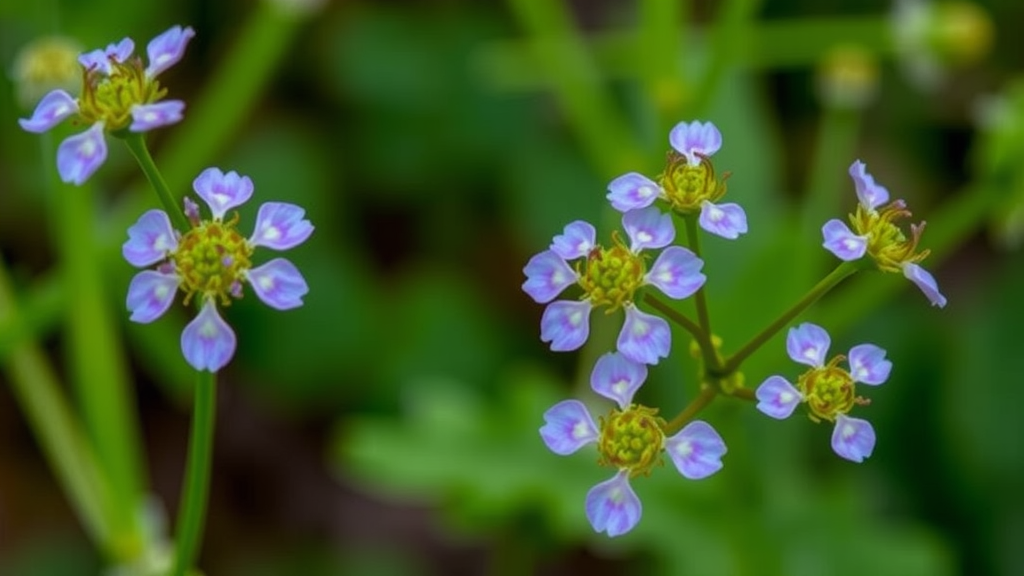
A sprawling review of the meadow rue genus, Thalictrum, has catalogued a striking trove of biologically active plant chemicals across Africa and Asia, while simultaneously exposing how little of the evidence stands up to rigorous scientific scrutiny. The study, published in Plant Biosystems by an international team led by Sagir Mustapha of Universiti Malaya, is the first to subject Thalictrum research from these two continents to a formal quality assessment, and its verdict is a paradox familiar to anyone following natural product drug discovery: enormous pharmacological promise wrapped in a fragile evidentiary shell.
The genus Thalictrum belongs to the buttercup family, Ranunculaceae, and its members have long histories in traditional medicine. Across African and Asian healing systems, preparations from these herbs have been used to treat fevers, infections, gastrointestinal complaints, wounds, and inflammation. Yet, as the review authors emphasize, historical use is not the same as validated efficacy. To move beyond anecdote, the team systematically mined PubMed, ScienceDirect, Scopus, Google Scholar, and ethnobotanical surveys, ultimately identifying eleven Thalictrum species native to Africa and Asia with documented medicinal relevance.
Those eleven species, ranging from Thalictrum rhynchocarpum of East Africa to Himalayan and East Asian species such as T. foliolosum, T. cultratum, and T. delavayi, share a common chemical signature. Phytochemical analyses reveal abundant isoquinoline alkaloids, the same structural family that gave the world berberine and related compounds, alongside flavonoids, terpenoids, tannins, and diverse phenolics. In species such as T. cultratum, chemists have isolated dozens of bisbenzylisoquinoline and aporphine alkaloids, some with demonstrable antiproliferative effects against tumor cells in laboratory settings. From T. alpinum, researchers previously reported northalrugosidine, a bisbenzyltetrahydroisoquinoline alkaloid with in vivo antileishmanial activity.
The pharmacological signals extend across several therapeutic domains. Preliminary studies point to antimicrobial, antioxidant, anti-inflammatory, anticancer, and antidiabetic effects. Work on T. foliolosum from the northwestern Himalayas has documented antifungal activity, hepatoprotective effects, anti-urolithiatic potential against kidney stones, and antimalarial activity in mouse models of lethal malaria. Extracts of T. minus have shown protective effects against chemically induced acute lung injury in mice, while T. baicalense has yielded alkaloid dimers with antitumor activity and isoflavones and lignans with anti-inflammatory properties. Studies of T. rhynchocarpum root extract demonstrated antidiarrhoeal effects in mice.
Here, however, the review delivers its most sobering finding. When the authors applied structured quality criteria to the existing literature, they found that approximately 70 percent of studies lacked adequate experimental controls. Only four of the eleven species have had their principal bioactive compounds quantified. Most strikingly, eight of the eleven species have never been tested in any in vivo model, meaning that the vast majority of therapeutic claims rest entirely on test tube experiments with crude extracts of unknown composition. Toxicity data, an absolute prerequisite for any clinical translation, exist for only two species.
This pattern matters because crude extract pharmacology is notoriously vulnerable to false positives. Without proper controls, effects attributed to plant chemicals can arise from solvent artifacts, tannin nonspecificity, or assay interference. Without quantification, doses cannot be standardized between experiments, making results irreproducible. And without in vivo validation, no claim of therapeutic relevance can survive contact with physiological reality, where absorption, metabolism, distribution, and toxicity conspire to eliminate most candidate molecules before they ever reach a clinic.
To their credit, the review authors do not simply catalogue the deficits. They propose a strategic framework for converting this botanical bounty into genuine drug candidates. The framework calls for bioassay-guided isolation, in which fractionation is paired with iterative activity testing to identify the specific molecules responsible for observed effects. It then demands rigorous in vivo validation, mechanistic studies to explain how active compounds work at the molecular level, and attention to sustainable sourcing so that promising species are not driven toward extinction by harvest pressure before their value is established.
The framework aligns with broader trends in ethnopharmacology, where traditional knowledge increasingly serves as a map for modern chemistry rather than as evidence in its own right. The World Health Organization has documented the growing global integration of traditional and modern medicine, and the review situates Thalictrum within this context, noting that species in the genus appear in Tibetan, Ayurvedic, Chinese, and various African medical traditions. The chemotaxonomic richness of the genus, particularly its isoquinoline alkaloid diversity, makes it a natural candidate for systematic drug discovery campaigns using modern metabolomic techniques such as UHPLC-QTOF profiling.
For drug discovery pipelines, the Thalictrum findings carry both encouragement and caution. The encouragement lies in the sheer chemical novelty on display; new alkaloid skeletons continue to emerge from these plants, including novel benzo[c]azepinones and dimeric aporphinoids with structural features rarely seen elsewhere in nature. The caution lies in the realization that decades of fragmented research, spread across species, journals, and methodologies, has produced remarkably little translatable knowledge. Approximately seven in ten studies cannot support firm conclusions, and for most species, the fundamental question of whether any compound can be safely administered to a living animal remains unanswered.
The review thus serves as both inventory and indictment. It confirms that Thalictrum species across Africa and Asia harbor a chemical arsenal of genuine interest to pharmacologists, but it quantifies for the first time how deep the evidentiary gap really is. Whether the strategic framework proposed by Mustapha and colleagues can redirect the field toward controlled, reproducible, mechanistically grounded research will determine whether meadow rue becomes a source of new medicines or remains, like many medicinal plant genera, a library of untested potential. The answer, the authors suggest, will require coordinated investment in isolation chemistry, animal pharmacology, toxicology, and conservation biology, pursued together rather than in the piecemeal fashion that has characterized Thalictrum research to date.
Subject of Research: Phytochemical and pharmacological evaluation of African and Asian Thalictrum species for drug discovery
Article Title: Phytochemical profiles and therapeutic potentials of Thalictrum species in Africa and Asia: a structured review with evidence quality assessment and strategic framework for drug discovery
Article References: Mustapha, S., Mustapha, L., Suciati, S., Govindaraju, K., Ngadimon, I. W., Nordin, M. L., Mohammed, M., Lawal, H., Jibrilla, H. U., Abdulkarim, N., & Azemi, A. K. (2026). Phytochemical profiles and therapeutic potentials of Thalictrum species in Africa and Asia: a structured review with evidence quality assessment and strategic framework for drug discovery. Plant Biosystems, 160(5), Article 250. https://doi.org/10.1007/s44473-026-00263-w
Image Credits: AI Generated
DOI: 10.1007/s44473-026-00263-w
Keywords: Thalictrum, phytochemistry, isoquinoline alkaloids, ethnomedicine, drug discovery, medicinal plants, Ranunculaceae, evidence quality, pharmacology, toxicity, bioassay-guided isolation, Africa and Asia flora
Cite Scienmag News
Louis Brooks. (September 13, 2026). Meadow Rue Genus Shows Drug Promise, but Review Finds Evidence Gaps. Scienmag. https://scienmag.com/meadow-rue-genus-shows-drug-promise-but-review-finds-evidence-gaps/
Louis Brooks. "Meadow Rue Genus Shows Drug Promise, but Review Finds Evidence Gaps." Scienmag, 13 September 2026, https://scienmag.com/meadow-rue-genus-shows-drug-promise-but-review-finds-evidence-gaps/. Accessed 4 October 2026.
Louis Brooks. "Meadow Rue Genus Shows Drug Promise, but Review Finds Evidence Gaps." Scienmag. September 13, 2026. https://scienmag.com/meadow-rue-genus-shows-drug-promise-but-review-finds-evidence-gaps/


