


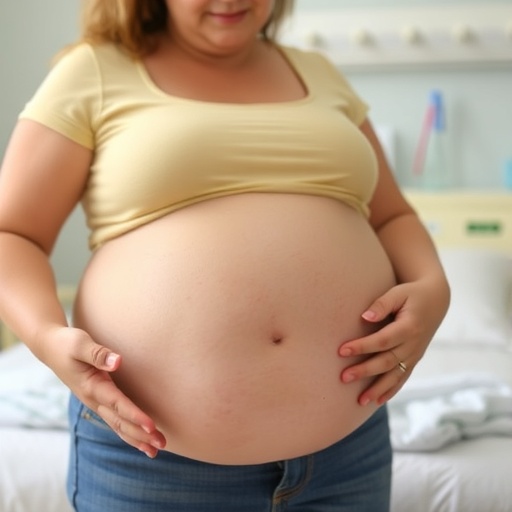
The relationship between maternal obesity and offspring health has been an area of growing scientific concern, as global obesity rates continue to rise unabated. A new longitudinal cohort study, published in the open-access journal BMJ Medicine, sheds critical light on how a mother’s body mass index (BMI), particularly in cases classified as severe obesity (BMI of 35 or higher), correlates with an increased likelihood of hospital admissions for infections in their children. This connection underscores complex physiological mechanisms initiated during gestation that may predispose children to heightened infectious vulnerability, reflecting significant public health implications on a global scale.
Maternal obesity has reached near-epidemic proportions worldwide, with projections estimating that nearly one in four pregnant women will be classified as obese by 2030. The pathophysiology of obesity is characterized by chronic systemic inflammation, which can dysregulate immune function and influence gene expression patterns. Furthermore, alterations in the maternal gut microbiome during pregnancy have been shown to impact fetal development profoundly. These biological disruptions are believed to set the stage for a compromised immune system in the offspring, ultimately manifesting as increased susceptibility to infections during childhood.
Historically, prior investigations into the association between maternal BMI and childhood infection have yielded inconclusive and inconsistent results, with many studies failing to account for potentially modifiable factors such as breastfeeding duration, delivery method, pregnancy weight gain, and childhood obesity. Recognizing these gaps, researchers leveraged data from the Born in Bradford cohort, a richly phenotyped population-based birth cohort designed to uncover social, environmental, and genetic influences on mother and child health outcomes, providing an ideal resource to explore these nuanced relationships.
The study cohort encompassed 9,037 women who delivered living children at Bradford Royal Infirmary between March 2007 and December 2010, all with recorded height and weight data to accurately calculate BMI. This population was ethnically diverse, comprising approximately 45% Pakistani and 40% white British women, with more than one-third residing in areas classified among the most socioeconomically deprived in the UK. Such demographic data provide crucial context, as ethnic and socioeconomic factors can independently influence health outcomes and healthcare access.
Children from the cohort were longitudinally tracked for up to 15 years after birth, with a total of 9,540 offspring monitored for hospital admissions related to infections. The researchers meticulously classified infections into seven categories: upper respiratory tract, lower respiratory tract, skin and soft tissue, genitourinary, gastrointestinal, invasive bacterial, and multisystem viral infections. This comprehensive approach allowed the investigators to delineate the specific infectious disease burdens associated with maternal BMI, thereby enhancing understanding of which infections drove the overall risk.
Maternal clinical measurements were systematically recorded at three pivotal gestational milestones: the initial booking appointment during the first trimester, between 26 to 28 weeks, and during a routine third trimester assessment. Approximately 30% of women were overweight and 26% were obese, with 10% classified as having grade 2 to 3 obesity (BMI ≥ 35). These repeated measures strengthened the study’s reliability in assessing maternal weight status throughout pregnancy rather than relying on a single time point.
A striking finding of the study was the quantified risk of infection-related hospital admissions in children relative to maternal BMI categories. Across all age groups, children born to mothers with grade 2-3 obesity experienced significantly higher admission rates compared to those born to mothers of healthy weight. Specifically, infants under one year born to severely obese mothers were 41% more likely to be hospitalized for infection, and this elevated risk persisted into later childhood, with a 53% increased likelihood of admission between ages five and fifteen. This robust association held true even after adjusting for confounders such as maternal age, ethnicity, and deprivation indices.
Examining sex and ethnicity nuances, the analysis uncovered more pronounced associations among male offspring compared to females, and among children of Pakistani heritage relative to white British counterparts. Such findings may hint at genetic susceptibilities or culturally linked environmental exposures influencing immune development and infection risk, warranting further mechanistic studies to parse out these disparities.
Among factors potentially modifiable through clinical or public health interventions, the study identified cesarean section deliveries and childhood obesity at ages 4 to 5 as significant mediators contributing to the increased infection risk associated with maternal obesity. Notably, cesarean births accounted for 21% of the risk mediation, while childhood obesity contributed 26%, highlighting avenues where targeted preventive strategies during and after pregnancy could meaningfully reduce childhood infectious morbidity. Conversely, variables such as breastfeeding for six or more weeks and maternal excessive pregnancy weight gain demonstrated no significant effect modifications.
Preterm birth, typically linked with immature immune function in neonates, only explained a modest fraction (7%) of the relationship between severe maternal obesity and infection hospitalizations during the first five years, suggesting that the observed infection risk extends beyond prematurity-related vulnerabilities. This underscores the multifactorial nature of maternal obesity’s impact on offspring health, involving intricate immunometabolic, microbiological, and potentially epigenetic mechanisms.
Despite the rigor of the investigation, the researchers acknowledge limitations inherent to observational designs, including the inability to assert causality. Additionally, reliance on data captured from a single hospital site may limit generalizability, and missing data on breastfeeding practices and child BMI introduce potential biases. Environmental exposures and lifestyle factors, which also modulate infection risk, were not fully accounted for—areas ripe for future research expansion.
Nonetheless, the findings carry profound implications for public health policy and clinical practice. Given the dramatic rise in maternal obesity worldwide, even a moderate increase in infection risk translates into a substantial disease burden across populations. The study advocates for intensified efforts to support women of reproductive age in achieving and maintaining healthy body weight prior to and during pregnancy. Such interventions could confer far-reaching benefits by improving immune outcomes in the next generation and reducing healthcare utilization related to preventable infections.
This research adds a vital piece to the puzzle of how the intrauterine environment shapes lifelong health trajectories. By elucidating the link between severe maternal obesity and offspring infection risk, it encourages a holistic approach encompassing preconception health optimization, tailored obstetric care, and early childhood obesity prevention. Ultimately, mitigating the downstream consequences of maternal obesity may be key to curbing health inequalities and fostering resilient, healthier future generations.
News Publication Date: 3-Jun-2025
Web References: DOI: 10.1136/bmjmed-2024-001050
Cite Scienmag News
Harold Sullivan. (June 3, 2025). Maternal Obesity Increases Child’s Risk of Hospitalization Due to Infections. Scienmag. https://scienmag.com/maternal-obesity-increases-childs-risk-of-hospitalization-due-to-infections/
Harold Sullivan. "Maternal Obesity Increases Child’s Risk of Hospitalization Due to Infections." Scienmag, 3 June 2025, https://scienmag.com/maternal-obesity-increases-childs-risk-of-hospitalization-due-to-infections/. Accessed 3 September 2026.
Harold Sullivan. "Maternal Obesity Increases Child’s Risk of Hospitalization Due to Infections." Scienmag. June 3, 2025. https://scienmag.com/maternal-obesity-increases-childs-risk-of-hospitalization-due-to-infections/


