


Marine Protected Areas (MPAs) are designed to ensure the long-term conservation of marine ecosystems and the services they provide to human societies; however, only a third of these areas are capable of offering real protection on a global scale. These are the findings of a study, carried out by scientists from the CNRS1 as part of an international research team, to be published on 9 May in Conservation Letters. By analysing the world’s 100 largest MPAs, or 90% of the world’s marine protected areas, the team have shown that a quarter of this surface area is unregulated and unmanaged. For example, more than a third of MPAs allow industrial activities such as large-scale commercial fishing – the main cause of ocean biodiversity loss and an act generally incompatible with marine conservation. The study also points out that large MPAs exist disproportionately in remote areas and in the overseas territories of certain nations, to the detriment of important habitats and species located in ocean regions heavily affected by human activities.

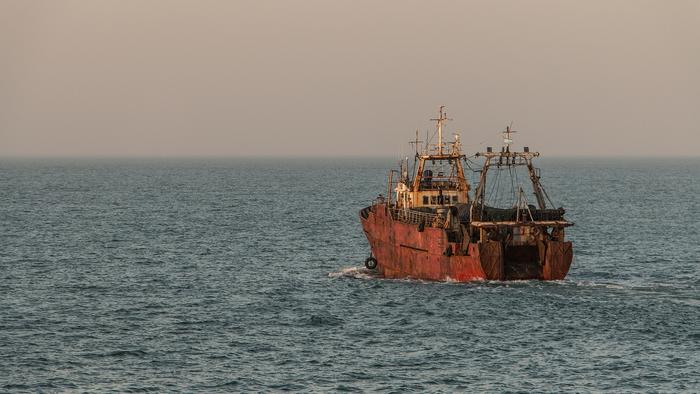
Credit: ©Claudio Bianchi / Pixabay
Marine Protected Areas (MPAs) are designed to ensure the long-term conservation of marine ecosystems and the services they provide to human societies; however, only a third of these areas are capable of offering real protection on a global scale. These are the findings of a study, carried out by scientists from the CNRS1 as part of an international research team, to be published on 9 May in Conservation Letters. By analysing the world’s 100 largest MPAs, or 90% of the world’s marine protected areas, the team have shown that a quarter of this surface area is unregulated and unmanaged. For example, more than a third of MPAs allow industrial activities such as large-scale commercial fishing – the main cause of ocean biodiversity loss and an act generally incompatible with marine conservation. The study also points out that large MPAs exist disproportionately in remote areas and in the overseas territories of certain nations, to the detriment of important habitats and species located in ocean regions heavily affected by human activities.
1 – Centre de recherche insulaire et observatoire de l’environnement (CNRS/École Pratique des Hautes Études – Université PSL/Université de Perpignan Via Domitia)
2 – The MPA Guide: A framework to achieve global goals for the ocean, Science, 10 September 2021. The MPA Guide establishes a link between scientific evidence and conservation outcomes, creating a framework for categorising MPAs and determining whether they are being put in place to contribute successfully to conservation outcomes.
3 – Adopted by the United Nations 19 June 2023
These findings, established as a result of the MPA Guide2, suggest that current assessment and monitoring methods overestimate the quantity of protection provided by MPAs to the detriment of quality. For the research team, the outcome calls for stricter applications of the MPA guidelines to ensure that all areas meet international standards. While the implementation of MPAs is a key tool for achieving the United Nations objective of protecting at least 30% of the oceans by 2030, the scientists propose that MPAs with an unknown or insufficient level of protection should no longer be taken into account, that MPAs should be extended to cover all marine ecosystems, and that the international treaty on the protection of the high seas3 should be ratified to include only MPAs offering a high level of protection.
Journal
Conservation
Method of Research
Observational study
Article Title
Ocean protection quality is lagging behind quantity: Applying a scientific framework 1 to assess real MPA progress against the 30 by 30 target
Article Publication Date
9-May-2024
Cite Scienmag News
Violet Maxwell. (May 14, 2024). Marine protected areas: Only a third are effective. Scienmag. https://scienmag.com/marine-protected-areas-only-a-third-are-effective/
Violet Maxwell. "Marine protected areas: Only a third are effective." Scienmag, 14 May 2024, https://scienmag.com/marine-protected-areas-only-a-third-are-effective/. Accessed 3 September 2026.
Violet Maxwell. "Marine protected areas: Only a third are effective." Scienmag. May 14, 2024. https://scienmag.com/marine-protected-areas-only-a-third-are-effective/

