


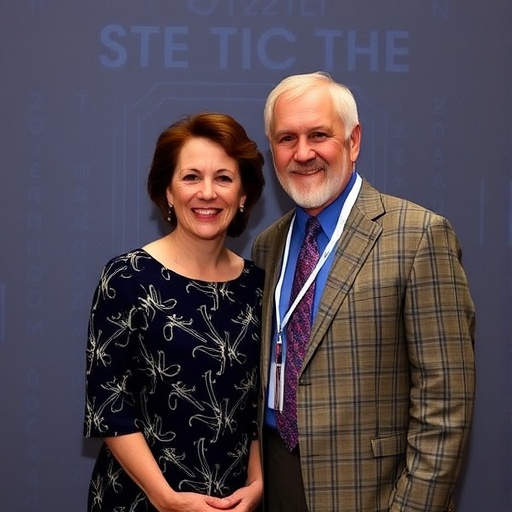
The intersection of artificial intelligence (AI) and scientific research is creating unprecedented avenues for exploration and innovation, as evidenced by the recent announcement from the University of Chicago and Caltech regarding the inaugural Margot and Tom Pritzker Prize for AI in Science Research Excellence. This award, presented during the AI+Science Conference hosted at Caltech on November 10 and 11, signifies a bold step forward in recognizing those who combine AI’s transformative capabilities with the rigor of the natural sciences and engineering.
With the rapid evolution of AI technologies, it has become increasingly clear that these tools can serve as catalysts for profound advancements across various scientific disciplines. The Pritzker Prize aims to acknowledge individuals whose work not only merges AI with scientific inquiry but also significantly impacts our understanding of complex systems. It is a timely acknowledgement of how far AI has come and, importantly, a nod to its potential to fuel future discoveries.
Margot and Tom Pritzker, co-founders of the Margot and Tom Pritzker Foundation, expressed a powerful vision for the future of AI in scientific research. They highlighted the necessity of viewing AI as a facilitator that accelerates human ingenuity, underscoring their belief that the integration of AI into scientific methodology can push the boundaries of exploration and understanding. In their words, the prize attempts to catalyze a new era where scientists can extend their reach into frontiers once deemed unreachable, thus benefiting all of humanity.
The scope of support offered by the Pritzker Foundation extends beyond the prize itself. It includes the promotion of trainees at various educational levels who demonstrate significant contributions to the realms of AI and science. Notable figures such as Jonathan Weare and Max Welling have been appointed as Pritzker Sabbatical Visitors at the University of Chicago and Caltech, respectively. Their roles highlight the foundation’s commitment not just to recognizing established scientists but also to fostering the next generation of intellectual leaders in these fields.
Furthermore, the AI+Science Conference serves as an invaluable platform for graduate students and postdoctoral researchers from both institutions. These scholars are encouraged to present their research and engage in dialogues that foster collaboration across disciplines, including crucial areas such as Climate Sciences and Neuroscience. The conference represents a melting pot of ideas, where the latest advancements in AI technologies meet the needs and challenges of scientific investigation.
The significance of the Margot and Tom Pritzker Prize cannot be overstated. It sets a new standard for acknowledging the innovative efforts of individuals who are bridging the gap between machine learning and scientific discovery. As University of Chicago Data Science Institute Faculty Director for AI, Rebecca Willett, articulated, the aim of such an award is to not only recognize creativity and impact but also to spur transformative scholarship that benefits both science and society at large.
This year, the prize recipients have been rightfully celebrated for their groundbreaking contributions to their respective fields. Kyle Cranmer, a prominent figure in the realm of particle physics, has gained recognition for his pioneering work in simulation-based inference. His innovative approaches have fundamentally reshaped data analysis techniques and experimental design, providing fresh insights into complex scientific phenomena.
On the other hand, Deborah Marks represents a growing movement towards the application of AI in understanding biological systems. Her contributions to the development and application of language modeling methods are crucial for deciphering evolutionary data, with implications that span predicting phenotypes and elucidating molecular properties. As science continues to grapple with the complexities of biology, innovative approaches like Marks’ are becoming increasingly vital.
Cranmer expressed his enthusiasm for AI, emphasizing how it allows for an expressive language that can articulate complex physical systems. He views AI not merely as a tool but as a mechanism through which fundamental principles can be harmonized with sophisticated data-driven models. This synergy could lead to a deeper understanding of complicated natural phenomena.
Similarly, Marks advocates for a biologically-aware approach to AI. She asserts the necessity for context-driven, iterative development of AI methods that collaborate closely with biotechnology and medicine. Her perspective underscores the challenges of applying conventional AI methodologies to biological data, which often come from diverse and multi-faceted sources. The potential to create more nuanced and effective models hinges on addressing these complexities.
The selection process for the inaugural Pritzker Prize involved an international committee of distinguished experts, ensuring that the awardees were recognized by leading figures in the industry. Among the committee members are notable personalities such as John Jumper and Eric Hordtiz, signifying the high caliber of expertise involved in the prize selection. Their involvement not only lends credibility to the award but also signals a unified commitment to exploring the future of AI within scientific discourse.
As the AI landscape continues to evolve, the collaborative efforts showcased at the AI+Science Conference promise to unite diverse perspectives and spur groundbreaking discoveries. The confluence of AI and scientific inquiry paves the way for a new era where complex challenges can be addressed through innovative methodologies and interdisciplinary collaboration.
The inaugural Margot and Tom Pritzker Prize for AI in Science Research Excellence sets a remarkable precedent for the future. By honoring the pioneers who are leading the charge in integrating AI with scientific research, it inspires a new generation to follow in their footsteps. As we stand on the brink of extraordinary advancements, this award symbolizes hope, vision, and the unyielding pursuit of knowledge that defines humanity’s quest for understanding.
Through these initiatives and recognitions, the Margot and Tom Pritzker Foundation exemplifies the transformative power of commitment to innovation in both AI and the sciences. It lays the groundwork for what could become one of the most exciting frontiers in research—a realm where AI and scientific inquiry converge to illuminate the unknown and reshape our understanding of the universe.
Keywords
Cite Scienmag News
Denise Maddox. (November 10, 2025). Margot and Tom Pritzker Prize for AI in Scientific Research Unveils Winners at Conference. Scienmag. https://scienmag.com/margot-and-tom-pritzker-prize-for-ai-in-scientific-research-unveils-winners-at-conference/
Denise Maddox. "Margot and Tom Pritzker Prize for AI in Scientific Research Unveils Winners at Conference." Scienmag, 10 November 2025, https://scienmag.com/margot-and-tom-pritzker-prize-for-ai-in-scientific-research-unveils-winners-at-conference/. Accessed 9 September 2026.
Denise Maddox. "Margot and Tom Pritzker Prize for AI in Scientific Research Unveils Winners at Conference." Scienmag. November 10, 2025. https://scienmag.com/margot-and-tom-pritzker-prize-for-ai-in-scientific-research-unveils-winners-at-conference/


