


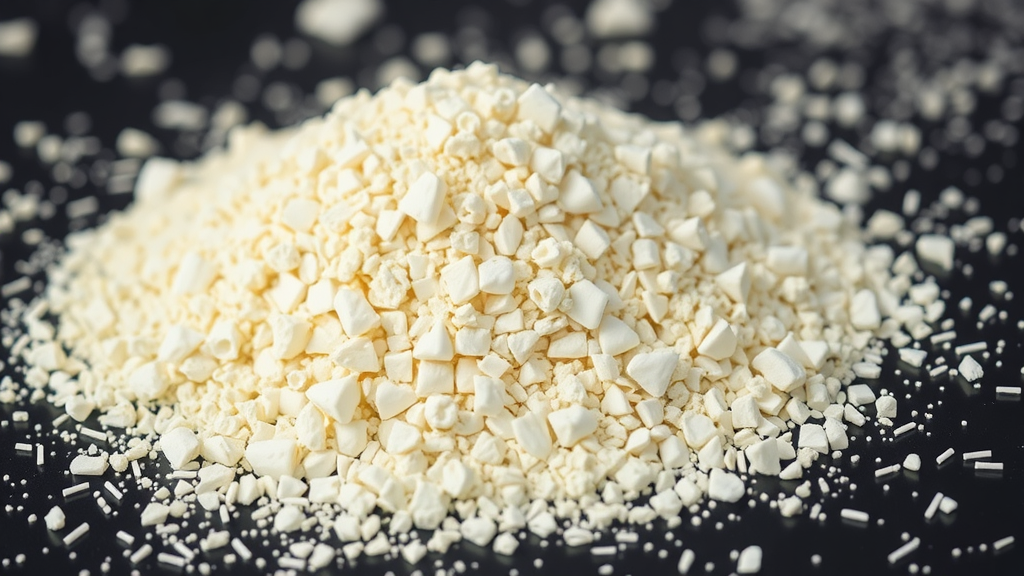
Researchers in India have found a way to transform ordinary marble dust, a low-value by-product of the stone-cutting industry, into a powerful additive that makes one of the world’s most widely used aluminium alloys significantly stronger and more resistant to wear. In a study published in the Journal of Materials Science: Metallurgy, Ashiwani Kumar of the Feroze Gandhi Institute of Engineering and Technology and Mukesh Kumar of Malaviya National Institute of Technology Jaipur describe how they reinforced AA6061 aluminium with marble dust particles and used a battery of statistical decision-making tools to identify the best possible formulation. The result is a family of composites whose mechanical properties climb steadily as the marble content rises, offering automotive and aerospace engineers a cheaper and greener route to high-performance metal parts.
The choice of matrix alloy was deliberate. AA6061 is a wrought aluminium alloy prized for its excellent thermal and physical properties, its corrosion resistance, and the ease with which it can be fabricated into machine parts, structural elements and aerospace components. Yet like most commercial alloys, it has limits in strength and wear performance that can restrict its use in demanding tribological applications such as brakes, bearings and gears. Materials scientists have long explored ways to tailor aluminium by adding hard ceramic or mineral particles, including silicon carbide, alumina, fly ash, red mud and zircon silicate, and previous studies have generally found that such reinforcements boost hardness and strength while often reducing density. What makes the new work distinctive is the use of marble dust, an abundant industrial waste stream from Rajasthan’s stone industry, which turns a disposal problem into a feedstock for advanced materials.
To create the composites, the team used a semi-automatic stir-casting process, one of the most economical and widely adopted liquid-state fabrication routes for metal matrix composites. Cleaned and cut AA6061 alloy rods were melted in a graphite crucible at 720 degrees Celsius, and the molten metal was fluxed to remove impurities. Around 2 weight percent of magnesium, added in the form of MgO, was stirred into the melt to improve wettability, a critical step because poorly wetted particles tend to cluster rather than disperse. Meanwhile, the marble dust was preheated to about 400 degrees Celsius for half an hour to drive off moisture and lower the surface energy of the particles, which further promotes uniform mixing. The heated reinforcement was then added incrementally while a graphite stirrer agitated the melt at 250 revolutions per minute for five minutes. The melt was superheated slightly to maintain fluidity and poured into a permanent mould, producing cast plates from which standard test specimens were machined.
Five compositions were prepared, spanning 0 to 6 weight percent marble dust in 1.5 percent increments, labelled M0 through M6. The researchers evaluated density, void content, tensile strength, flexural strength, hardness and impact strength for each formulation. A clear trend emerged: as the marble dust content increased, the void fraction dropped from roughly 12.5 percent to 6.66 percent, while every measured mechanical property improved. Tensile strength rose from about 238 megapascals in the unreinforced alloy to roughly 277 megapascals at 6 percent reinforcement. Hardness climbed from 75 to 90 on the Rockwell B scale, flexural strength increased from 180 to about 205 megapascals, and impact strength grew from 16.5 to 21 kilojoules per square metre. The team attributes these gains to two mechanisms: the rising dislocation density and the build-up of a stronger matrix-particle interface, which reduces voids and improves load transfer, and the ability of hard particles to act as barriers to dislocation motion, producing classic dispersion strengthening.
The tribological behaviour of the composites was assessed under dry sliding conditions, with the specific wear rate ranging from about 2.006 to 2.528 times ten to the minus six cubic millimetres per newton-metre. Three operating variables were systematically varied: normal load from 10 to 50 newtons, sliding distance from 800 to 4000 metres, and sliding velocity from 1 to 2 metres per second. Across the composition range, wear rate and friction coefficient increased with each of these parameters but fell as marble content rose. The M6 composite, containing the maximum 6 weight percent reinforcement, consistently delivered the lowest wear and friction. The researchers explain this through the same microstructural logic that governs the mechanical results: fewer voids mean a more continuous, better-bonded material that transfers load efficiently between matrix and particles, so the surface resists softening, ploughing and debris generation during sliding.
Scanning electron microscopy of the worn surfaces revealed the underlying wear mechanisms in vivid detail. At the lowest load of 10 newtons, the M6 composite displayed clean primary surfaces with minimal debris, evidence of its intactness and strength. At 20 newtons, mild ploughing and pitting appeared, and by 30 newtons deep ploughing grooves and a secondary layer of laminated wear debris became visible. At 40 and 50 newtons the damage turned aggressive, with massive debris layers and extensive pitting. The team attributes this escalation to rising interfacial temperatures at higher loads, which soften the surface, promote debonding and generate hard debris particles that then scour the interface in a destructive three-body abrasion mechanism. These micrographs directly link the macroscopic wear measurements to observable surface physics.
To optimise the sliding wear process, the researchers turned to Taguchi’s design of experiments, arranging trials in an L25 orthogonal array and using signal-to-noise ratios with a smaller-the-better objective to minimise wear. Analysis of variance on the results showed that normal load was the most influential parameter, contributing 33.33 percent of the variability in specific wear rate, followed by sliding distance at 13.36 percent, reinforcement content at 12.98 percent and sliding velocity at 9.64 percent. The highest F-value, 2.49 for normal load, confirmed its dominant role. The optimal parameter combination produced a signal-to-noise ratio of 58.60 decibels, and a confirmation experiment run at randomly selected settings validated the model with an error of only 3.6 percent, demonstrating that Taguchi’s approach can reliably guide wear-minimising process design for these materials.
Perhaps the most novel element of the study is its use of hybrid multi-criteria decision-making techniques to rank the five composites across all their performance metrics simultaneously. The two-phase AHP-TOPSIS algorithm first converts expert judgment about the relative importance of criteria into quantitative weights using Saaty’s nine-point scale, checking consistency to ensure the weights are trustworthy, and then measures each alternative’s closeness to an ideal solution. The hybrid AHP-R method follows the same first phase but uses reciprocal rank-based weighting in the second. In both analyses, the criteria hierarchy placed hardness, tensile strength, flexural strength and impact strength at the top, with density and wear rate weighted lower, and the consistency ratio of roughly 0.0044 fell far below the accepted 10 percent threshold. Critically, the two independent ranking methods converged on exactly the same order: M6 outperformed M4.5, which beat M3, with M1.5 and M0 trailing, confirming the subjective assessment that the highest marble content is optimal.
The convergence of experimental measurement, statistical optimisation and decision theory gives the findings unusual robustness, and the practical implications are considerable. The authors suggest that composites with low void content and strong mechanical properties are well suited to tribological applications, and that these marble-dust-reinforced aluminium alloys could serve as substitute materials in rollers, brakes, guideways, bearings and gears. Because the reinforcement is essentially industrial waste, the cost and environmental footprint of producing the composites should be far lower than those of conventional ceramic-reinforced alternatives. The work also adds to a growing body of literature showing that hybrid decision-making algorithms such as AHP-TOPSIS and AHP-R, borrowed from operations research, can rapidly and objectively rank material alternatives, sparing engineers from grappling with conflicting criteria by intuition alone.
The study was conducted with support from the Advanced Research Lab for Tribology and the Material Research Centre at Malaviya National Institute of Technology Jaipur, and the authors report no competing interests. While the research remains at the laboratory scale, the combination of a cheap, abundant reinforcement, a scalable casting process and statistically validated performance gains suggests a credible pathway from quarry waste to engineered components. For industries under pressure to cut both costs and carbon, the message of this work is striking: the material of the future for lightweight, wear-resistant metal parts may already be piling up in the dust of India’s marble workshops, waiting to be stirred into the melt.
Subject of Research: Marble dust particle-reinforced AA6061 aluminium matrix composites evaluated for mechanical strength and sliding wear performance using hybrid decision-making techniques
Article Title: Mechanical and sliding wear performance analysis of AA6061 − marble particulates reinforced alloy composites via hybrid decision-making techniques
Article References: Kumar, A., & Kumar, M. (2026). Mechanical and sliding wear performance analysis of AA6061 − marble particulates reinforced alloy composites via hybrid decision-making techniques. Journal of Materials Science: Metallurgy, 1(1), Article 15. https://doi.org/10.1007/s44492-026-00015-z
Image Credits: AI Generated
DOI: 10.1007/s44492-026-00015-z
Keywords: AA6061 alloy, marble dust particulates, metal matrix composites, stir casting, sliding wear, mechanical properties, Taguchi method, ANOVA, hybrid AHP-TOPSIS, AHP-R method, tribology, automotive materials
Cite Scienmag News
Denise Maddox. (September 12, 2026). Marble Dust Turns Industrial Waste Into Stronger, Longer-Lasting Aluminium Composites. Scienmag. https://scienmag.com/marble-dust-turns-industrial-waste-into-stronger-longer-lasting-aluminium-composites/
Denise Maddox. "Marble Dust Turns Industrial Waste Into Stronger, Longer-Lasting Aluminium Composites." Scienmag, 12 September 2026, https://scienmag.com/marble-dust-turns-industrial-waste-into-stronger-longer-lasting-aluminium-composites/. Accessed 5 October 2026.
Denise Maddox. "Marble Dust Turns Industrial Waste Into Stronger, Longer-Lasting Aluminium Composites." Scienmag. September 12, 2026. https://scienmag.com/marble-dust-turns-industrial-waste-into-stronger-longer-lasting-aluminium-composites/


