

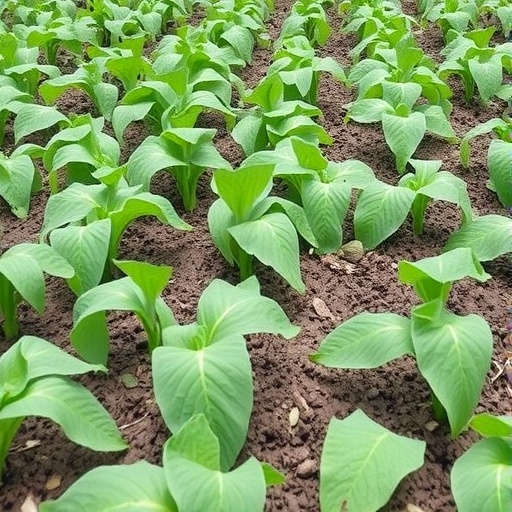
In an era where sustainable agriculture is becoming progressively more critical due to climate change and rising global populations, researchers have turned their attention to understanding and combatting plant diseases. Notably, fusarium wilt, caused by the Fusarium species, poses a substantial threat to several economically important crops, including castor beans. The recent work led by Kumar et al. focuses on developing a linkage map and exploring simple sequence repeat (SSR) markers associated with resistance to fusarium wilt in castor (Ricinus communis L.), providing valuable insights for the agricultural community.
Castor, known for its oil-rich seeds, has significant economic value, primarily in the production of castor oil, which is utilized across various industries—from biofuels to cosmetics. As global demand for castor oil rises, so does the necessity to mitigate the impacts of diseases like fusarium wilt that can devastate crops and compromise yield. Understanding the genetic factors that influence disease resistance is crucial for developing improved cultivars.
The study in question presents a detailed analysis of a specific F2:3 population of castor, an essential step in plant breeding programs. The F2:3 generation is particularly informative because it can reveal the inheritance patterns of traits like disease resistance. By mapping the genetic architecture of fusarium wilt resistance, researchers can identify specific markers that breeders can use to select for resistant genotypes. This advancement can significantly enhance breeding efficiency by allowing for the early identification of plants that possess desirable traits.
At the heart of this research lies the construction of a comprehensive linkage map. This map serves as a blueprint of the castor genome, pinpointing the locations of various genes and markers on chromosomes. Utilizing molecular techniques, the researchers successfully created this linkage map and identified SSR markers that are tightly linked to fusarium wilt resistance. SSR markers offer several advantages, including high variability and ease of use in marker-assisted selection processes.
The importance of this linkage map cannot be overstated. It provides a foundation for subsequent studies aimed at breeding for disease resistance traits. With a solid genetic framework established, breeders can effectively exploit these SSR markers in their selection programs, thereby accelerating the development of resistant castor cultivars. This will ultimately lead to more robust crop production systems that can withstand the pressures of disease outbreaks.
Furthermore, the involvement of SSR markers in this research highlights the shift toward molecular breeding in agriculture. Traditional breeding methods, albeit effective, can be time-consuming and labor-intensive. In contrast, integrating molecular markers allows for precise selection, significantly speeding up the breeding cycle. By leveraging the information derived from this research, future castor breeding programs stand to benefit from improved efficiency and efficacy.
The findings of Kumar et al. resonate beyond just castor; they hold implications for other crops affected by fusarium wilt and similar diseases. The strategies employed, including the development of a genetic map and the utilization of molecular markers, can be adapted for various plant species. As such, this research contributes to the broader goal of enhancing food security and sustainability in agriculture.
One of the key challenges in managing fusarium wilt is the pathogen’s ability to mutate and evolve, making it critical to develop resistant cultivars continually. The linkage map created in this study can facilitate the identification of novel resistance genes, offering a pathway to integrating new genetic material into existing cultivars. This proactive approach ensures that breeders stay ahead of evolving diseases, ultimately safeguarding crop yields.
Moreover, the study also identifies potential target regions for further genetic research. Through extensive mapping, the researchers can highlight gene clusters that warrant additional investigation, potentially leading to the discovery of new resistance mechanisms. This exploration not only enriches our understanding of plant-pathogen interactions but also presents opportunities for innovative breeding approaches.
In conclusion, the groundbreaking research conducted by Kumar and collaborators presents a significant advancement in the field of agricultural biotechnology. By elucidating the genetic underpinnings of fusarium wilt resistance in castor, this study opens avenues for future breeding strategies that prioritize disease resistance. As we face increasing agricultural challenges, such research underscores the importance of marrying traditional breeding practices with modern genetic technologies.
The implications of this work extend to researchers, breeders, and policymakers alike, emphasizing the critical role of science in addressing agricultural sustainability. As the reliance on crops like castor grows, initiatives like these become pivotal in ensuring that we produce them efficiently and resiliently. With continued research and collaboration across disciplines, we can aspire to maintain and enhance the productivity of vital crops in the face of biological threats and environmental change.
Strong foundations in genetic research can ultimately provide the solutions needed for a sustainable agricultural future. Thus, the work of Kumar et al. not only adds to our academic knowledge but also guides practical applications that reach far beyond the laboratory.
As we look to the future, the momentum generated by this research could inspire further studies exploring genetic resistance in other crops and create a ripple effect of innovation across the agricultural sector. Success in breeding disease-resistant varieties, especially in crops of economic importance like castor, will contribute significantly to the development of robust agricultural systems, vital to humanity’s ongoing need for food security.
In essence, through painstaking research and diligent effort, the team led by Kumar has marked a substantial stride towards fortifying castor against fusarium wilt. Their contributions are a hopeful reminder of the power of science in transforming agricultural landscapes and enhancing crop resilience in a world increasingly rife with challenges.
Subject of Research: Fusarium wilt resistance in castor (Ricinus communis L.) using SSR markers.
Article Title: Development of linkage map and mapping of SSR markers linked to fusarium wilt resistance in F2:3 population of castor (Ricinus communis L.).
Article References:
Kumar, S., Sakure, A.A., Kundaria, H. et al. Development of linkage map and mapping of SSR markers linked to fusarium wilt resistance in F2:3 population of castor (Ricinus communis L.).
3 Biotech 16, 25 (2026). https://doi.org/10.1007/s13205-025-04637-3
Image Credits: AI Generated
DOI: https://doi.org/10.1007/s13205-025-04637-3
Keywords: Fusarium wilt, castor, SSR markers, linkage map, disease resistance.


